
Short Answer
Definition of Nuclear Chemistry
Nuclear chemistry is a specialized branch of science that merges principles from both physics and chemistry to study the behavior and transformations of atomic nuclei. It investigates the interactions and changes occurring within the nucleus of atoms, focusing on phenomena such as radioactivity, nuclear reactions, and the forces that govern subatomic particles. This field reveals the intricate and dynamic nature of atomic structures, providing insights into the fundamental processes that shape matter and energy in the universe.
Atomic Structure and Nuclear Forces
The foundation of nuclear chemistry lies in understanding the atom’s architecture. Traditionally visualized as a miniature solar system, the atom consists of electrons orbiting a central nucleus made up of protons and neutrons. However, the nucleus itself is a complex environment where particles are held together by the strong nuclear force. This force, although effective only over very short distances, is powerful enough to counteract the repulsive electromagnetic forces between positively charged protons. The balance maintained by these forces is critical, as any disruption can lead to nuclear instability or transformation.
Key Components of the Nucleus
- Protons:
Positively charged particles that define the atomic number and element identity. - Neutrons:
Neutral particles that contribute to nuclear stability and isotopic variation. - Strong Nuclear Force:
The fundamental force binding protons and neutrons together within the nucleus.
Radioactivity and Nuclear Decay
Radioactivity is a hallmark of nuclear chemistry, describing the spontaneous breakdown of unstable atomic nuclei. This decay process results in the emission of various types of radiation and the transformation of one isotope into another. The phenomenon can be envisioned as a countdown, where each decay event marks a step toward a more stable nuclear configuration.
Types of Radioactive Emissions
- Alpha Particles:
Heavy, positively charged particles consisting of two protons and two neutrons, resembling a slow-moving but powerful force. - Beta Particles:
High-energy, lightweight electrons or positrons emitted during nuclear decay, comparable to swift, energetic runners. - Gamma Rays:
Electromagnetic radiation with no mass or charge, possessing high penetration ability and often accompanying other decay types.
Understanding Half-Life
The concept of half-life is central to nuclear chemistry, representing the time required for half of a given quantity of a radioactive isotope to decay. This measure varies widely among isotopes, from fractions of a second to millions of years, and serves as a crucial tool in fields such as archaeology, geology, and medicine.
- Radiocarbon Dating:
Utilizes the half-life of carbon-14 to estimate the age of ancient organic materials. - Radioactive Waste Management:
Involves understanding the half-lives of isotopes to safely store and dispose of nuclear byproducts.
Applications of Nuclear Chemistry
Nuclear chemistry extends far beyond theoretical study, impacting various practical domains including healthcare, energy, and environmental science.
Medical Uses
Radioisotopes play a vital role in diagnostic and therapeutic procedures. For example, technetium-99m is widely used in medical imaging techniques such as single photon emission computed tomography (SPECT), enabling detailed visualization of physiological functions and aiding in disease diagnosis.
Energy Production
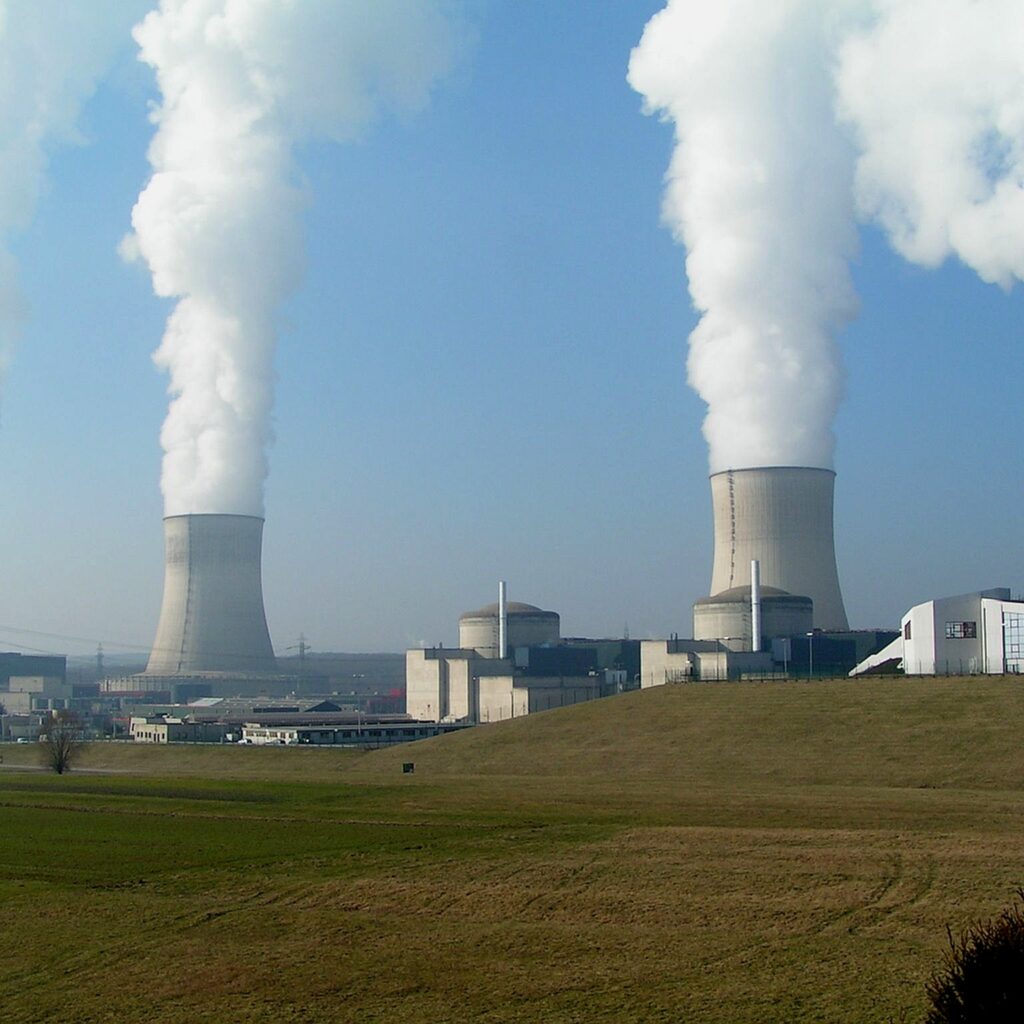
Nuclear fission, the splitting of heavy atomic nuclei like uranium-235 or plutonium-239, releases substantial energy harnessed in nuclear power plants. This process initiates a chain reaction, producing heat that generates electricity on a large scale. Despite its efficiency, nuclear fission presents challenges including radioactive waste disposal and the risk of reactor accidents.
Future Prospects: Nuclear Fusion
Nuclear fusion, the process powering stars, involves combining light nuclei such as deuterium and tritium to form helium, releasing vast amounts of energy. Research efforts aim to develop controlled fusion reactors as a clean, sustainable energy source, potentially revolutionizing global energy systems and reducing reliance on fossil fuels.
Ethical and Societal Considerations
The dual-use nature of nuclear technology raises significant ethical questions. While nuclear chemistry enables advancements in energy and medicine, it also underpins the development of nuclear weapons, posing profound moral and security challenges. Responsible stewardship requires collaboration among scientists, policymakers, and ethicists to ensure that nuclear knowledge is applied for the benefit of humanity and global safety.
Why Nuclear Chemistry Is Important
Nuclear chemistry provides essential insights into the fundamental workings of matter and energy, influencing diverse scientific and technological fields. Its applications improve healthcare, contribute to sustainable energy solutions, and enhance our understanding of the natural world. Moreover, the discipline highlights the delicate balance between scientific progress and ethical responsibility, reminding us of the need for careful management of powerful technologies.
FAQ
What is nuclear chemistry?
Nuclear chemistry is the study of changes in atomic nuclei, including radioactive decay and nuclear reactions, blending concepts from physics and chemistry.
What are the main types of radioactive emissions?
The main types are alpha particles, beta particles, and gamma rays, each with distinct properties and roles in nuclear decay.
How is the half-life concept used in practical applications?
Half-life helps date archaeological finds using radiocarbon dating and manage radioactive waste by understanding isotope decay timelines.
What are the medical applications of nuclear chemistry?
Nuclear chemistry is used in medical imaging and therapy, such as with radioisotopes like technetium-99m in diagnostic scans.
What ethical concerns surround nuclear chemistry?
Ethical issues arise from nuclear technology’s dual-use potential, including energy benefits versus nuclear weapons proliferation risks.






Leave a Reply