
Short Answer
Definition of Lunar Formation
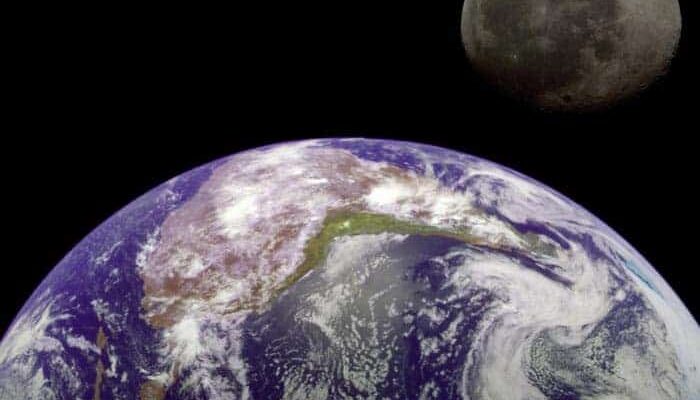
Lunar formation refers to the processes and events that led to the creation of the Moon, Earth’s natural satellite. Understanding how the Moon originated is crucial for insights into planetary formation and the early history of the solar system. Various scientific models have been proposed to explain the Moon’s genesis, with the giant impact hypothesis being the most widely accepted for many years.
Traditional Model: The Giant Impact Hypothesis
The giant impact hypothesis suggests that the Moon was formed when a Mars-sized protoplanet collided with the early Earth. This colossal impact ejected debris into orbit around Earth, which eventually coalesced to form the Moon. This theory has been favored because it explains the close isotopic similarities between Earth and lunar rocks, particularly in oxygen isotopes.
- Key Concept:
A massive collision between Earth and a protoplanet generated debris that formed the Moon. - Isotopic Evidence:
Similar oxygen isotope ratios in Earth and Moon samples support a shared origin.
Challenges to the Giant Impact Model
Despite its popularity, recent geological and isotopic analyses have raised questions about the giant impact hypothesis. Studies of lunar samples, including basalt and anorthosite, reveal a surprising uniformity in isotopic composition that is difficult to reconcile with the expected heterogeneity from a single massive impact. These findings suggest a more intricate formation history than previously thought.
- Isotopic Discrepancies:
The Moon’s material shows a higher degree of isotopic similarity to Earth than predicted if it originated mainly from the impactor. - Geological Uniformity:
High-resolution studies indicate consistent lunar rock compositions, challenging the chaotic mixing expected from a giant collision.
Alternative Theories of Lunar Formation
Double-Impact Hypothesis
This model proposes that the Moon’s formation involved two separate collisions. The first was a large impact similar to the giant impact hypothesis, followed by a secondary, smaller collision that contributed material which eventually formed the Moon. This approach attempts to address the isotopic uniformity problem but introduces new questions about the timing and dynamics of these impacts.
Capture Hypothesis
Another perspective suggests that the Moon may have formed elsewhere in the solar system and was later gravitationally captured by Earth. This theory requires reconsideration of the interactions between lunar and terrestrial materials and the conditions that would allow such a capture to occur. While less widely accepted, it opens new avenues for understanding early solar system dynamics.
Advances in Computational Modeling
Modern computational simulations have become instrumental in exploring lunar formation scenarios. By adjusting variables such as impact velocity, angle, and mass ratios, researchers can model a range of outcomes to better understand the conditions that could produce a Moon-like body. These sophisticated models indicate that lunar formation is likely more complex than any single hypothesis can fully explain.
- Impact Parameters:
Variations in collision speed and angle significantly affect the resulting debris and Moon formation. - Mass Ratios:
The relative sizes of colliding bodies influence the composition and structure of the Moon.
Significance of Lunar Formation in Earth’s Biosphere
The Moon plays a vital role in stabilizing Earth’s axial tilt, which in turn regulates the planet’s climate and seasonal cycles. This stability has been essential for the development and sustainability of life on Earth. Understanding the Moon’s origin thus extends beyond geology and astronomy, intersecting with astrobiology and Earth sciences.
- Tidal Forces:
The Moon’s gravitational pull generates tides that affect oceanic and atmospheric systems. - Axial Stability:
The Moon helps maintain Earth’s tilt, preventing extreme climate variations.
Broader Implications for Planetary Science
Insights gained from studying lunar formation have broader applications in planetary science, particularly in understanding the formation of other celestial bodies, including exoplanets. The Moon serves as a natural laboratory for testing theories of planetary genesis and evolution, offering clues about the processes that shape worlds beyond our solar system.
Common Misconceptions About Lunar Formation
The Moon formed solely from Earth’s material.
While Earth’s material is a major component, the Moon’s composition also reflects contributions from the impacting body or bodies.
The giant impact hypothesis fully explains all lunar characteristics.
New evidence suggests that additional or alternative processes may have played significant roles.
The Moon’s formation had no impact on Earth’s environment.
The Moon’s presence has been crucial in stabilizing Earth’s climate and supporting life.
Conclusion: The Ongoing Quest to Understand the Moon’s Origin
The study of lunar formation remains a dynamic and evolving field, driven by new data, advanced modeling techniques, and interdisciplinary research. Whether through refining existing theories or exploring novel hypotheses, scientists continue to deepen our understanding of the Moon’s birth. This knowledge not only illuminates the history of our closest celestial neighbor but also enriches our comprehension of planetary formation and the cosmic environment that shaped Earth and its life.



Leave a Reply