
Short Answer
Understanding Neutrinos and Their Significance
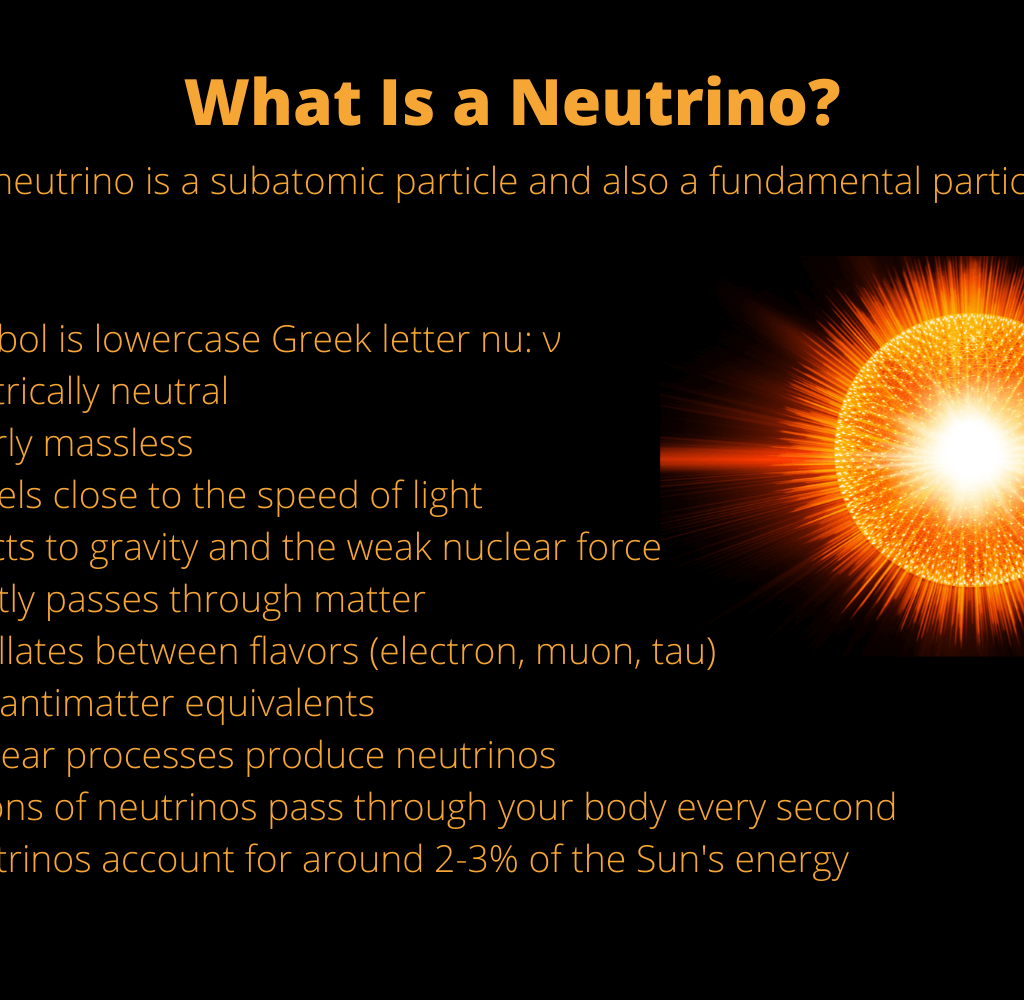
Neutrinos are fundamental subatomic particles that play a crucial role in the universe’s underlying processes. Often dubbed “ghost particles,” neutrinos are generated in vast quantities through nuclear reactions occurring in stars, supernovae, and radioactive decay. Their defining characteristics include an extremely small mass and the absence of electric charge, enabling them to traverse ordinary matter almost without interaction. Consequently, billions of neutrinos pass through every human body each second unnoticed, making their detection a formidable scientific challenge.
- Origin:
Neutrinos primarily emerge from stellar nuclear fusion, supernova explosions, and radioactive decay within Earth’s crust. - Properties:
They possess negligible mass and no electric charge, allowing them to penetrate matter with minimal interaction. - Detection Difficulty:
Their weak interaction with matter necessitates highly sensitive detectors, often placed underground or underwater to shield from cosmic interference.
Neutrino Detection: Techniques and Challenges
Capturing neutrinos requires sophisticated instrumentation designed to isolate these elusive particles from background noise. Detectors are typically located deep beneath the Earth’s surface or submerged in large water bodies to minimize interference from cosmic rays and other particles. These facilities employ materials sensitive to neutrino interactions, such as certain isotopes, to register the rare events when neutrinos collide with atomic nuclei.
The process of neutrino detection is akin to seeking intangible phantoms embedded within the fabric of reality, demanding precision, patience, and innovative technology.
Archaeology’s Unexpected Role in Neutrino Research
While the connection between archaeology and particle physics may seem unconventional, ancient artifacts and geological formations uncovered during archaeological excavations can contribute valuable materials for neutrino studies. For example, the remnants of Roman engineering-such as aqueducts constructed from durable limestone and terracotta-may contain isotopes sensitive to neutrino interactions. These materials, preserved over millennia, could enhance the capabilities of neutrino detectors.
Moreover, archaeological sites often reveal unique geological contexts where trace radioactive elements have accumulated, potentially serving as natural laboratories for neutrino research. This intersection invites a multidisciplinary approach, blending historical exploration with cutting-edge physics.
Geological and Isotopic Insights from Historical Sites
Ancient sites provide more than cultural and historical value; they also offer geological formations enriched with isotopes relevant to neutrino detection. Over thousands of years, certain rocks and sediments may have concentrated radioactive materials, which physicists can analyze to improve detector sensitivity and accuracy.
- Isotope Accumulation:
Geological layers at archaeological sites may harbor isotopes that interact with neutrinos, aiding in their detection. - Material Durability:
Roman construction materials like limestone and terracotta have preserved isotopic signatures useful for scientific analysis.
Bridging Disciplines: Challenges in Collaborative Research
Integrating archaeology with neutrino physics presents significant hurdles due to differing methodologies, objectives, and terminologies. Archaeologists prioritize cultural context and chronological sequencing, whereas physicists focus on isotopic data and experimental reproducibility. Harmonizing these perspectives requires deliberate communication and shared goals.
Additionally, the physical extraction and transportation of archaeological materials for scientific analysis must balance technical feasibility with ethical considerations. Preserving the integrity of historically significant sites is paramount, necessitating careful planning to avoid damaging cultural heritage while pursuing scientific advancement.
Ethical and Logistical Considerations in Excavation
Excavating ancient sites for scientific purposes involves navigating complex ethical landscapes. Invasive procedures risk damaging invaluable cultural artifacts, so collaboration must ensure that archaeological preservation remains a priority. Furthermore, transporting materials to laboratories demands meticulous handling to maintain sample integrity and comply with legal frameworks protecting heritage sites.
Leveraging Modern Technology: Data Analysis and Machine Learning
The vast datasets generated by neutrino detectors require advanced computational tools for effective analysis. Emerging techniques such as machine learning, though relatively new to archaeology, offer promising avenues for integrating historical data with particle physics research. This synergy could unlock novel insights into both ancient civilizations and fundamental particle behavior.
By combining archaeological stratigraphy with isotopic mapping and computational analytics, researchers can foster innovative discoveries that transcend traditional disciplinary boundaries.
Collaborative Innovation: The Future of Neutrino and Archaeological Research
The partnership between archaeologists and physicists holds the potential to revolutionize our understanding of both the cosmos and human history. Joint efforts could involve simultaneous excavation and isotopic analysis, revealing hidden narratives encoded in artifacts and geological layers alike. This interdisciplinary approach encourages creativity and broadens the scope of scientific inquiry.
Significance of Integrating Ancient Civilizations with Modern Science
Exploring the relationship between ancient engineering feats and neutrino physics exemplifies the interconnectedness of human knowledge. Utilizing remnants of past civilizations to advance contemporary scientific goals not only enriches our comprehension of the universe but also deepens appreciation for cultural heritage. This fusion underscores the value of multidisciplinary research in addressing complex questions.
Conclusion: Embracing Multidisciplinary Exploration
The imaginative concept of enlisting Roman engineering in the pursuit of neutrino detection transcends mere speculation, offering a tangible framework for collaborative research. Despite inherent challenges, the convergence of archaeology and particle physics promises to expand the frontiers of knowledge. By embracing this alliance, scientists and historians alike can contribute to a richer, more integrated understanding of both the microcosmic and macrocosmic realms.
FAQ
What are neutrinos?
Neutrinos are subatomic particles with very low mass and no electric charge that interact weakly with matter, making them difficult to detect.
How can archaeology contribute to neutrino research?
Archaeological materials, such as those from Roman engineering like aqueducts, may contain isotopes useful in neutrino detection, and ancient geological formations may harbor trace radioactive materials relevant to neutrino studies.
What challenges exist in collaborating between archaeology and physics?
Challenges include differing methodologies, terminologies, priorities, ethical considerations of excavating historical sites, and balancing cultural heritage preservation with scientific objectives.
Why are neutrino detectors often placed underground or underwater?
To shield the detectors from cosmic rays and other background interference, improving the chances of observing neutrinos.





Leave a Reply