
Short Answer
Definition of Wandering Black Holes
Wandering black holes are massive cosmic objects that move through galaxies rather than remaining fixed at their centers. Unlike the traditional view of black holes as stationary entities anchored in galactic cores, these black holes traverse the stellar environments of galaxies, interacting dynamically with their surroundings. They are often classified as intermediate-mass black holes, which are larger than typical stellar black holes but smaller than supermassive black holes found at galactic centers.
- Intermediate-Mass Black Holes:
Black holes with masses ranging between stellar and supermassive scales, typically from hundreds to hundreds of thousands of solar masses. - Nomadic Behavior:
The characteristic movement of these black holes through the galaxy, as opposed to being gravitationally bound to a fixed position.
Origins and Formation Theories
The genesis of wandering black holes remains a subject of active research and debate. Several hypotheses attempt to explain how such massive objects come to roam freely within galaxies:
- Ejection from Galactic Centers:
Gravitational interactions or mergers involving supermassive black holes may propel intermediate-mass black holes away from the galactic core. - Isolated Formation:
These black holes might form independently through the collapse of massive star clusters or via successive mergers of smaller black holes. - Cosmic Collisions:
Interactions between galaxies can dislodge black holes, setting them adrift in the galactic outskirts.
Mechanics of Wandering Black Holes
As these black holes traverse the galaxy, they exert gravitational forces on nearby stars, gas clouds, and dark matter. This movement distorts the local space-time fabric and influences the dynamics of their stellar neighborhoods. Their interactions can trigger phenomena such as star formation bursts or gas accretion events, providing unique observational opportunities to study galactic evolution and gravitational effects on a localized scale.
Observational Techniques and Technological Advances
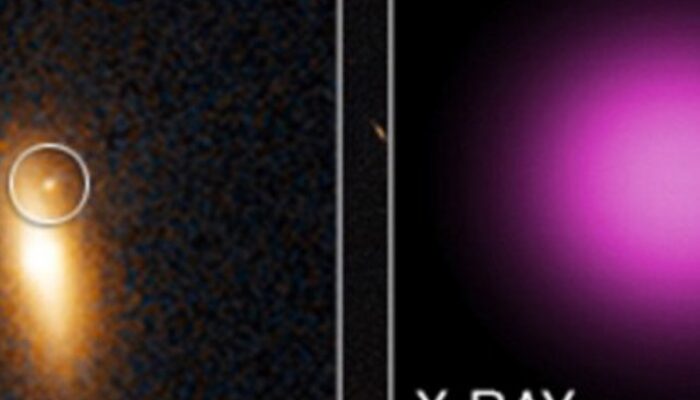
Detecting wandering black holes requires cutting-edge technology and innovative methods. Astronomers utilize high-resolution imaging combined with spectral analysis to identify X-ray emissions characteristic of black holes. Additionally, subtle gravitational influences on the motion of nearby stars and gas clouds serve as indirect evidence of their presence. These techniques highlight the precision and sophistication of modern astrophysical instrumentation, enabling the discovery of black holes that defy traditional stationary models.
Implications for Gravitational Wave Astronomy
Wandering black holes play a significant role in the study of gravitational waves-ripples in space-time predicted by Einstein’s general relativity. Their mobility increases the likelihood of encounters and mergers with other massive objects, events that generate detectable gravitational wave signals. Understanding the behavior and frequency of these nomadic black holes enhances predictions for gravitational wave observatories such as LIGO and Virgo, advancing the field of multi-messenger astronomy.
Impact on Galactic Dynamics and Dark Matter Research
The presence of wandering black holes influences the structural and dynamical evolution of galaxies. Their gravitational interactions can redistribute mass and energy, affecting star orbits and gas cloud behavior. Moreover, their gravitational signatures may provide indirect clues about the distribution of dark matter within galaxies, as these elusive components affect the motion of visible matter and black holes alike.
Common Misconceptions About Black Holes
Black holes are always stationary and fixed at galactic centers.
Some black holes, especially intermediate-mass ones, can move freely through galaxies, challenging the notion of static black holes.
All black holes form only from collapsing stars.
Intermediate-mass black holes may form through complex processes such as mergers of smaller black holes or ejection from galactic centers.
Philosophical and Scientific Significance
The discovery of wandering black holes reshapes our understanding of the universe as a dynamic and ever-changing entity. It challenges the perception of cosmic constancy, emphasizing a universe where galaxies collide, stars explode, and massive black holes roam freely. This evolving perspective inspires deeper inquiry into the nature of space-time, gravitation, and the cosmic environment that shapes our existence.
Future Prospects and Research Directions
As observational technologies continue to advance, the detection of additional wandering black holes is expected to increase. These discoveries will provide invaluable insights into fundamental cosmic processes, including galaxy formation, black hole evolution, and the behavior of dark matter. The ongoing study of these nomadic giants promises to expand our cosmic horizons and refine theoretical models, marking a new era in astrophysical research.
FAQ
What are wandering black holes?
Wandering black holes are massive cosmic objects that move through galaxies instead of being fixed at their centers.
How do wandering black holes influence their surroundings?
Their movement can distort space-time, influence star formation, and affect the dynamics of gas clouds.

Leave a Reply