
Short Answer
Definition
The concept that meteorites contributed to the origin of life on Earth is a compelling hypothesis within astrobiology, bridging planetary science and biology. It suggests that organic molecules carried by meteorites played a crucial role in initiating life by acting as catalysts in the complex chemical environment of early Earth. This idea proposes that these extraterrestrial objects delivered essential molecular ingredients, potentially sparking the emergence of life as we know it.
Characteristics of Meteorites
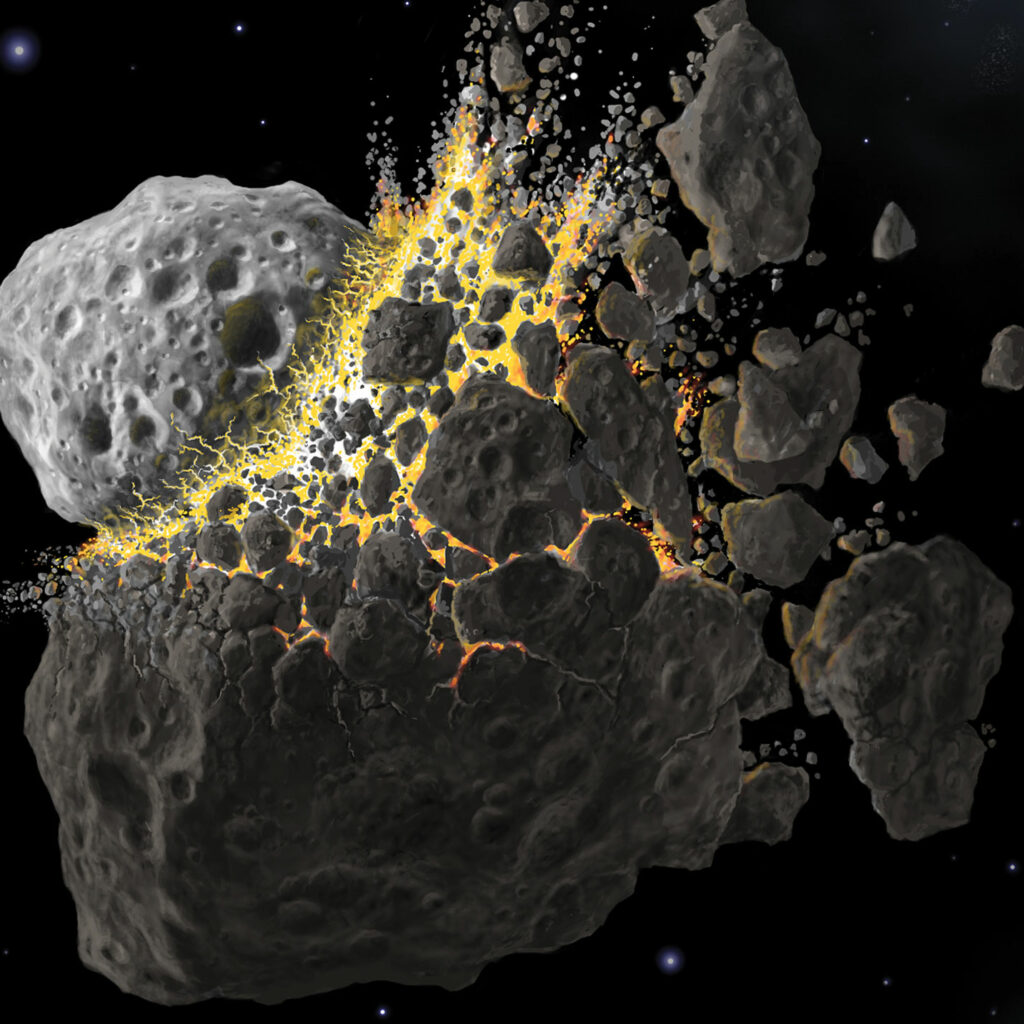
Meteorites are fragments of celestial bodies such as asteroids, comets, and larger planetary remnants that survived the violent processes of the solar system’s formation. When these objects enter Earth’s atmosphere, they create bright trails before impacting the surface. Beyond their dramatic entry, meteorites represent a source of diverse biochemical materials that may have influenced Earth’s early chemical landscape.
Types and Composition
- Carbonaceous Chondrites:
These are among the most primitive meteorites, rich in organic compounds including amino acids, which are fundamental to protein formation. - Mineral Content:
Meteorites also contain minerals such as silicates and sulfides, which could have served as catalysts in prebiotic chemical reactions on early Earth.
Mechanisms Linking Meteorites to Life’s Origins
The theory of abiogenesis, which posits that life arose spontaneously from non-living matter, is increasingly examined through the framework of panspermia. This concept suggests that life’s essential components, or even life itself, originated elsewhere in the universe and were transported to Earth via meteorites. Laboratory experiments simulating early Earth conditions have demonstrated that biomolecules like nucleobases can form and polymerize on surfaces similar to those found in meteorites, supporting this hypothesis.
Scientific Evidence and Analytical Advances
Modern analytical techniques, such as mass spectrometry, have revolutionized the study of meteorites by enabling detailed examination of their molecular composition. These analyses have revealed a wide array of organic molecules, from simple hydrocarbons to complex structures resembling biological molecules. Additionally, isotopic studies of meteorites provide insights into the primordial conditions of the solar system, offering clues about the environment in which these organic compounds formed and were preserved.
Challenges and Counterarguments
- Misconception: Organic molecules cannot survive the harsh conditions of space travel.
Correction: While cosmic radiation, extreme temperatures, and vacuum pose significant threats, the discovery of extremophiles on Earth-organisms thriving in extreme environments-suggests that some life forms or organic compounds could endure space conditions. - Misconception: Meteorites are too rare to have significantly influenced life’s origin.
Correction: Geological records indicate frequent meteorite impacts during Earth’s early history, potentially delivering substantial amounts of organic material over time.
Role in Earth’s Geological and Biological History
The delivery of organic compounds by meteorites may have acted as both a catalyst and a contingency mechanism during periods of environmental upheaval, such as mass extinctions. These extraterrestrial inputs could have contributed to the resilience and diversification of life by providing new biochemical resources that facilitated evolutionary radiations.
Significance in Astrobiology and Cosmology
Studying meteorites not only sheds light on the origins of life on Earth but also informs the broader search for life elsewhere in the universe. These cosmic objects serve as natural laboratories for understanding the chemical pathways that lead to life and suggest that the universe may be more interconnected through shared biochemical processes than previously thought.
Conclusion
The investigation into meteorites as potential seeds of life on Earth opens a profound window into the interplay between cosmic phenomena and biological emergence. Each meteorite carries a narrative of cosmic history and biochemical potential, offering valuable insights into one of humanity’s most enduring mysteries: the origin of life. Ongoing research continues to unravel this complex relationship, promising to deepen our understanding of life’s cosmic context.
FAQ
What are meteorites?
Meteorites are fragments of celestial bodies that survive their passage through Earth's atmosphere and impact the surface, often containing diverse biochemical materials.
How do meteorites relate to the origin of life?
Meteorites may have delivered organic compounds that acted as catalysts for the chemical reactions necessary for the emergence of life on Earth.



Leave a Reply