

Short Answer
Definition of Elementary Particles
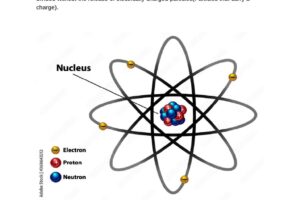
Elementary particles are the most fundamental units of matter and energy, serving as the foundational components from which all physical substances and forces arise. These particles are indivisible within the current scope of scientific understanding, forming the essential building blocks of the universe.
- Quarks:
Fundamental constituents of protons and neutrons, existing in six flavors and carrying fractional electric charges. - Leptons:
A family of particles including electrons and neutrinos, characterized by their lack of strong interaction. - Bosons:
Force-carrying particles responsible for mediating fundamental interactions such as electromagnetism and the strong and weak nuclear forces.
Historical Evolution of Particle Theory
The concept of elementary particles has evolved through centuries of philosophical and scientific inquiry. Early thinkers like Democritus proposed the idea of indivisible atoms as the basic units of matter. This notion was refined in the 19th century by John Dalton’s atomic theory, which laid the groundwork for modern chemistry. The 20th century ushered in quantum mechanics and the standard model of particle physics, providing a comprehensive framework to classify and understand these particles and their interactions.
Quantum Characteristics and Duality
Elementary particles exhibit a unique dual nature, behaving both as discrete particles and as waves. This wave-particle duality is a cornerstone of quantum mechanics, leading to phenomena that challenge classical intuition. For instance, particles do not possess definite positions or velocities until measured, existing instead as probability waves. This principle raises profound questions about the nature of reality and the role of observation in defining physical states.
Entanglement and Non-Locality
One of the most intriguing quantum phenomena is entanglement, where pairs or groups of particles become interconnected such that the state of one instantly influences the state of another, regardless of the distance separating them. This non-local correlation defies classical concepts of separateness and locality, suggesting a deeply interconnected universe where information transcends conventional spatial constraints.
Significance in Cosmology and Particle Physics
Elementary particles are not only fundamental to matter but also pivotal in understanding the cosmos. The discovery of the Higgs boson, for example, confirmed the existence of the Higgs field, which endows particles with mass. This insight bridges the microscopic world of particles with the macroscopic universe, linking subatomic physics to cosmological phenomena. Additionally, the mass-energy equivalence principle, expressed by Einstein’s equation E=mc², underscores the profound relationship between matter and energy at all scales.
Technological and Practical Implications
Research into elementary particles has driven numerous technological advancements that permeate everyday life. Innovations such as semiconductors, which are foundational to modern electronics, and sophisticated medical imaging techniques owe their development to insights from particle physics. These practical applications highlight the tangible benefits of exploring the subatomic world.
Unresolved Questions and Theoretical Frontiers
Despite the successes of the standard model, many mysteries remain. Scientists continue to investigate whether elementary particles are truly fundamental or composed of even smaller entities. Theories like string theory propose that particles are manifestations of tiny vibrating strings, suggesting a deeper layer of reality. Moreover, the enigmatic nature of dark matter and dark energy, which constitute the majority of the universe’s mass-energy content, points to physics beyond the current models and fuels ongoing research.
Philosophical Reflections on Elementary Particles
The study of elementary particles transcends pure science, inviting philosophical contemplation about existence and the universe’s nature. The ephemeral lifecycle of particles, marked by continuous creation and annihilation, mirrors broader themes of impermanence and transformation. This interplay between the tangible and the abstract enriches our understanding of reality and humanity’s place within the cosmic order.
Common Misconceptions
Elementary particles are indivisible and unchanging.
While currently considered fundamental, ongoing research explores the possibility that these particles may have substructures or be excitations of more basic entities.
Particles have definite positions and velocities at all times.
Quantum mechanics reveals that particles exist in probabilistic states until measured, challenging classical deterministic views.
Entanglement allows faster-than-light communication.
Although entangled particles exhibit instantaneous correlations, this phenomenon does not enable information transfer faster than light, preserving causality.
Why Understanding Elementary Particles Is Crucial
Grasping the nature of elementary particles is essential for advancing both fundamental science and practical technology. These particles underpin the structure of matter and the forces governing the universe, making their study vital for unraveling cosmic mysteries. Furthermore, the knowledge gained fuels innovations that improve human life, demonstrating the profound impact of particle physics on society and our comprehension of existence.
FAQ
What are elementary particles?
They are the most fundamental units of matter and energy, making up all physical substances.
Why are elementary particles important?
They help in understanding the structure of the universe and the forces that govern it.




Leave a Reply