

Short Answer
Definition of Nuclear Physics
Nuclear physics is a specialized branch of physics focused on studying the components and interactions within atomic nuclei. It explores the behavior, structure, and forces that govern protons and neutrons-the nucleons-inside the nucleus. This field encompasses a wide range of phenomena including nuclear reactions, radioactive decay, and the fundamental forces that hold the nucleus together.
Historical Development
The evolution of nuclear physics is marked by pioneering contributions from scientists such as Ernest Rutherford, Niels Bohr, and Enrico Fermi. Their experimental breakthroughs laid the foundation for understanding atomic structure and nuclear processes. Rutherford’s gold foil experiment revealed the existence of a dense atomic nucleus, while Bohr’s model introduced quantized energy levels. Fermi’s work on nuclear reactions further expanded the field, leading to practical applications in energy generation and medical technologies. This historical progression highlights how nuclear physics has grown from fundamental discoveries to impactful real-world uses.
Core Principles and Concepts
To effectively study nuclear physics, one must first master several fundamental concepts:
- Atomic Nucleus:
Comprised of protons and neutrons, the nucleus is held together by the strong nuclear force, which overcomes the electrostatic repulsion between positively charged protons. - Nuclear Forces:
The strong interaction is the primary force binding nucleons, while other forces like the weak nuclear force play roles in radioactive decay. - Radioactivity and Decay:
Processes such as alpha, beta, and gamma decay describe how unstable nuclei transform into more stable configurations. - Binding Energy:
The energy required to disassemble a nucleus into its constituent nucleons, reflecting nuclear stability. - Quantum Mechanics:
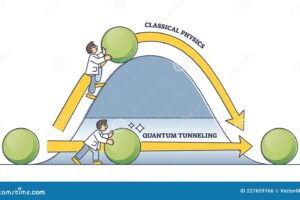
Governs the behavior of particles at the subatomic level, introducing principles like wave-particle duality and uncertainty.
A solid understanding of these concepts, along with proficiency in mathematics-especially calculus and differential equations-is essential for grasping more advanced nuclear physics topics.
Educational Pathways and Learning Resources
Those interested in nuclear physics can pursue formal education through undergraduate and graduate programs that combine theoretical coursework with laboratory experiments. These programs often cover nuclear reactions, radioactive decay, and quantum mechanics, providing hands-on experience to reinforce learning. Additionally, a wealth of online materials, textbooks, and scholarly articles support self-study. Collaborative learning through study groups and tutoring can further enhance comprehension by fostering discussion and problem-solving skills.
Challenges in Learning Nuclear Physics
Despite its fascinating nature, nuclear physics presents several learning obstacles:
- Mathematical Complexity:
The field relies heavily on advanced mathematics to model nuclear interactions and predict experimental outcomes. - Abstract Concepts:
Phenomena such as wave-particle duality and the probabilistic nature of quantum mechanics can be counterintuitive and difficult to visualize. - Conceptual Shifts:
Moving from classical deterministic physics to quantum probabilistic frameworks requires significant cognitive adjustment. - Emotional Resilience:
Persistence and determination are crucial to overcoming the initial intimidation posed by the subject’s depth and breadth.
Quantum Mechanics and Nuclear Physics
Quantum mechanics forms the theoretical backbone of nuclear physics, explaining the behavior of particles at atomic and subatomic scales. Key principles include:
- Wave-Particle Duality:
Particles such as protons and neutrons exhibit both wave-like and particle-like properties. - Uncertainty Principle:
It is impossible to simultaneously know certain pairs of physical properties, like position and momentum, with absolute precision.
These principles challenge classical intuitions and require learners to adopt new ways of thinking about matter and energy.
Practical Applications of Nuclear Physics
Nuclear physics has far-reaching implications across various industries and scientific fields:
- Energy Production:
Nuclear fission powers reactors that generate electricity on a large scale. - Medical Technology:
Radioisotopes are used in diagnostic imaging and cancer treatments, improving healthcare outcomes. - Security and Industry:
Nuclear techniques assist in material analysis, radiation detection, and national security measures.
The tangible benefits of nuclear physics often inspire learners to engage deeply with the subject despite its challenges.
Interdisciplinary Connections and Ongoing Research
Nuclear physics intersects with numerous scientific disciplines, including astrophysics, materials science, and environmental studies. Research in these areas continues to push the boundaries of knowledge, offering opportunities for innovation and discovery. As students advance, they may contribute to cutting-edge developments, transforming initial difficulties into rewarding intellectual achievements.
Common Misconceptions About Nuclear Physics
Nuclear physics is only about nuclear weapons.
While nuclear weapons are a part of the field’s history, nuclear physics encompasses a broad range of peaceful applications such as energy, medicine, and scientific research.
Nuclear physics is too difficult for most people to understand.
Although challenging, with proper education, resources, and perseverance, many learners can successfully grasp nuclear physics concepts.
Significance of Nuclear Physics
Nuclear physics plays a vital role in advancing scientific knowledge and technological progress. Its principles underpin critical technologies that impact energy sustainability, medical diagnostics, and national security. Moreover, the field’s continuous evolution fosters innovation and deepens our understanding of the universe at its most fundamental level. For students and professionals alike, mastering nuclear physics opens doors to contributing meaningfully to science and society.
FAQ
Is nuclear physics difficult to learn?
Yes, it involves advanced mathematics and abstract concepts, but with the right resources, it can be mastered.
What are the main applications of nuclear physics?
Nuclear physics is used in energy production, medical technology, and various scientific research fields.





Leave a Reply