
Short Answer
Definition of Elementary Particles
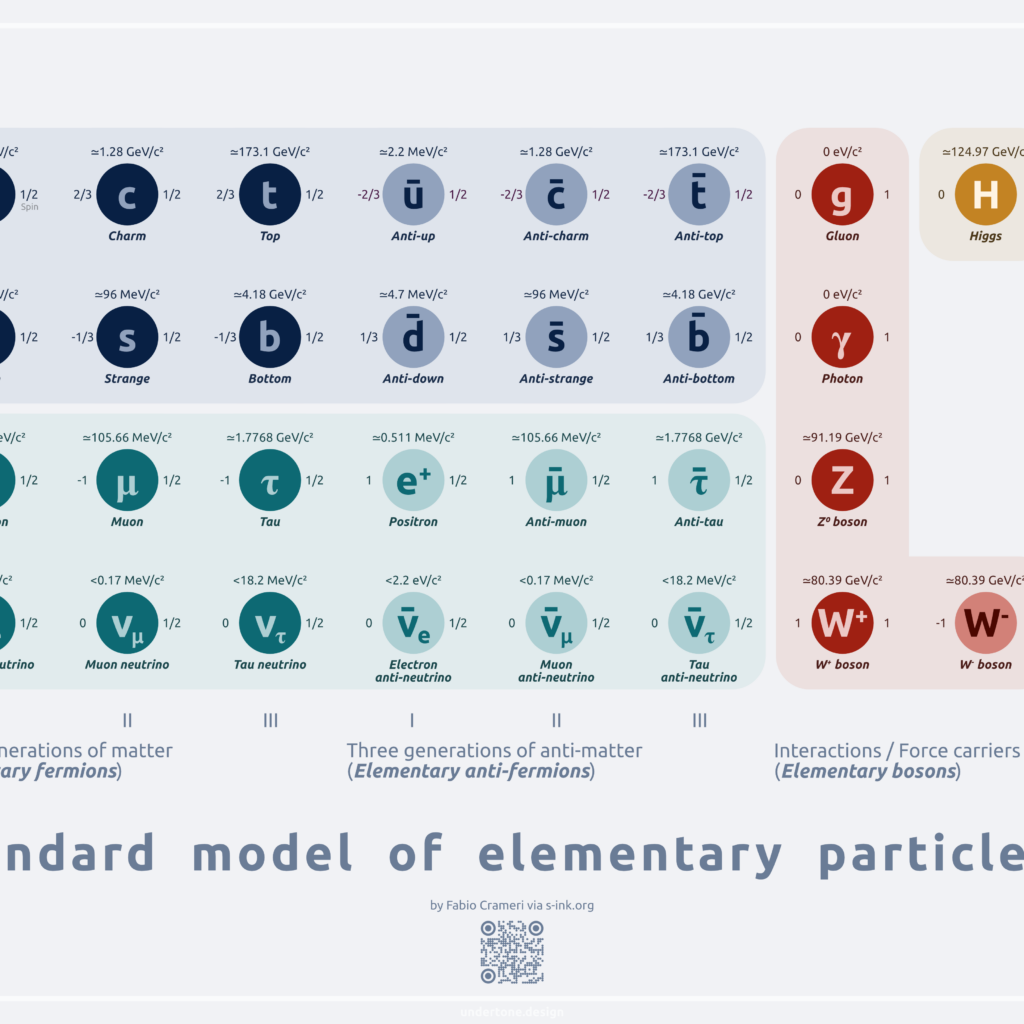
Elementary particles are the most basic units of matter, forming the foundation of everything in the universe. These particles, which include quarks, leptons, and gauge bosons, are indivisible and exist at scales far smaller than the wavelength of visible light. Because of their minuscule size, they cannot be observed directly through conventional optical means, posing a significant challenge to human perception and scientific observation.
Challenges in Visualizing Elementary Particles
Traditional vision depends on photons interacting with objects large enough to reflect or emit light detectable by the human eye. However, elementary particles are so tiny that visible light cannot resolve them. This limitation necessitates alternative approaches to detect and understand these fundamental constituents of matter. Instead of direct visualization, scientists rely on indirect evidence and sophisticated technologies to infer their presence and properties.
Indirect Observation Techniques
Particle Accelerators and Collision Experiments
One of the primary methods to study elementary particles involves particle accelerators, massive machines that accelerate charged particles to near-light speeds and collide them. These high-energy collisions produce a variety of secondary particles, which can be detected and analyzed to reveal information about the original particles involved. A notable example is the Large Hadron Collider (LHC), which confirmed the existence of the Higgs boson, a particle responsible for imparting mass to other particles through the Higgs mechanism. Although the LHC does not produce direct images of particles, it provides compelling empirical evidence of their existence through the detection of collision byproducts.
Quantum Field Theory Perspective
Quantum field theory (QFT) offers a conceptual shift by describing particles as excitations or disturbances in underlying fields that permeate all of space-time. Instead of viewing particles as discrete objects, QFT treats them as manifestations of these continuous fields. This perspective suggests that visualizing elementary particles might be better approached by representing the fields themselves. Developing visualization tools that can depict these fields could provide deeper insights into particle behavior and interactions.
Advanced Theoretical Approaches
Quantum Entanglement and Particle Visualization
Quantum entanglement is a phenomenon where two or more particles become linked such that the state of one instantly influences the state of the other, regardless of the distance between them. This non-local connection challenges classical ideas of causality and locality. Researchers speculate that by manipulating entangled particles, it might be possible to indirectly observe or infer properties of elementary particles, offering a novel route to “see” particles through their entangled partners.
Mathematical Frameworks: Scattering Amplitudes
Theoretical physicist Nima Arkani-Hamed has introduced the concept of scattering amplitudes as a way to mathematically represent particle interactions. These amplitudes encapsulate the probabilities and dynamics of particles colliding and interacting. Translating these abstract mathematical expressions into visual forms remains a significant challenge but holds promise for enhancing our understanding of particle behavior through visual representation.
Technological Innovations in Particle Detection
Quantum Sensors
Quantum sensors leverage the principles of quantum mechanics to achieve extraordinary sensitivity in measuring physical phenomena. When integrated with particle collision experiments, these sensors can detect subtle fluctuations in fields associated with particle interactions. This capability allows scientists to indirectly observe the presence and characteristics of elementary particles with unprecedented precision.
Computational Simulations and Visualizations
High-performance computing and advanced data analytics have enabled the creation of detailed simulations that model particle interactions and formations. These computational visualizations provide conceptual images of processes occurring at the quantum level, which are otherwise invisible to direct observation. By simulating particle behavior, researchers can better understand the forces and dynamics at play within the subatomic world.
Interdisciplinary Contributions to Particle Visualization
Collaboration between physicists, computer scientists, and artists has opened new avenues for representing elementary particles and their interactions. Artists contribute creative interpretations that complement scientific data, producing engaging and informative visualizations. This interdisciplinary approach enriches the scientific narrative and helps communicate complex quantum phenomena to broader audiences.
Why Visualizing Elementary Particles Is Important
Understanding and visualizing elementary particles is crucial for advancing fundamental physics, technology, and our comprehension of the universe. These particles underpin all matter and govern the forces that shape reality. Improved visualization techniques not only aid scientific discovery but also enhance education and public engagement with cutting-edge physics. As technology and theory evolve, so too does our ability to explore and depict the quantum realm, bringing us closer to unraveling the mysteries of existence at its most elemental level.
Summary
While directly seeing elementary particles remains beyond current optical capabilities, a variety of theoretical and technological strategies provide indirect means of observation. From particle accelerators and quantum field theory to entanglement, quantum sensors, and computational simulations, these approaches collectively push the boundaries of how we detect and conceptualize the fundamental building blocks of matter. Interdisciplinary efforts further enrich this quest, blending science and art to visualize the invisible and deepen our understanding of the quantum universe.
FAQ
What are elementary particles?
Elementary particles are the fundamental building blocks of matter, including quarks and leptons.
Why can't we see elementary particles directly?
They are too small to be resolved by visible light.
What is quantum field theory?
A theoretical framework that describes particles as excitations in fields.






Leave a Reply