
Short Answer
Definition of Atoms and Molecules
In the field of chemistry, understanding the difference between atoms and molecules is fundamental. Atoms are the smallest units of matter, indivisible by chemical means, composed of protons, neutrons, and electrons arranged in a specific structure. Molecules, on the other hand, are formed when two or more atoms chemically bond together, creating a more complex entity that exhibits distinct chemical properties.
- Atom:
The basic unit of a chemical element, consisting of a nucleus surrounded by electrons. - Molecule:
A group of atoms bonded together, representing the smallest unit of a compound that retains its chemical characteristics.
Understanding the Nitrogen Atom
Nitrogen is an element found in group 15 of the periodic table, characterized by having five electrons in its outermost shell, known as valence electrons. This electron configuration makes nitrogen highly inclined to form strong covalent bonds with other atoms to achieve a stable electronic arrangement. The nitrogen atom itself is a fundamental building block, but its behavior becomes more intriguing when it interacts with other nitrogen atoms.
The Nature of the N2 Molecule
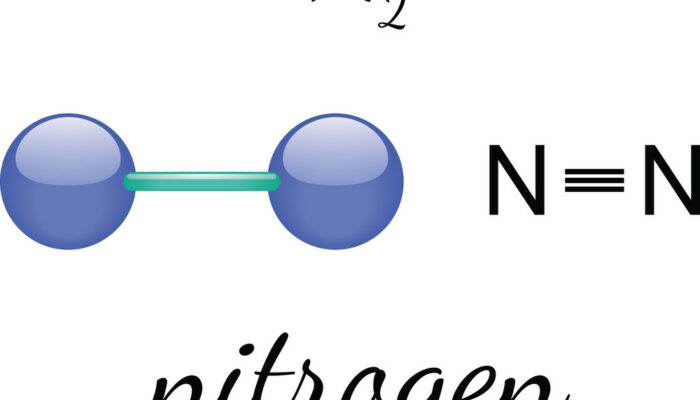
The molecule N2 consists of two nitrogen atoms bonded together, making it a diatomic molecule. These atoms are connected by a triple covalent bond, which involves the sharing of three pairs of electrons. This triple bond is one of the strongest known in chemistry, providing the molecule with exceptional stability and resilience under various conditions.
Imagine the two nitrogen atoms as partners in a perfectly coordinated dance, their shared electrons acting as the bonds that hold them together while allowing each atom to maintain its identity. This molecular formation exemplifies how individual atoms can unite to form a stable and cohesive structure.
Scientific Classification of N2
According to the American Chemical Society, a molecule is defined as the smallest particle of a substance that retains its chemical properties. By this standard, N2 qualifies unequivocally as a molecule because it consists of two nitrogen atoms joined by a robust triple bond, maintaining the chemical characteristics of nitrogen gas.
Role of N2 in the Atmosphere
Nitrogen gas makes up about 78% of Earth’s atmosphere, serving as an inert filler that stabilizes the gaseous envelope surrounding our planet. The remarkable stability of N2 is due to its strong triple bond, which makes it largely unreactive under normal atmospheric conditions. This inertness is crucial for maintaining atmospheric balance but also means that nitrogen gas requires specific processes to become chemically active.
Nitrogen Fixation and Biological Importance
Despite its inert nature, N2 plays a vital role in biological systems through the process of nitrogen fixation. This natural mechanism converts diatomic nitrogen into reactive nitrogen compounds, such as ammonia, which are essential for synthesizing amino acids-the fundamental components of proteins. This transformation is critical for sustaining life, as it integrates nitrogen into the biochemical cycles that support ecosystems.
Industrial Applications of N2
Beyond its natural significance, nitrogen gas is indispensable in various industrial sectors. It is commonly used to create inert atmospheres in manufacturing processes, preventing unwanted chemical reactions. Additionally, nitrogen is a key ingredient in producing fertilizers, explosives, and pharmaceuticals. The Haber-Bosch process, a landmark industrial method, synthesizes ammonia by combining nitrogen and hydrogen gases under high pressure and temperature, highlighting the practical importance of N2 in food production and industrial chemistry.
Philosophical Reflections on Nitrogen’s Stability
The stability and inertness of the N2 molecule can also be viewed metaphorically, symbolizing balance and steadiness. Just as nitrogen’s unreactive nature provides a stable backdrop for life’s complex chemical interactions, this concept can be extended to philosophical ideas about equilibrium in life, where not all elements need to be dynamic or reactive to contribute meaningfully to growth and development.
Summary: The Significance of N2
In conclusion, N2 is definitively a molecule formed by two nitrogen atoms linked by a strong triple bond. Its importance transcends the laboratory, influencing natural ecosystems, industrial processes, and even philosophical thought. Recognizing N2 as more than just a diatomic molecule allows us to appreciate its role as a symbol of connection, durability, and transformation-qualities that resonate deeply within both scientific inquiry and the broader human experience.
FAQ
What is N2?
N2 is a diatomic molecule consisting of two nitrogen atoms bonded by a triple covalent bond.
Why is N2 important in the atmosphere?
N2 makes up about 78% of Earth’s atmosphere and is essential for maintaining atmospheric balance.
What is nitrogen fixation?
Nitrogen fixation is the process by which diatomic nitrogen (N2) is converted into reactive nitrogen compounds, crucial for life.





Leave a Reply