
Short Answer
Definition of States of Matter
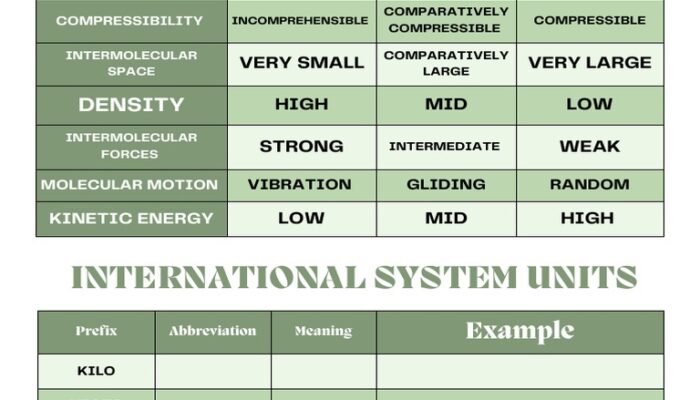
Matter, fundamentally defined as any substance possessing mass and occupying space, has traditionally been classified into three primary states: solid, liquid, and gas. These classical states describe the physical forms in which matter commonly exists under everyday conditions. However, advances in physics and materials science have revealed a far more intricate landscape, suggesting that matter can exist in numerous additional states beyond this conventional triad.
- Solid:
Characterized by a fixed shape and volume, with particles tightly packed in a structured arrangement. - Liquid:
Exhibits a definite volume but adapts to the shape of its container, with particles more loosely connected than in solids. - Gas:
Lacks fixed shape and volume, with particles moving freely and filling any available space.
Expanding the Spectrum: Beyond the Classical States
While the three classical states suffice for many practical purposes, scientific inquiry has uncovered a variety of exotic states that challenge these boundaries. These include plasma, Bose-Einstein condensates, fermionic condensates, superfluids, supersolids, and more. Each of these states arises under specific conditions of temperature, pressure, or energy, revealing the complex behavior of matter at both macroscopic and quantum scales.
Plasma
Plasma is an ionized gas consisting of free electrons and ions, exhibiting collective electromagnetic behavior distinct from neutral gases. It is the most abundant state of visible matter in the universe, found in stars and lightning, and is characterized by high energy and conductivity.
Bose-Einstein Condensates (BECs)
Formed near absolute zero temperatures, BECs represent a quantum state where particles occupy the same ground energy level, behaving as a single quantum entity. This state reveals macroscopic quantum phenomena, such as superfluidity and coherence.
Fermionic Condensates
Similar to BECs but composed of fermions, these condensates form under ultra-cold conditions and exhibit superfluidity, providing insights into quantum mechanics and particle interactions.
Exotic and Emerging States of Matter
Recent research has introduced even more unconventional states that blur the lines between traditional categories, such as superfluids, supersolids, time crystals, and quark-gluon plasma. These states often emerge under extreme or finely tuned conditions, expanding our understanding of matter’s versatility.
- Superfluids:
Fluids that flow without viscosity, defying classical fluid dynamics and enabling phenomena like frictionless flow. - Supersolids:
A paradoxical state combining the rigidity of solids with the frictionless flow of superfluids, challenging conventional phase distinctions. - Time Crystals:
Structures that exhibit periodic motion in their ground state, breaking temporal symmetry and opening new frontiers in quantum physics. - Quark-Gluon Plasma:
An ultra-hot, dense state of matter where quarks and gluons, normally confined within protons and neutrons, exist freely, resembling conditions moments after the Big Bang.
Phase Transitions and Conditions for State Changes
The transformation of matter from one state to another is governed by phase transitions, which occur when external parameters such as temperature and pressure vary. These transitions can be simple, like ice melting into water, or complex, involving quantum phase changes that give rise to novel states. The multidimensional parameter space of physical conditions allows matter to adopt a wide array of configurations, each with unique properties.
Mathematical Framework and Physical Principles
The study of states of matter often involves thermodynamics and quantum mechanics. Phase transitions can be described by equations relating temperature (T), pressure (P), and volume (V), such as the Clausius-Clapeyron relation for first-order transitions:
dP/dT = L / (T ΔV)
- dP/dT: Slope of the phase boundary in pressure-temperature space
- L: Latent heat of the transition
- ΔV: Change in volume during the transition
Quantum states like Bose-Einstein condensates require quantum statistical mechanics for their description, involving wavefunctions and particle statistics (Bose-Einstein or Fermi-Dirac distributions).
Practical Applications and Technological Impact
The discovery and manipulation of diverse states of matter have profound implications across multiple fields. Liquid crystals, for example, are essential in display technologies such as LCD screens. Superconductors and superfluids offer potential breakthroughs in energy transmission and quantum computing. Understanding quark-gluon plasma aids in particle physics and cosmology, shedding light on the universe’s earliest moments.
Common Misconceptions About States of Matter
Matter exists only in three states.
Modern physics recognizes many more states, including plasma, condensates, and exotic quantum phases.
Phase transitions are always visible and abrupt.
Some transitions occur gradually or at quantum scales, making them less apparent without specialized equipment.
Exotic states like Bose-Einstein condensates are purely theoretical.
These states have been experimentally realized and studied in laboratory settings.
Significance of Recognizing Multiple States of Matter
Expanding the classification of matter’s states enriches our comprehension of the physical world and drives innovation. It challenges traditional scientific paradigms, encourages interdisciplinary research, and fosters technological advancements. By embracing the complexity of matter’s forms, scientists can develop new materials and devices that leverage unique properties, ultimately enhancing various aspects of modern life.
Conclusion: The Evolving Understanding of Matter
The simplistic model of solids, liquids, and gases serves as a foundational framework but falls short of capturing the full diversity of matter’s manifestations. The proposition that there are as many as twenty-two distinct states underscores the dynamic and evolving nature of scientific knowledge. As research progresses, our grasp of matter’s multifaceted states deepens, inviting continual reassessment and inspiring curiosity about the universe’s fundamental building blocks.
FAQ
Does matter really have 22 states?
While the traditional three states of matter are well-known, modern physics recognizes many more, including up to around 22 distinct states when considering exotic and quantum phases.
What conditions create exotic states of matter like Bose-Einstein condensates?
Exotic states such as Bose-Einstein condensates form under extreme conditions, often near absolute zero temperature, enabling particles to occupy the same quantum state.
Are all states of matter observable in everyday life?
No, many states of matter like quark-gluon plasma or time crystals occur under extreme or laboratory conditions and are not commonly seen in daily environments.
What practical applications arise from understanding multiple states of matter?
Understanding diverse states has led to advances in display technologies, superconductors, quantum computing, and particle physics research.



Leave a Reply