

Short Answer
Definition of Fiber Optics and Natural Light
Fiber optics refers to the technology that uses slender strands of glass or plastic, known as optical fibers, to transmit light signals over long distances with minimal loss. Natural light, on the other hand, is the broad spectrum of electromagnetic radiation emitted primarily by the sun, encompassing visible light as well as ultraviolet and infrared wavelengths. Understanding how these two concepts intersect is essential to exploring the feasibility of transporting natural light through fiber optic systems.
Fundamental Principles of Fiber Optic Technology
At the core of fiber optics lies the principle of total internal reflection. When light enters an optical fiber at a shallow angle, it is continuously reflected within the fiber’s core, allowing it to travel long distances without escaping. This mechanism enables the efficient transmission of data, voice, and video signals across vast networks with high fidelity. Optical fibers are typically engineered to guide specific wavelength ranges, predominantly within the visible spectrum, to optimize performance.
Characteristics of Natural Light
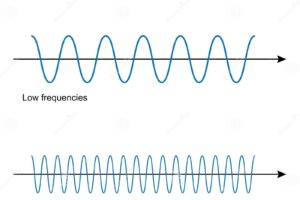
Natural light is a complex mixture of electromagnetic waves spanning a continuous range of wavelengths. Unlike monochromatic light sources, natural light contains multiple frequencies that combine to produce the rich colors and illumination we experience daily. This broad spectral composition includes visible light, ultraviolet rays, and infrared radiation, each with distinct properties and interactions with materials.
- Visible Spectrum:
The portion of natural light detectable by the human eye, responsible for color perception. - Ultraviolet Radiation:
Higher energy wavelengths beyond visible light, with applications in sterilization and fluorescence. - Infrared Radiation:
Longer wavelengths associated with heat, used in thermal imaging and remote controls.
Challenges in Transmitting Natural Light Through Optical Fibers
Transporting the full spectrum of natural light via fiber optics introduces several technical difficulties. One major issue is chromatic dispersion, where different wavelengths travel at varying speeds within the fiber, causing signal distortion and loss of clarity. This effect can blur the original light signal, undermining the natural coherence and color fidelity.
Additionally, variations in fiber diameter and refractive index complicate the uniform guidance of all wavelengths. Designing fibers that accommodate the entire solar spectrum requires advanced materials and structural innovations to minimize attenuation and maintain signal integrity.
Innovations Enhancing Natural Light Transmission
Recent progress in optical engineering has led to the development of photonic crystal fibers, which feature a microstructured arrangement of air holes that manipulate light propagation in novel ways. These fibers can support a wider range of wavelengths, making them promising candidates for transmitting natural light more effectively.
Moreover, advancements in light source technologies, such as LEDs and lasers engineered to mimic the spectral qualities of sunlight, are being integrated with fiber optics. These synthetic light sources aim to replicate natural illumination, bridging the gap between artificial and natural light in fiber optic applications.
Practical Applications of Natural Light Fiber Optics
The ability to channel natural light through fiber optics holds transformative potential across various fields:
- Architectural Lighting:
Fiber optic systems can deliver sunlight into interior spaces, enhancing energy efficiency by reducing dependence on artificial lighting while preserving privacy and design flexibility. - Medical Imaging:
Utilizing natural light in fiber optic endoscopes may improve image clarity and detail during minimally invasive procedures, aiding diagnostics and surgical precision.
Common Misconceptions About Fiber Optics and Natural Light
Fiber optics can transmit all types of light without any loss.
Different wavelengths experience varying degrees of attenuation and dispersion, making it challenging to transmit the entire natural light spectrum without degradation.
Natural light is a single wavelength.
Natural light is a composite of multiple wavelengths spanning a broad spectrum, which complicates its transmission through fibers designed for specific ranges.
Significance of Integrating Natural Light with Fiber Optics
Incorporating natural light into fiber optic technology represents a significant advancement with implications for sustainability, health, and technology. By harnessing sunlight’s full spectrum, we can create more energy-efficient environments, improve human well-being through enhanced lighting quality, and expand the capabilities of optical devices. This integration also challenges us to rethink how natural phenomena can be seamlessly embedded within modern technological frameworks.
Conclusion: Future Prospects and Philosophical Reflections
The pursuit of transmitting natural light through fiber optics is both a technical challenge and an invitation to deepen our connection with the natural world. As research continues to overcome material and design obstacles, the prospect of blending natural illumination with cutting-edge technology becomes increasingly tangible. This endeavor not only promises practical benefits but also encourages a renewed appreciation for the interplay between nature and innovation in shaping our built environments.
FAQ
What are fiber optics?
Fiber optics are technology that uses thin strands of glass or plastic to transmit light signals over distances.
Can all types of natural light be transmitted through fiber optics?
No, different wavelengths experience varying degrees of attenuation and dispersion.
What are the applications of natural light in fiber optics?
Key applications include architectural lighting and medical imaging.




Leave a Reply