

Short Answer
Definition of Pressure and Its Measurement
Pressure is defined as the force applied per unit area on a surface, a fundamental physical quantity influencing numerous scientific and engineering fields. Accurate pressure measurement is essential for analyzing fluid behavior, ensuring structural safety, and optimizing thermodynamic systems. Instruments designed to measure pressure provide critical data that support research, industrial operations, and technological advancements.
Categories of Pressure Measuring Instruments
Pressure measurement devices can be broadly classified into several types, each with distinct operating principles and suited for specific applications. The primary categories include manometers, Bourdon tube gauges, diaphragm pressure gauges, pressure transducers, and digital pressure sensors. Understanding their unique features and operational mechanisms is vital for selecting the appropriate instrument for a given task.
Manometers
Manometers are among the earliest and simplest tools for pressure measurement, relying on the hydrostatic principle. They measure pressure by observing the height difference of a liquid column, typically mercury or water, between two points. Manometers are divided into two main types:
- Open Manometers:
These measure pressure relative to atmospheric pressure, making them suitable for environments where atmospheric fluctuations are minimal. - Closed Manometers:
Also known as U-tube manometers, these measure gauge pressure relative to a vacuum, providing precise readings in controlled settings.
While manometers offer high accuracy, their practicality diminishes at high pressures, limiting their use primarily to laboratory experiments and educational demonstrations.
Bourdon Tube Gauges
Bourdon tube gauges are widely used in industrial environments due to their durability and straightforward operation. They function by converting pressure-induced mechanical deformation into a readable dial indication. The device consists of a curved, elliptical cross-section tube that tends to straighten as internal pressure rises. This mechanical movement is then translated into a pressure reading.
Constructed from materials like brass or stainless steel, Bourdon tubes withstand harsh conditions and are commonly employed in pipelines, hydraulic systems, and pneumatic equipment. Despite their robustness, these gauges may experience hysteresis and reduced accuracy at extreme pressures, necessitating periodic calibration.
Diaphragm Pressure Gauges
Diaphragm gauges measure pressure through the deflection of a flexible membrane that responds to pressure changes. These instruments excel in low to medium pressure ranges and are favored in sanitary industries such as food processing and pharmaceuticals due to their ease of cleaning and contamination prevention.
The diaphragm’s movement is linked to a mechanical or electronic transducer that converts deflection into a measurable pressure value. Selecting diaphragm materials compatible with the measured medium is crucial to minimize non-linearity and ensure precise readings.
Pressure Transducers
Pressure transducers represent a modern approach to pressure measurement by converting mechanical pressure into electrical signals. They employ various sensing technologies, including piezoelectric, capacitive, and strain gauge elements, to cater to diverse industrial sectors like aviation, automotive, and chemical processing.
- Piezoelectric Transducers:
Generate voltage in response to pressure changes, ideal for capturing dynamic pressure variations in fast processes. - Capacitive Transducers:
Detect changes in capacitance caused by diaphragm displacement, offering high sensitivity for precise measurements.
These transducers facilitate integration with automated systems, enabling real-time pressure monitoring and control.
Digital Pressure Sensors
The integration of digital technology has led to the development of digital pressure sensors, which combine traditional sensing methods with microprocessor-based data processing. These sensors provide enhanced accuracy, broad measurement ranges, and capabilities such as data storage and network connectivity.
Digital sensors are extensively used in manufacturing, environmental monitoring, and smart systems where precise pressure control is critical for operational efficiency and safety.
Types of Pressure Measurements
Understanding the different pressure measurement references is essential for selecting the correct instrument and interpreting data accurately. The main types include absolute, gauge, and differential pressure measurements.
- Absolute Pressure:
Measured relative to a perfect vacuum, absolute pressure is vital in applications like vacuum technology, altimetry, and scientific experiments. - Gauge Pressure:
Measured relative to atmospheric pressure, gauge pressure is commonly used in systems where pressure differences from the ambient environment are significant, such as HVAC and automotive systems. - Differential Pressure:
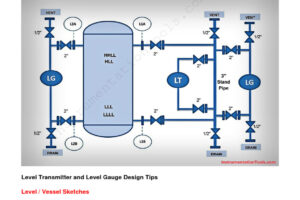
Represents the pressure difference between two points, crucial for monitoring filtration efficiency, flow rates, and system performance using devices like differential pressure transmitters and manometers.
Practical Applications of Pressure Measurement
Pressure measurement instruments are indispensable across a wide range of real-world scenarios:
- Industrial Processes:
Monitoring pressure in pipelines, reactors, and hydraulic systems ensures operational safety and efficiency. - Scientific Research:
Precise pressure data supports experiments in fluid dynamics, thermodynamics, and material science. - Healthcare and Sanitation:
Diaphragm gauges maintain sterile conditions in pharmaceutical manufacturing. - Environmental Monitoring:
Digital sensors track atmospheric pressure changes for weather forecasting and pollution control.
Common Misconceptions About Pressure Measurement
All pressure gauges measure absolute pressure.
Many gauges measure gauge pressure relative to atmospheric pressure, not absolute pressure.
Manometers are suitable for all pressure ranges.
Manometers are generally limited to low-pressure applications due to practical constraints.
Digital sensors are always more accurate than mechanical gauges.
While digital sensors offer advantages, accuracy depends on sensor quality, calibration, and application context.
Significance of Pressure Measurement
Accurate pressure measurement is fundamental to advancing science, enhancing industrial productivity, and ensuring safety. It enables the control and optimization of processes, supports innovation in technology, and helps prevent failures in critical systems. As measurement technologies evolve, they provide increasingly sophisticated tools that meet the demands of complex modern applications, underscoring the enduring importance of pressure instrumentation.
FAQ
What are the main types of pressure measuring instruments?
The main types include manometers, Bourdon tube gauges, diaphragm gauges, pressure transducers, and digital pressure sensors.
How does a manometer work?
A manometer measures pressure by observing the height difference of a liquid column between two points.
What is the significance of pressure measurement?
Accurate pressure measurement is crucial for safety, efficiency, and optimizing processes across various industries.

Leave a Reply