
Short Answer
Definition of Gravity on Europa
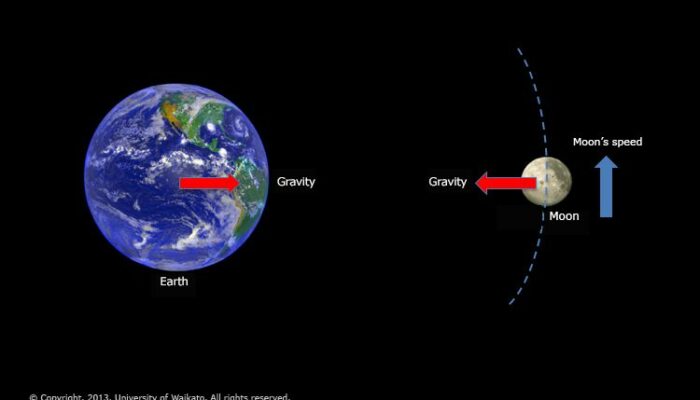
Gravity is the force that attracts objects toward one another, fundamentally shaping the environment on planets and moons. Europa, one of Jupiter’s largest moons, exhibits a gravitational pull that is distinct from Earth and the Moon. This force influences everything from surface conditions to the potential for life and human exploration on this icy satellite.
Comparative Gravity in the Solar System
Gravity varies significantly across celestial bodies in our solar system, depending on their physical properties. Earth’s gravity, which we experience daily, is standardized as 1 g or 9.8 m/s2. The Moon’s gravity is much weaker, approximately 16.5% of Earth’s gravity, equating to about 1.62 m/s2. Europa’s gravity falls between these two but is closer to the Moon’s, at roughly 13.4% of Earth’s gravity or 1.31 m/s2.
Factors Influencing Europa’s Gravity
The strength of gravity on any celestial body depends primarily on its mass and radius, as described by Newton’s law of universal gravitation. A larger mass and smaller radius result in stronger surface gravity. Europa, while larger than the Moon, has a lower mass than Earth due to its unique composition, which affects its gravitational pull.
- Mass and Radius:
Europa’s radius is about 1,560 kilometers, slightly smaller than the Moon’s 1,737 kilometers, but its mass is significantly less than Earth’s. - Density and Composition:
Europa’s average density is approximately 3.01 g/cm3, lower than the Moon’s 3.34 g/cm3, indicating a substantial amount of water ice mixed with rock. This lower density reduces its overall gravitational force.
How Europa’s Gravity Shapes Its Environment
Europa’s gravity, though weaker than Earth’s, plays a crucial role in its geophysical and potentially biological processes. The moon’s icy surface and subsurface ocean are influenced by this gravitational force, which affects surface movement, fluid dynamics, and possibly the behavior of any microbial life beneath the ice.
Gravitational Interactions and Geological Activity
Europa’s gravity is intimately linked to the tidal forces exerted by Jupiter. These tidal interactions generate internal frictional heat, which is believed to maintain Europa’s subsurface ocean in a liquid state and drive geological activity such as ice tectonics and surface reshaping. This dynamic highlights the importance of gravity in planetary geology and the moon’s potential habitability.
Real-World Implications for Exploration
The similarity of Europa’s gravity to that of the Moon suggests that future human missions or robotic explorers might experience conditions somewhat comparable to lunar environments, though with unique challenges posed by Europa’s icy crust and subsurface ocean. Understanding this gravity is essential for designing equipment, habitats, and mobility systems for exploration.
Common Misconceptions About Europa’s Gravity
Europa’s gravity is nearly the same as Earth’s.
Europa’s gravity is only about 13.4% of Earth’s, much closer to the Moon’s gravity.
Gravity on Europa is uniform across its surface.
Variations in surface composition and internal structure can cause slight differences in gravitational strength across Europa.
Why Understanding Europa’s Gravity Is Important
Grasping the nuances of Europa’s gravity is vital for multiple scientific and practical reasons. It informs our knowledge of the moon’s geological processes, its potential to support life, and the design of future exploratory missions. Moreover, studying Europa’s gravity enriches our broader understanding of how gravitational forces shape planetary bodies throughout the solar system.
FAQ
How does Europa's gravity compare to Earth's?
Europa's gravity is about 13.4% that of Earth's, which is significantly weaker.
What factors affect Europa's gravity?
Europa's gravity is influenced by its mass, radius, and density, which are lower than those of Earth.
Why is understanding Europa's gravity important?
It aids in understanding Europa's geological processes, potential for life, and helps in planning future exploration missions.
Leave a Reply