
Short Answer
Definition of Dark Energy
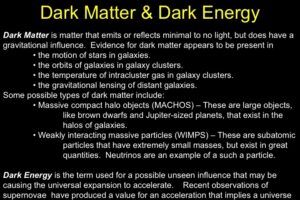
Dark energy is a mysterious and invisible force that permeates the universe, driving its accelerated expansion. Although it cannot be directly observed, its presence is inferred from astrophysical measurements indicating that the cosmos is expanding at an increasing rate. Dark energy is estimated to constitute about 68% of the total energy content of the universe, making it a dominant component in cosmic dynamics.
Historical Background and Discovery
The concept of dark energy emerged in the late 20th century following observations of distant Type Ia supernovae. Contrary to expectations that the universe’s expansion would slow down due to gravitational attraction, these supernovae revealed that the expansion is accelerating. This unexpected finding necessitated the introduction of a new form of energy or force that counteracts gravity on cosmic scales, leading to the formulation of dark energy as a fundamental component of the universe.
Dark Energy and the Fabric of Space
To understand whether dark energy is essentially the fabric of space itself, it is important to explore the nature of space from both cosmological and quantum perspectives. Space is not an empty void but possesses intrinsic properties governed by physical laws. One key idea is that space contains a baseline energy density, often called vacuum energy or the cosmological constant, which could be responsible for the observed acceleration.
- Vacuum Energy:
This refers to the energy inherent in empty space, implying that even a perfect vacuum has a latent energy that influences cosmic expansion. - Cosmological Constant:
Introduced by Albert Einstein as a modification to his General Relativity equations, this constant represents a fixed energy density filling space uniformly, exerting a repulsive force that drives expansion.
The Cosmological Constant and Its Challenges
Einstein’s cosmological constant, once dismissed as a mistake, has regained significance as a leading explanation for dark energy. If dark energy corresponds to this constant, it means that every unit volume of space contains a small but persistent repulsive energy. However, theoretical predictions from quantum field theory estimate vacuum energy densities that are vastly larger-by about 10120 times-than what is observed. This enormous discrepancy, known as the cosmological constant problem, remains one of the most profound unsolved issues in physics, suggesting either a fundamental misunderstanding or the need for new physics beyond current models.
Alternative Theories: Quintessence and Dynamic Fields
Beyond the static cosmological constant, some theories propose that dark energy arises from dynamic scalar fields collectively termed “quintessence.” Unlike a fixed vacuum energy, quintessence fields can vary over time and space, providing a flexible energy component that evolves with the universe. This perspective treats dark energy as a mutable entity rather than an immutable property of space, potentially offering explanations for observed cosmic phenomena that differ from the cosmological constant model.
Cosmic Geometry and the Role of Dark Energy
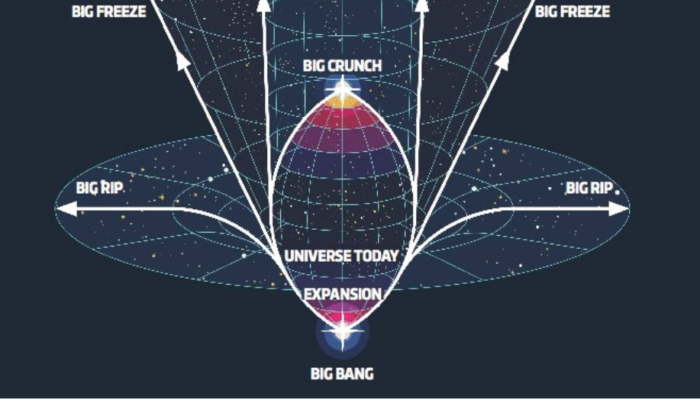
Dark energy profoundly influences the shape, structure, and ultimate fate of the universe. Space is a manifold whose curvature and topology are shaped by the distribution of mass, energy, and fundamental forces. The accelerated expansion driven by dark energy suggests that the universe may continue to expand indefinitely, leading to a scenario known as “heat death,” where all matter becomes increasingly isolated and energy disperses uniformly. This expansion also affects the cosmic horizon, altering how distant galaxies are observed and understood.
Observational Evidence and Measurement Techniques
Modern cosmology employs various observational tools to study dark energy and its properties. Key methods include:
- Cosmic Microwave Background (CMB):
Measurements of the CMB provide insights into the early universe’s conditions and the influence of dark energy on cosmic evolution. - Baryon Acoustic Oscillations (BAO):
These are periodic fluctuations in the density of visible baryonic matter, serving as a “standard ruler” to measure cosmic expansion. - Large-Scale Structure Surveys:
Mapping the distribution of galaxies helps constrain dark energy’s equation of state, which relates its pressure to energy density.
Refining the equation of state is crucial for distinguishing between a constant vacuum energy and dynamic models like quintessence or alternative theories involving modifications to General Relativity.
Theoretical Frameworks and Quantum Considerations
Efforts to reconcile dark energy with fundamental physics involve exploring the quantum nature of spacetime and gravity. Theories such as the holographic principle, emergent gravity, and string theory propose that space and energy are deeply interconnected in ways that transcend classical understanding. In these frameworks, dark energy may not simply be a force but a fundamental aspect of the universe’s fabric, arising from quantum properties of spacetime itself.
Philosophical and Existential Implications
Recognizing dark energy as an intrinsic property of space challenges traditional notions of emptiness and existence. Instead of being a passive void, space becomes an active, dynamic entity filled with latent energy that shapes cosmic evolution. This perspective invites a broader philosophical reflection on the interconnectedness of the universe, where every portion of space contributes to the grand cosmic narrative.
Future Research and Exploration
Upcoming missions and observatories aim to deepen our understanding of dark energy’s nature and role in the cosmos. Notable projects include:
- Euclid Mission:
A space telescope designed to map the geometry of the dark universe with high precision. - Vera C. Rubin Observatory:
Ground-based observatory conducting wide-field surveys to study cosmic expansion and dark energy effects. - Particle Physics Experiments:
Investigations into vacuum fluctuations and potential dark sector particles that may shed light on dark energy’s origins.
These endeavors hold promise for resolving whether dark energy is a cosmological constant, a dynamic field, or an entirely new phenomenon, pushing the boundaries of human knowledge.
Significance of Dark Energy in Modern Science
Dark energy represents one of the most profound mysteries in contemporary physics and cosmology. Its discovery has revolutionized our understanding of the universe, revealing a cosmos that is far more complex and dynamic than previously imagined. Studying dark energy not only advances scientific knowledge but also enriches our philosophical appreciation of existence, inspiring ongoing inquiry into the fundamental nature of reality and the ultimate fate of the universe.

Leave a Reply