
Short Answer
Definition of Semi-Solids
Semi-solids represent a unique category of matter that exhibit characteristics intermediate between solids and liquids. Unlike the classical states of matter-solid, liquid, and gas-semi-solids display a combination of rigidity and fluidity, making them distinct in their physical behavior. Common examples include gels, pastes, and colloidal suspensions, which maintain a certain shape yet can flow or deform under applied forces.
Classical States of Matter: A Brief Overview
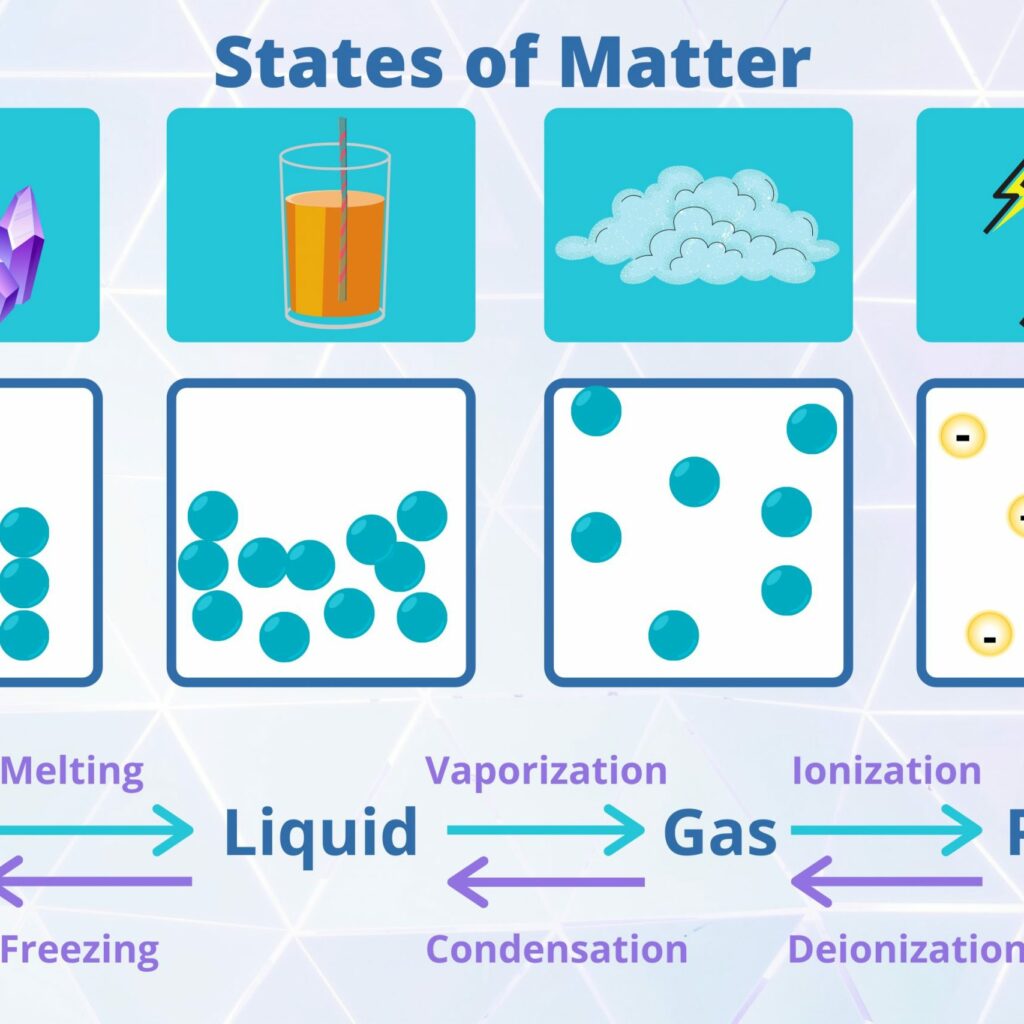
To understand semi-solids, it is essential to first revisit the fundamental states of matter:
- Solids:
Possess a fixed shape and volume due to closely packed particles that vibrate in place without significant movement. - Liquids:
Have a definite volume but adapt their shape to the container, with molecules that flow while maintaining cohesion. - Gases:
Characterized by molecules with high kinetic energy that move freely, resulting in indefinite shape and volume, expanding to fill any space.
Structural Characteristics of Semi-Solids
Semi-solids derive their unique properties from a complex molecular architecture often described as a network structure. This framework consists of solid-like particles interspersed within a liquid medium or a solid matrix saturated with liquid. The interplay of intermolecular forces such as van der Waals interactions, hydrogen bonds, and ionic attractions governs the semi-solid’s rheological behavior, enabling it to exhibit both solidity and fluidity depending on external conditions.
Network Structure Explained
The semi-solid state can be visualized as a lattice where solid particles form a scaffold that traps or suspends liquid components. This dual-phase composition allows semi-solids to resist deformation to some extent while still permitting flow under stress, distinguishing them from purely solid or liquid states.
Rheological Behavior and Mechanical Response
Semi-solids demonstrate distinctive responses when subjected to mechanical forces, often studied through rheology-the science of deformation and flow. Many semi-solids exhibit non-Newtonian behavior, such as:
- Shear-thinning:
Viscosity decreases with increased shear rate, allowing easier flow under gentle stirring or spreading. - Shear-thickening:
Viscosity increases under high shear stress, causing the material to behave more like a solid when force is applied rapidly or intensely.
These properties are critical in understanding how semi-solids perform in practical applications, influencing their texture, stability, and usability.
Applications in Biology and Material Science
The concept of semi-solids extends beyond pure chemistry into biology and engineering:
- Biological Systems:
Cytoplasm within cells exemplifies a semi-solid environment where organelles are suspended in a viscous medium, facilitating essential biochemical reactions and intracellular transport. - Material Engineering:
Semi-solids are engineered for diverse uses, including food products like mayonnaise (a colloidal suspension) and pharmaceutical gels designed for controlled drug release, showcasing their versatility in technology and manufacturing.
Scientific and Practical Significance
Understanding semi-solids enriches the traditional framework of matter by revealing a continuum of states rather than discrete categories. This knowledge is pivotal for innovations in multiple fields, from developing responsive materials that adapt to environmental stimuli to improving formulations in food science and medicine. The study of semi-solids also deepens insight into molecular interactions and material properties, fostering advancements that impact everyday life and industrial processes.
Common Misconceptions About Semi-Solids
Semi-solids are just thick liquids.
Semi-solids possess a structured network that imparts partial rigidity, differentiating them from simple viscous liquids.
Semi-solids behave uniformly under all forces.
Their response varies with the type and magnitude of applied stress, exhibiting both solid-like and liquid-like behaviors.
Conclusion: Expanding the Understanding of Matter
The study of semi-solids challenges the conventional tripartite classification of matter by introducing a nuanced state that blends solidity and fluidity. This hybrid nature not only broadens scientific perspectives but also opens avenues for practical applications across disciplines. Recognizing the complexity and versatility of semi-solids invites ongoing exploration into the fundamental nature of materials and their potential to revolutionize technology and biological understanding.
FAQ
What is a semi-solid?
A semi-solid is a material that exhibits characteristics of both solids and liquids, maintaining some form and shape while being able to flow or deform.
How do semi-solids differ from solids and liquids?
Unlike solids, semi-solids can flow under force, and unlike liquids, they maintain some structural integrity and shape.
Where are semi-solids commonly found?
Semi-solids are found in everyday products like toothpaste and food items, as well as in biological contexts such as cytoplasm.
What causes the semi-solid state at a molecular level?
The semi-solid state arises from a network of solid-like particles suspended in or combined with a liquid phase, governed by intermolecular forces like hydrogen bonding and van der Waals forces.
Why study semi-solids?
Understanding semi-solids aids in developing advanced materials with tailored flow and structural properties for applications in medicine, food technology, and material engineering.



Leave a Reply