
Short Answer
Overview of Space Telescopes: Hubble and James Webb
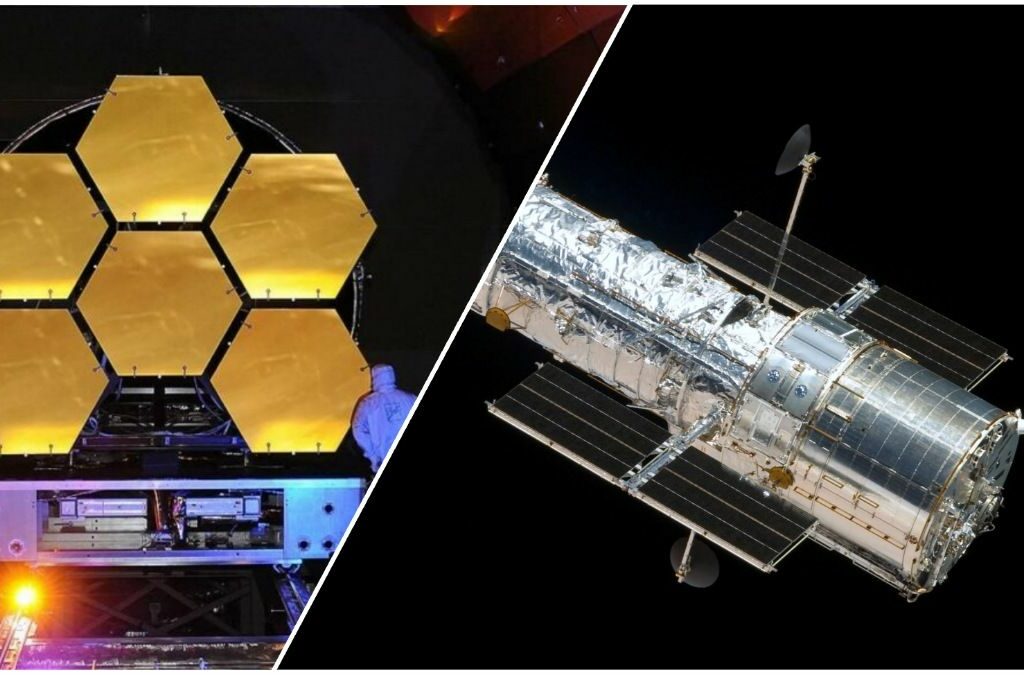
The question of whether two monumental space observatories can operate simultaneously in the vastness of space exploration invites a deeper examination beyond mere technological succession. The James Webb Space Telescope (JWST) and the Hubble Space Telescope (HST) each bring unique observational strengths, challenging the assumption that the arrival of a newer instrument renders its predecessor obsolete. Instead, their combined operation offers a richer, more comprehensive understanding of the universe.
Definition and Historical Context
Hubble Space Telescope:
Launched in 1990, the Hubble Space Telescope revolutionized astronomy by providing unprecedented clarity and perspective from its orbit above Earth’s atmosphere. This vantage point allowed it to capture sharp images and gather data that transformed our knowledge of cosmic phenomena, including the expansion rate of the universe, stellar life cycles, and the structure of countless galaxies. Hubble primarily observes in the visible and ultraviolet wavelengths, enabling detailed studies of celestial objects that are difficult to analyze from ground-based telescopes.
James Webb Space Telescope:
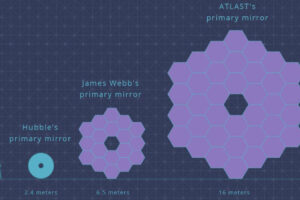
Deployed in 2021, the James Webb Space Telescope represents a leap forward with its innovative design and advanced infrared detection capabilities. Positioned near the second Lagrange Point (L2), about 1.5 million kilometers from Earth, JWST can peer through cosmic dust clouds and observe the universe’s earliest stages, such as the formation of stars and planets. Its large segmented mirror surpasses Hubble’s single mirror in size, allowing it to collect faint infrared signals from galaxies formed just hundreds of millions of years after the Big Bang.
Technical Capabilities and Observational Strengths
- Hubble’s Strengths:
Excelling in high-resolution imaging within the ultraviolet and visible light spectra, Hubble captures detailed views of phenomena like supernovae, nebulae, and planetary atmospheres. Its orbit around Earth facilitates periodic servicing missions, which have extended its operational life and enhanced its instruments over time. - James Webb’s Advantages:
Specializing in infrared observations, JWST can penetrate dust-obscured regions and detect cooler celestial bodies that Hubble cannot observe effectively. Its location at L2 minimizes thermal interference, optimizing its sensitivity to faint infrared signals. However, this distant orbit precludes routine maintenance or upgrades.
Complementarity and Synergy Between Hubble and Webb
Rather than viewing JWST as a replacement for Hubble, their combined use highlights complementary observational niches across the electromagnetic spectrum. Hubble’s ultraviolet and visible light capabilities provide insights into hot, young stars and explosive cosmic events, while Webb’s infrared vision reveals embryonic stars and planetary systems hidden within dense nebulae. This dual approach enables astronomers to construct a more complete and nuanced narrative of cosmic evolution.
Orbital Differences and Operational Implications
Hubble’s low Earth orbit allows for relatively straightforward servicing missions, historically conducted by space shuttle crews, which have maintained and upgraded its instruments. In contrast, Webb’s position at the L2 point offers a stable, cold environment ideal for infrared observations but makes physical servicing impossible with current technology. These differing orbits create distinct operational challenges and advantages, allowing the telescopes to share scientific responsibilities rather than compete.
Scientific Impact and Multidisciplinary Applications
The tandem operation of Hubble and Webb fosters a multidisciplinary approach to studying the cosmos. For instance, investigations into stellar evolution benefit from Hubble’s ultraviolet and visible-light data on mature and explosive stars, while Webb’s infrared observations uncover the earliest stages of star formation within dust clouds. This collaborative data collection enriches scientific understanding and accelerates discovery by providing overlapping and complementary perspectives.
Challenges and Considerations in Maintaining Both Telescopes
Despite their scientific synergy, maintaining two major space telescopes involves significant financial and logistical challenges. Debates continue regarding resource allocation, with some advocating for prioritizing Webb’s cutting-edge technology and others emphasizing the enduring value of Hubble’s legacy and unique observational capabilities. The decision to keep both operational hinges on balancing innovation with continuity, as well as recognizing the importance of observational redundancy in scientific research.
Importance of Redundancy and Data Verification
Having multiple observatories operating across different spectral bands enhances the reliability and accuracy of astronomical data. Overlapping datasets allow for cross-validation of findings, reduce observational biases, and strengthen confidence in scientific conclusions. This redundancy is crucial in a field where precision and reproducibility underpin the advancement of knowledge.
Adaptability to Evolving Scientific Goals
The flexibility offered by operating both Hubble and Webb enables the scientific community to adapt to emerging phenomena and shifting research priorities. As new cosmic mysteries arise and theoretical frameworks evolve, these telescopes can adjust their observational focus accordingly, providing a dynamic and responsive approach to space exploration.
Cultural and Inspirational Significance
Beyond their scientific roles, both telescopes hold symbolic importance. Hubble’s iconic images have inspired generations, permeating popular culture and education worldwide. Its continued operation alongside Webb represents a bridge between past achievements and future discoveries, embodying humanity’s enduring quest for knowledge and exploration.
Conclusion: The Case for Coexistence
The question of whether both the Hubble and James Webb Space Telescopes are still needed transcends a simple binary answer. Each observatory offers distinct yet complementary insights into the cosmos, with unique vantage points and specialized capabilities. Their joint operation promises a richer, multidimensional understanding of the universe, heralding a new era of astronomical discovery that no single instrument could achieve alone.
FAQ
What are the key differences between the Hubble and James Webb Space Telescopes?
Hubble primarily observes in the visible and ultraviolet wavelengths, while James Webb specializes in infrared observations, allowing it to see through cosmic dust.
Why is it important to have both telescopes operational?
Each telescope offers unique insights, and their combined observations provide a more comprehensive understanding of cosmic phenomena.
Leave a Reply