

Short Answer
Understanding Black Holes
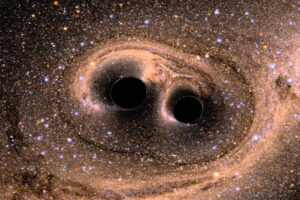
Black holes are among the most intriguing objects in the cosmos, characterized by gravitational fields so intense that nothing, not even light, can escape their grasp. These enigmatic entities have fascinated scientists for decades, prompting extensive research into their nature and influence on the universe. Black holes are primarily classified based on their mass:
- Stellar Black Holes:
These form from the remnants of massive stars that have ended their life cycles in supernova explosions. - Supermassive Black Holes:
Found at the centers of most galaxies, these black holes possess masses millions to billions of times that of the Sun, believed to grow through gas accretion and mergers with smaller black holes.
Despite this classification, the interactions between black holes and their environments are complex and multifaceted, influencing galactic structures in profound ways.
Accretion Disks and Energetic Emissions
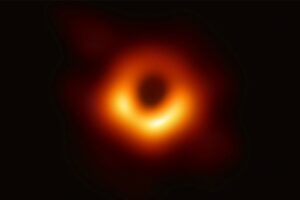
Surrounding many black holes is an accretion disk-a rotating, flattened ring of gas and dust spiraling inward. As matter in this disk moves closer to the black hole, it undergoes intense gravitational and frictional forces, heating up and emitting high-energy radiation, especially in the X-ray spectrum. This radiation is often accompanied by powerful winds that blow outward from the vicinity of the black hole.
Previously, these winds were thought to have a limited effect on the surrounding intergalactic medium. However, recent observations have challenged this view, revealing that black hole winds are far more influential than once believed.
Recent Discoveries on Black Hole Winds
Using cutting-edge telescopes and spectrometers, astronomers have traced the movement and composition of gas in galaxies hosting supermassive black holes. These studies uncovered that the winds produced by black holes are not mere dissipating gas streams but potent forces capable of significantly altering the gas content within their host galaxies. This discovery highlights a critical feedback mechanism that plays a vital role in galactic ecosystems.
Impact on Galactic Evolution and Star Formation
The powerful outflows generated by black hole winds exert pressure on the gas clouds within galaxies, often expelling material that would otherwise contribute to star formation. This process can initiate a feedback loop that suppresses star formation rates and influences the lifecycle of galaxies. By redistributing baryonic matter, black hole winds challenge traditional models of galaxy evolution and necessitate a reevaluation of the dynamic processes shaping galaxies.
Addressing the Missing Baryon Problem
One of the intriguing implications of these findings is their potential to shed light on the “missing baryon problem” in cosmology-the observed deficit of ordinary matter in the universe compared to theoretical predictions. The material expelled by black hole winds may enrich the intergalactic medium with baryons, thereby influencing the formation and structure of large-scale cosmic features. Thus, black hole winds not only affect star formation but also contribute to the broader cosmic matter distribution.
Connection Between Black Hole Winds and Galactic Jets
In addition to winds, supermassive black holes often produce galactic jets-immense streams of charged particles propelled at near-light speeds. These jets, commonly associated with active galactic nuclei (AGN), represent another channel through which black holes transfer energy and momentum to their surroundings. Understanding the relationship between black hole winds and jets is a promising area of research that may unify various high-energy astrophysical phenomena.
Challenges in Understanding Black Hole Wind Dynamics
Deciphering the mechanisms behind black hole wind generation and behavior remains a significant challenge. Researchers must integrate observations across multiple wavelengths-from X-ray emissions that map energetic winds to radio waves that reveal jet structures. Developing comprehensive models requires accounting for complex gravitational, hydrodynamic, and thermodynamic interactions that govern these astrophysical processes.
Role of Computational Astrophysics
Advances in computational astrophysics are essential for modeling the intricate dynamics of gas around black holes. Sophisticated simulations enable scientists to explore nonlinear plasma behavior and magnetohydrodynamic effects critical to understanding wind formation and propagation. These computational tools complement observational data, offering deeper insights that are otherwise inaccessible.
Future Directions and Multidisciplinary Approaches
Progress in this field depends on a multidisciplinary strategy that combines observational astronomy, theoretical physics, and computational modeling. The deployment of next-generation telescopes and instruments promises to revolutionize our understanding of black hole winds and their galactic impact. Over the coming decade, these technological advancements will facilitate unprecedented exploration of these cosmic phenomena.
Significance of Black Hole Winds in Cosmic Evolution
The revelation that black hole winds are more powerful than previously assumed challenges existing paradigms and opens new avenues for investigating galaxy formation and evolution. The question of whether black holes can genuinely shape the structure and destiny of galaxies is not only relevant but central to contemporary astrophysical research. As our comprehension of these cosmic giants deepens, we edge closer to unraveling the mysteries of the universe’s architecture and ultimate fate.
FAQ
What are black hole winds?
Black hole winds are powerful streams of gas driven by the energetic processes near black holes, particularly from their accretion disks.
Why are black hole winds important in astronomy?
They play a critical role in shaping the gas content of galaxies, affecting star formation and large-scale cosmic structure.
How do astronomers observe black hole winds?
Using advanced telescopes and spectrometers that detect high-energy radiation and gas movements across multiple wavelengths.
What future research is needed on black hole winds?
Improved computational models and multi-disciplinary studies to better understand the complex physics and their impact on galaxies.



Leave a Reply