

Short Answer
Understanding Distant Galaxies
When we look up at the night sky, the tiny points of light we see are often mistaken for mere stars. In reality, many of these luminous dots are entire galaxies, vast collections of stars, gas, and dust located billions of light-years away. Their immense distance and age captivate both the imagination and scientific curiosity, prompting questions about how we can observe such remote cosmic structures. The ability to study these galaxies hinges on advanced telescopes, which combine optical design, cutting-edge technology, and astrophysical principles to transform faint light signals into detailed images and data.
Definition and Role of Telescopes in Astronomy
Telescopes are specialized instruments crafted to gather and magnify light from distant celestial bodies, enabling observation far beyond the capabilities of the unaided human eye.
- Light Collection:
Telescopes use large lenses or mirrors, known as apertures, to capture more photons than the human eye can, significantly enhancing the visibility of faint objects like distant galaxies. - Magnification and Resolution:
Beyond collecting light, telescopes focus and process it to produce clearer and more detailed images, allowing astronomers to discern structures within galaxies.
Challenges in Observing Remote Galaxies
Galaxies located billions of light-years away present unique observational difficulties. Their light is not only extremely faint but also affected by cosmic redshift, a phenomenon where the universe’s expansion stretches light waves to longer, less energetic wavelengths.
- Cosmic Redshift:
This effect shifts the light from distant galaxies toward the red and infrared parts of the spectrum, requiring telescopes to be sensitive across a wide range of wavelengths. - Atmospheric Distortion:
Earth’s atmosphere can blur incoming light, reducing image clarity for ground-based telescopes.
Technological Innovations Enhancing Galactic Observation
Modern telescopes incorporate several advanced technologies to overcome observational challenges and improve the quality of data collected from distant galaxies.
- Charge-Coupled Devices (CCDs):
These sensors convert incoming photons into electronic signals, allowing for long exposure times that accumulate faint light over hours or days, vastly improving sensitivity compared to traditional photographic methods. - Adaptive Optics:
By using deformable mirrors that adjust in real-time to atmospheric turbulence, adaptive optics systems sharpen images, revealing fine details such as spiral arms and star-forming regions within galaxies. - Spectral Analysis:
Spectrographs attached to telescopes break down light into its component wavelengths, enabling astronomers to determine the chemical makeup, velocity, age, and star formation activity of galaxies billions of light-years away.
How Telescopes Function as Cosmic Time Machines
Observing galaxies at extreme distances is equivalent to looking back in time, as their light has traveled for billions of years before reaching Earth. This temporal aspect allows scientists to study the early universe and the formation of galaxies in their infancy.
- Light Travel Time:
The farther a galaxy is, the older the light we observe, providing snapshots of different epochs in cosmic history. - Galaxy Evolution Insights:
By analyzing distant galaxies, astronomers gain understanding of how galaxies like our Milky Way formed and evolved over billions of years.
Mapping the Universe’s Large-Scale Structure
Beyond individual galaxies, telescopes help reveal the grand architecture of the cosmos, showing how galaxies cluster into vast filaments and voids, forming a cosmic web.
- Cosmic Web:
High-resolution imaging and deep-field surveys illustrate the interconnected nature of galaxies, challenging earlier notions of isolated star systems. - Cosmological Models:
Observations inform and refine theoretical models about the universe’s structure, composition, and expansion.
Space-Based Telescopes and Their Advantages
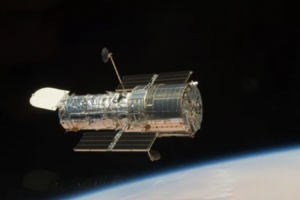
Telescopes positioned beyond Earth’s atmosphere offer unique benefits that complement ground-based observatories.
- Atmospheric Freedom:
Space telescopes avoid atmospheric distortion and absorption, enabling clearer and more comprehensive observations across various wavelengths. - Infrared Capabilities:
Instruments like the James Webb Space Telescope detect faint infrared emissions from the earliest galaxies, pushing the boundaries of observable cosmic history.
Scientific and Philosophical Significance
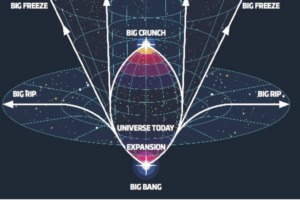
The exploration of distant galaxies through telescopes is not merely a technical achievement but a profound journey into understanding the universe’s origins, evolution, and ultimate destiny. These observations connect humanity to the cosmos across vast stretches of space and time, fueling both scientific progress and existential reflection.
Summary
Telescopes serve as powerful tools that collect and analyze faint light from galaxies billions of light-years away, overcoming challenges such as cosmic redshift and atmospheric interference through advanced technologies like CCDs, adaptive optics, and spectral analysis. By acting as windows into the distant past, they provide invaluable insights into galaxy formation, cosmic structure, and the universe’s evolution, enriching our knowledge and inspiring wonder about our place in the cosmos.

Leave a Reply