

Short Answer
Definition of Quantum Physics in Medicine
Quantum physics, a cornerstone of contemporary science, explores the behavior of matter and energy at the smallest scales. Its principles have increasingly influenced medical science, offering novel insights and technologies that transform diagnosis, treatment, and understanding of biological processes.
- Quantum Mechanics:
The study of particles at atomic and subatomic levels, where classical physics no longer applies. - Medical Applications:
Utilization of quantum phenomena to enhance imaging, drug delivery, diagnostics, and data security in healthcare.
Fundamental Quantum Concepts Relevant to Medicine
Several key quantum phenomena underpin the advancements seen in medical technologies:
- Superposition:
Particles exist in multiple states simultaneously until measured, enabling sophisticated imaging techniques. - Entanglement:
A connection between particles where the state of one instantly influences another, regardless of distance, crucial for quantum computing and secure communication. - Quantum Confinement:
The behavior of particles confined to nanoscale dimensions, foundational for quantum dots used in targeted therapies.
Quantum Mechanics in Medical Imaging
Quantum principles have revolutionized imaging modalities, providing unprecedented detail and functional insights into the human body.
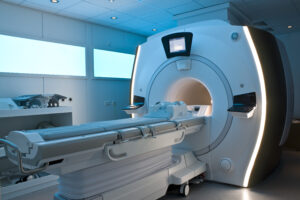
- Magnetic Resonance Imaging (MRI):
Utilizes superposition of hydrogen nuclei spins in water molecules to generate high-resolution images of internal structures, aiding in precise diagnosis. - Positron Emission Tomography (PET):
Relies on quantum annihilation events between positrons and electrons, producing gamma rays that map metabolic activity, crucial for early detection of diseases like cancer.
Quantum Computing and Personalized Medicine
Quantum computing harnesses entanglement and superposition to process complex datasets exponentially faster than classical computers. This capability holds promise for:
- Rapid analysis of genetic information to tailor individualized treatment plans.
- Modeling intricate molecular interactions for drug discovery.
- Addressing ethical challenges related to data privacy and equitable access to advanced therapies.
Innovations in Cancer Treatment Using Quantum Technologies
Quantum dots, nanoscale semiconductor particles exhibiting quantum confinement, are transforming cancer therapy by enabling:
- Targeted drug delivery systems that precisely release medication at tumor sites.
- Real-time monitoring of therapeutic efficacy through light emission at specific wavelengths.
- Reduction of side effects by minimizing damage to healthy tissues.
Quantum Biology: Bridging Physics and Life Sciences
Quantum biology investigates how quantum effects influence living organisms, revealing fascinating phenomena such as:
- Avian Navigation:
Birds may exploit quantum entanglement to detect Earth’s magnetic field, guiding migration. - Biomimicry Potential:
Insights from quantum biological processes inspire novel technologies, including advanced navigation systems for medical devices.
Quantum Theory in Drug Interaction and Design
Traditional pharmacology often relies on empirical data and probabilistic models. Quantum mechanics offers a more precise framework by:
- Simulating molecular dynamics at the quantum level to understand drug-target interactions.
- Facilitating the design of more effective and specific pharmaceuticals.
- Overcoming challenges posed by the complexity of molecular networks in biological systems.
Enhancing Telemedicine with Quantum Technologies
Quantum key distribution (QKD) introduces a new paradigm in secure communication, essential for telemedicine by:
- Providing unbreakable encryption for patient data transmission.
- Ensuring confidentiality and integrity of medical records in digital platforms.
- Addressing scalability and implementation challenges to build public trust.
Development of Quantum-Enabled Biocompatible Sensors
Quantum sensors leverage quantum effects to detect diseases at their earliest stages with exceptional sensitivity, offering:
- Improved early diagnosis capabilities.
- Integration challenges with existing healthcare infrastructure.
- Potential for continuous monitoring and personalized health management.
Why Quantum Physics is Transformative for Medicine
The integration of quantum mechanics into medical science enriches our comprehension of biological systems and drives innovation in healthcare technologies. This fusion promises:
- Enhanced diagnostic accuracy and treatment efficacy.
- Personalized medicine tailored to individual genetic profiles.
- Secure and efficient healthcare communication systems.
- New frontiers in understanding life processes at the quantum level.
Addressing ethical, technological, and accessibility challenges will be crucial to harnessing the full potential of quantum medicine responsibly and equitably.
FAQ
What is quantum physics?
Quantum physics is the study of matter and energy at atomic and subatomic levels, where classical physics no longer applies.
How does quantum physics impact medicine?
It enhances medical imaging, improves drug delivery systems, and aids in personalized medicine through advanced computational methods.




Leave a Reply