

Short Answer
Definition of Cosmic Rays
Cosmic rays are highly energetic particles originating from outer space, traveling at velocities close to the speed of light. These particles primarily consist of protons and atomic nuclei with energies surpassing those achievable by Earth-based particle accelerators. Their study offers valuable insights into the fundamental workings of the universe and the extreme astrophysical processes that generate them.
- Primary Cosmic Rays:
Particles that travel directly from their cosmic sources through interstellar space before reaching Earth. - Secondary Cosmic Rays:
Particles produced when primary cosmic rays interact with Earth’s atmosphere, creating cascades of secondary particles.
Origins and Sources of Cosmic Rays
The genesis of cosmic rays is linked to some of the most energetic phenomena in the universe. Key sources include supernova explosions, active galactic nuclei, and pulsars. These astrophysical events accelerate particles to extreme energies, propelling them across vast cosmic distances. Understanding these origins is crucial for replicating cosmic rays in controlled environments.
Methods for Generating Cosmic Rays
Particle Accelerators
One of the primary techniques to mimic cosmic rays involves particle accelerators, such as the Large Hadron Collider (LHC) at CERN. These devices use electromagnetic fields to accelerate charged particles to near-light speeds, enabling collisions that produce high-energy particles similar to those found in cosmic rays. Despite their sophistication, replicating the exact energy levels and particle compositions observed in natural cosmic rays remains a significant scientific challenge.
Nuclear Reactions
Another approach to producing cosmic ray-like particles is through nuclear decay processes. Radioactive isotopes undergoing alpha or beta decay emit high-energy particles that can simulate aspects of secondary cosmic rays. This method enhances our understanding of particle interactions and the nuclear processes occurring throughout the cosmos.
Astrophysical Simulations
Advanced computational models allow scientists to recreate the extreme conditions under which cosmic rays are generated. By simulating events such as supernovae, black hole dynamics, and neutron star behavior, researchers can predict the energy spectra and particle types produced. These simulations serve as vital theoretical frameworks that guide observational astrophysics and experimental design.
Laser-Driven Particle Acceleration
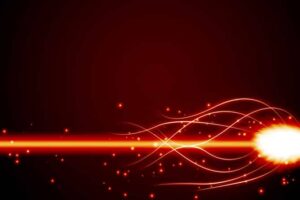
Emerging research explores the use of high-intensity laser pulses interacting with plasma to accelerate charged particles to relativistic speeds. This laser-driven acceleration mimics cosmic ray production mechanisms and opens new frontiers in high-energy physics, offering a novel pathway to generate cosmic ray analogs in laboratory settings.
Scientific Principles Behind Cosmic Ray Generation
Particle accelerators and other generation methods rely on electromagnetic forces to propel charged particles. Magnetic and electric fields guide and accelerate these particles along specific trajectories, increasing their kinetic energy to relativistic levels. When these particles collide, they produce a variety of secondary particles and high-energy states analogous to natural cosmic ray interactions.
Applications and Significance of Cosmic Rays
The study and generation of cosmic rays have far-reaching implications beyond pure scientific curiosity. Cosmic ray detection plays a pivotal role in astrophysics, atmospheric science, and even medical imaging technologies. For example, secondary cosmic rays influence atmospheric phenomena such as cloud formation and chemical reactions.
In space exploration, understanding cosmic rays is vital for astronaut safety. Exposure to cosmic radiation poses health risks during long-duration missions, such as those planned for Mars. Replicating cosmic rays in controlled environments aids in developing protective measures and safety protocols.
Common Misconceptions About Cosmic Rays
Cosmic rays are solely composed of photons.
Cosmic rays primarily consist of charged particles like protons and atomic nuclei, not photons.
Cosmic rays can be easily generated in any laboratory.
Producing cosmic rays with energies comparable to those found in nature requires highly specialized equipment such as particle accelerators and advanced simulation techniques.
Why Understanding Cosmic Rays Is Crucial
Exploring cosmic rays bridges multiple scientific disciplines, including particle physics, astrophysics, and computational science. This interdisciplinary approach enhances our comprehension of fundamental particles and cosmic phenomena. Moreover, the ability to generate and study cosmic rays in laboratory settings provides a window into the universe’s most energetic events, fostering technological advancements and deepening our cosmic perspective.
Summary
Generating cosmic rays involves replicating the extreme conditions found in the universe through particle accelerators, nuclear reactions, computational simulations, and laser-driven techniques. These efforts not only advance fundamental physics but also have practical applications in space exploration, atmospheric science, and technology. The ongoing quest to understand cosmic rays exemplifies humanity’s drive to connect the microcosmic world of particles with the vast expanse of the cosmos, revealing the profound mysteries that lie beyond our planet.
FAQ
Can cosmic rays be generated artificially in a laboratory?
Yes, cosmic rays can be partially replicated using particle accelerators, nuclear reactions, and laser-driven techniques, but producing cosmic rays with the same energies as natural ones remains challenging.
What are the main sources of cosmic rays in the universe?
Primary sources include supernova explosions, active galactic nuclei, and pulsars, which accelerate particles to extremely high energies.
What risks do cosmic rays pose to astronauts?
Cosmic rays expose astronauts to radiation that can cause health risks during long-duration space missions, necessitating protective measures.
Are cosmic rays composed of photons?
No, cosmic rays primarily consist of charged particles like protons and atomic nuclei, not photons.

Leave a Reply