

Short Answer
Definition of Gamma Rays and Galactic Haze
Gamma rays are a form of electromagnetic radiation characterized by extremely high energy levels. They play a vital role in astrophysics, emerging from a variety of complex cosmic phenomena such as nuclear reactions within stars, particle-antiparticle annihilation, and other exotic astrophysical events. One intriguing subject within this field is the gamma-ray galactic haze-a diffuse emission surrounding the Milky Way that exhibits a broad energy spectrum from radio waves up to gamma rays. This haze is notable for its soft gamma-ray spectrum and remains a focus of ongoing scientific investigation due to its mysterious origins and potential links to dark matter.
Origins and Characteristics of the Galactic Haze
The galactic haze is an obscured, diffuse glow enveloping our galaxy, distinguished by its unique gamma-ray emissions. Its spectral profile spans a wide range of energies, suggesting multiple contributing sources. Scientists have proposed several explanations for this phenomenon, including interactions involving cosmic rays, emissions from pulsars, and the possibility of dark matter-related processes. Despite extensive research, the exact mechanisms producing the haze remain partially unresolved, prompting further exploration into its nature.
Role of Cosmic Rays in Gamma-Ray Emissions
Cosmic rays, primarily composed of high-energy protons and atomic nuclei, are a significant contributor to the gamma-ray output observed in the galactic haze. These particles originate from energetic astrophysical sources such as supernova remnants and active galactic nuclei. When cosmic rays collide with the interstellar medium or interact with stellar photons, they generate gamma rays through mechanisms like inverse Compton scattering and pion decay. Although cosmic rays explain many features of the soft gamma-ray spectrum, they do not fully account for all observed characteristics of the haze, indicating the presence of additional sources.
Influence of Pulsars on Gamma-Ray Emissions
Pulsars-rapidly rotating neutron stars emitting beams of electromagnetic radiation including gamma rays-are another potential source contributing to the galactic haze. The combined emissions from numerous pulsars within the Milky Way could create a diffuse gamma-ray glow, especially concentrated along the galactic plane where pulsar density is higher. However, even when accounting for pulsar contributions, a significant portion of the gamma-ray haze remains unexplained, suggesting that other phenomena, such as dark matter interactions, might be involved.
Dark Matter: An Enigmatic Contributor
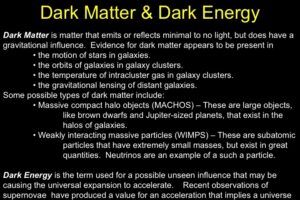
Dark matter constitutes roughly 27% of the universe’s total mass-energy content and remains one of the most profound mysteries in modern physics. It is detected indirectly through its gravitational effects on visible matter, as it interacts very weakly, if at all, with ordinary matter and electromagnetic radiation. A leading hypothesis posits that dark matter consists of weakly interacting massive particles (WIMPs), which could annihilate or decay to produce gamma rays. This theory provides a compelling framework to explain some of the unexplained gamma-ray emissions observed in the galactic haze.
Investigating Dark Matter Signatures in Gamma-Ray Data
Several studies have sought to correlate the spectral properties of the gamma-ray haze with potential signals from dark matter decay or annihilation. Notably, an excess of gamma-ray emissions has been detected in regions such as the Galactic Center, which some researchers interpret as evidence of dark matter particle interactions producing photons at specific energy levels. These findings have revitalized interest in the search for dark matter and its role in shaping the gamma-ray landscape of our galaxy.
Scientific and Technological Implications
The possible association between dark matter and the gamma-ray galactic haze has significant implications for astrophysics and cosmology. It drives the development of advanced gamma-ray observatories capable of detecting faint emissions with high precision. This intersection of observational astronomy and theoretical physics opens new avenues for understanding the fundamental components of the universe, potentially challenging and expanding existing cosmological models.
Interdisciplinary Approaches and Future Directions
Addressing the mysteries of the gamma-ray haze and dark matter requires a multidisciplinary approach, combining insights from astroparticle physics, cosmology, and observational astronomy. Advances in data collection and analysis, powered by modern computational techniques and collaborative research efforts, are enhancing the accuracy of gamma-ray measurements. Continued integration of expertise across fields is essential to unravel the complexities of these phenomena and to push the boundaries of our cosmic knowledge.
Conclusion: The Quest to Understand Gamma-Ray Galactic Haze and Dark Matter
Gamma rays, especially those associated with the galactic haze, represent a critical frontier in the quest to comprehend the universe’s hidden components. While cosmic rays and pulsars explain parts of the observed gamma-ray emissions, the potential involvement of dark matter introduces a profound dimension to this scientific puzzle. As observational technologies and theoretical models evolve, the study of gamma-ray emissions promises to yield transformative insights into astrophysics, cosmology, and the fundamental nature of reality, underscoring the enduring human drive to explore the cosmos.
FAQ
What are gamma rays?
Gamma rays are a form of electromagnetic radiation with extremely high energy levels, originating from various cosmic phenomena.
What is the galactic haze?
The galactic haze is a diffuse emission surrounding the Milky Way, characterized by its unique gamma-ray spectrum.
How do cosmic rays contribute to gamma-ray emissions?
Cosmic rays collide with the interstellar medium and stellar photons, generating gamma rays through processes like inverse Compton scattering.
What is dark matter?
Dark matter makes up about 27% of the universe’s mass-energy content and is detected through its gravitational effects on visible matter.


Leave a Reply