
Short Answer
Understanding Fractal Geometry
Fractal geometry refers to intricate shapes characterized by self-similarity, meaning their patterns recur at progressively smaller or larger scales. This mathematical concept, extensively developed by Benoit Mandelbrot, reveals that fractals are abundant in natural phenomena such as tree branches, mountain ranges, and coastlines. In essence, fractals describe complex structures that maintain a consistent pattern regardless of the level of magnification.
- Self-Similarity:
The property where a shape appears similar at different scales. - Natural Occurrence:
Fractals are found in various natural forms, from clouds to river networks. - Mathematical Foundation:
Fractal geometry uses iterative processes and equations to model these repeating patterns.
Fractals in the Realm of Art
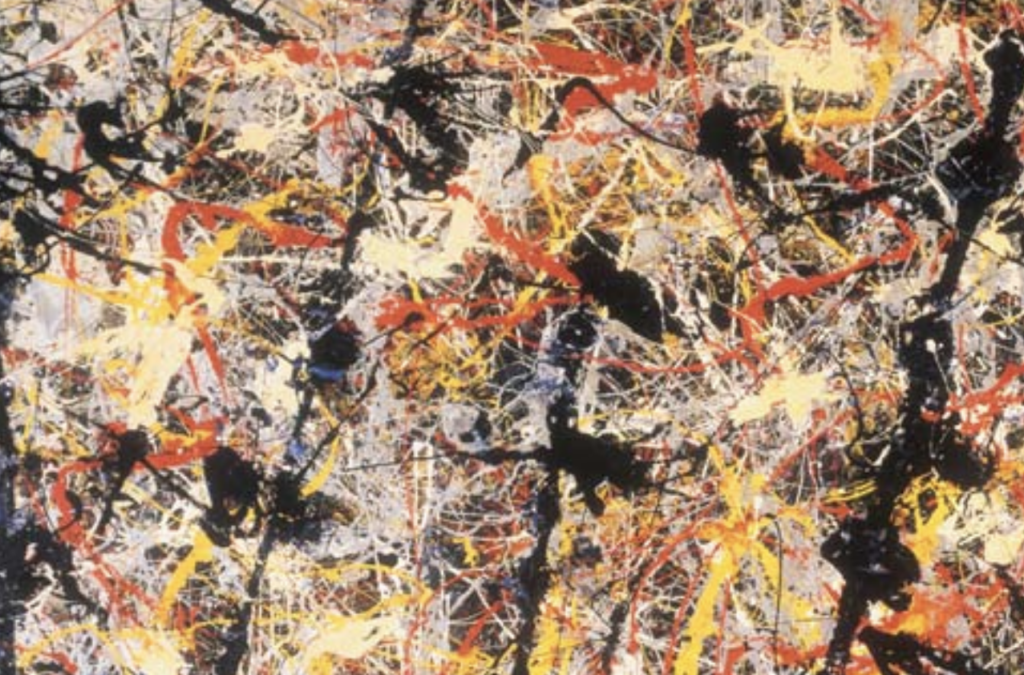
Fractal patterns are not confined to nature; they also manifest in artistic creations, particularly within abstract expressionism. Artists like Jackson Pollock, known for his drip paintings, inadvertently incorporated fractal-like complexity into their work. The seemingly chaotic brushstrokes reveal underlying mathematical order when analyzed through fractal dimensions, suggesting that these artists may have intuitively engaged with fractal principles.
By quantifying the fractal dimension of a painting, researchers can assess its visual complexity and texture. This numeric value serves as a metric to explore the stylistic development of an artist over time, offering a novel perspective on art historical analysis.
Historical Background: Abstract Expressionism and Its Innovations
The mid-1900s witnessed a transformative shift in art, marked by the emergence of abstract expressionism. This movement emphasized spontaneous, dynamic gestures and emotional intensity over representational accuracy. Jackson Pollock’s drip technique exemplifies this approach, where the interplay of randomness and structure mirrors fractal patterns found in nature. Studying the fractal characteristics of such works provides insight into the innovative methods and creative processes that defined this era.
Techniques for Measuring Fractal Dimensions in Paintings
To analyze the fractal properties of artworks, researchers utilize digital image processing tools. The process begins with high-resolution digitization of the painting, followed by computational analysis of pixel arrangements. One common method is the box-counting algorithm, which estimates the fractal dimension by counting the number of boxes of varying sizes needed to cover the pattern.
However, this methodology faces challenges, including differentiating intrinsic artistic features from external influences such as the medium used, cultural context, or the artist’s emotional state during creation. Additionally, technical constraints in imaging and data processing can impact the accuracy and reliability of fractal measurements.
Interpreting Fractal Analysis in Art
While fractal analysis offers quantitative insights into the complexity of artworks, its interpretation remains a subject of debate. Critics argue that reducing art to numerical data risks overlooking its emotional and philosophical essence. Conversely, advocates believe that fractal metrics can complement traditional art criticism by revealing patterns and evolutions not easily discernible through subjective observation alone.
This tension raises important questions about whether empirical data and subjective experience can coexist in the appreciation and study of art.
Broader Implications and Applications
Beyond art history, fractal analysis has practical applications in various disciplines. In forensic science, it assists in authenticating artworks and detecting forgeries by examining structural complexity. Archaeologists may use fractal metrics to study ancient artifacts, while conservationists apply these insights to guide restoration efforts, focusing on areas with distinct fractal characteristics.
This interdisciplinary approach enhances our understanding of artworks by integrating aesthetic appreciation with scientific rigor.
Significance of Fractal Analysis in Art and Science
Fractal analysis bridges the gap between artistic creativity and scientific inquiry, offering a unique lens through which to explore the temporal and stylistic dimensions of art. By quantifying visual complexity, it enriches art historical research and fosters dialogue between disciplines. This method not only deepens our appreciation of artistic expression but also challenges us to reconsider the relationship between empirical evidence and subjective experience in the interpretation of creativity.
Summary
The application of fractal geometry to art analysis represents a pioneering intersection of mathematics, aesthetics, and cultural history. Through digital techniques and fractal dimension calculations, researchers gain new tools to investigate the evolution and authenticity of artworks, particularly within abstract expressionism. Despite ongoing debates about its interpretive value, fractal analysis continues to inspire interdisciplinary collaboration and philosophical reflection on the nature of art itself.
FAQ
What are fractals?
Fractals are intricate shapes characterized by self-similarity, where patterns recur at different scales.
How are fractals used in art analysis?
Fractals help quantify the visual complexity of artworks, offering insights into an artist’s style and evolution.
What challenges exist in fractal analysis?
Challenges include differentiating artistic features from external influences and ensuring accurate data processing.


Leave a Reply