
Short Answer
Definition of Time Travel in Theoretical Physics
Time travel refers to the hypothetical concept of moving between different points in time, analogous to how we move through space. It has long fascinated both scientists and science fiction enthusiasts, raising profound questions about the nature of time, causality, and the structure of the universe. In physics, time travel is often explored through the lens of Einstein’s theories of relativity, which revolutionized our understanding of spacetime as a dynamic, interconnected fabric rather than a fixed backdrop.
Historical Context and Einstein’s Contributions
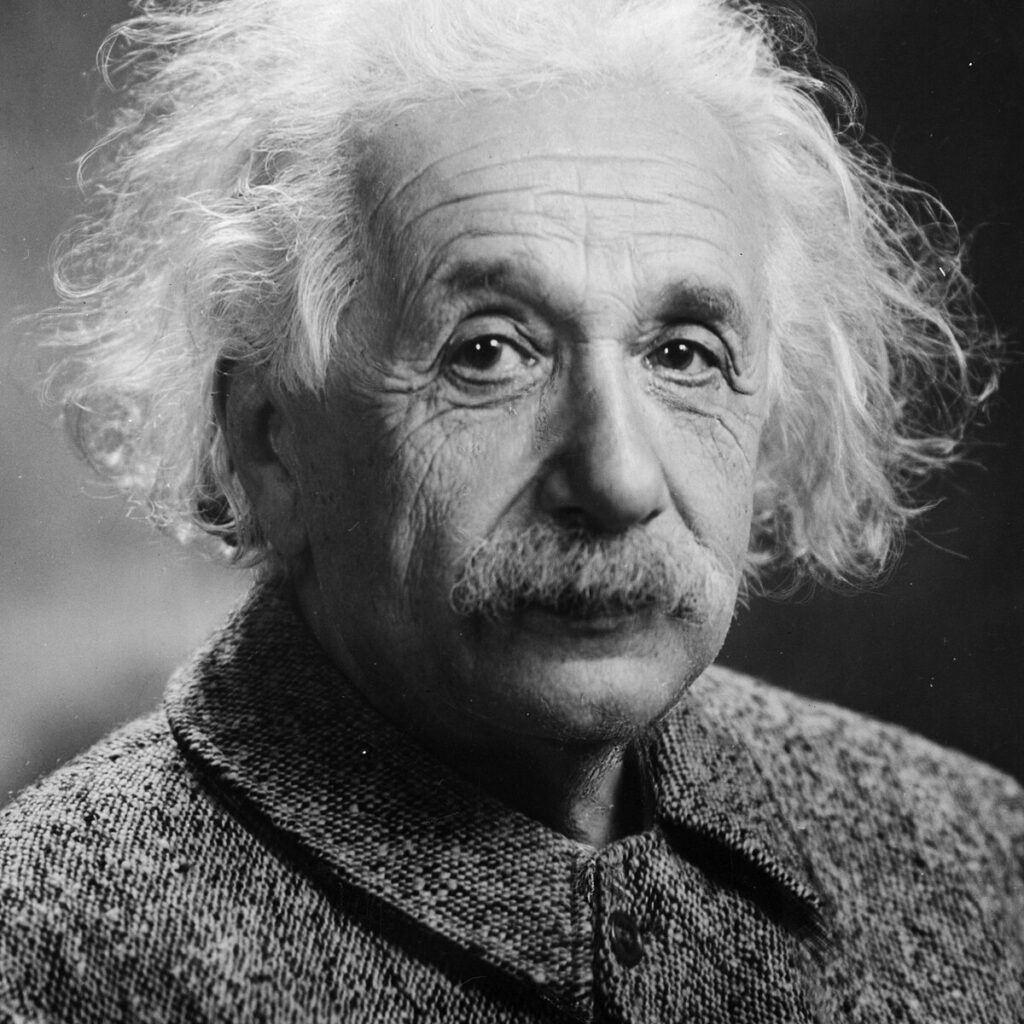
Albert Einstein’s groundbreaking work on relativity fundamentally altered how we perceive time and space. His theories demonstrated that time is relative and intertwined with the three spatial dimensions, forming a four-dimensional continuum known as spacetime. This framework opened the door to theoretical possibilities such as time dilation and, more speculatively, time travel.
The recently rediscovered manuscript attributed to Einstein revisits these ideas, proposing a novel interpretation of time as an oscillatory phenomenon rather than a simple linear progression. This perspective likens time to a sine wave, characterized by alternating peaks and troughs, suggesting that temporal flow might bend or loop under specific conditions.
Closed Timelike Curves and Temporal Loops
Central to the manuscript’s thesis is the concept of closed timelike curves (CTCs), theoretical solutions to Einstein’s field equations in general relativity. CTCs describe paths through spacetime that loop back on themselves, theoretically allowing an object to revisit its own past. This idea challenges conventional notions of causality and temporal order, introducing paradoxes such as the possibility of meeting one’s younger self or altering past events.
- Closed Timelike Curves (CTCs):
Hypothetical loops in spacetime permitting backward time travel. - Causal Loops:
Situations where cause and effect become entangled, complicating the sequence of events.
Mathematical Framework and Theoretical Implications
The manuscript integrates advanced mathematical models to explore the feasibility of time travel. It examines solutions to Einstein’s field equations that permit CTCs, often involving exotic conditions such as intense gravitational fields or the presence of hypothetical structures like wormholes. These wormholes could act as shortcuts connecting distant points in spacetime, potentially enabling temporal displacement.
Mathematically, the existence of CTCs arises from specific metrics in general relativity, such as the Gödel metric or Kerr black hole solutions, which allow for non-trivial topologies in spacetime. The equations highlight the delicate balance between geometry and physics required to sustain such phenomena without violating known physical laws.
Philosophical and Ontological Challenges
The possibility of time travel introduces profound philosophical dilemmas, particularly concerning causality and free will. The manuscript addresses paradoxes like the “grandfather paradox,” where altering past events could negate the conditions for the time traveler’s existence. It suggests that if time is non-linear and all moments coexist simultaneously, these paradoxes might be resolved by viewing time as a tapestry of interwoven possibilities rather than a single, immutable sequence.
Potential Mechanisms for Temporal Navigation
Einstein’s paper speculates on mechanisms that might enable traversal through time, focusing on extreme gravitational environments and wormholes. Wormholes, theoretical tunnels through spacetime, could connect disparate temporal and spatial locations, acting as cosmic bridges. The manipulation of such structures, if possible, might allow for controlled movement across different eras.
This concept evokes imagery of cosmic pathways or rivers, where branching tributaries represent alternate timelines or futures. Such metaphors help conceptualize the complex and often counterintuitive nature of temporal navigation.
Ethical Considerations and Consequences
The prospect of time travel carries significant ethical implications. Even minor interventions in the past could trigger cascading effects, reminiscent of the butterfly effect in chaos theory, where small changes lead to unpredictable and potentially catastrophic outcomes. The manuscript urges caution and reflection on the responsibilities that would accompany temporal manipulation.
Relevance and Impact on Modern Science and Society
The exploration of time travel transcends theoretical physics, touching on fundamental questions about human existence and our relationship with time. As technological and scientific advancements accelerate, understanding the nature of time becomes increasingly vital. The manuscript’s insights encourage a reevaluation of our temporal agency-whether we are passive observers or active participants shaping our destinies.
Common Misconceptions About Time Travel
Time travel allows unrestricted alteration of past events.
Theoretical models suggest constraints such as causal loops and self-consistency principles that limit paradoxical changes.
Time is a simple, linear progression.
Modern physics views time as part of a complex spacetime fabric, potentially oscillatory or multi-dimensional.
Conclusion: The Ongoing Quest to Understand Time
The rediscovery of Einstein’s manuscript reignites the scientific dialogue surrounding time travel, blending rigorous theoretical inquiry with imaginative speculation. Whether these ideas will lead to practical breakthroughs or remain conceptual frameworks, they enrich our understanding of the universe and inspire continued exploration. Time travel remains a compelling frontier, inviting us to ponder the infinite possibilities woven into the fabric of reality.
FAQ
What is the significance of Einstein's long-lost paper?
The paper explores the theoretical mechanisms of time travel, particularly through the concept of closed timelike curves.
How do closed timelike curves relate to time travel?
Closed timelike curves are theoretical paths in spacetime that could allow for backward time travel, challenging traditional notions of causality.


Leave a Reply