
Short Answer
Definition of the Doppler Effect
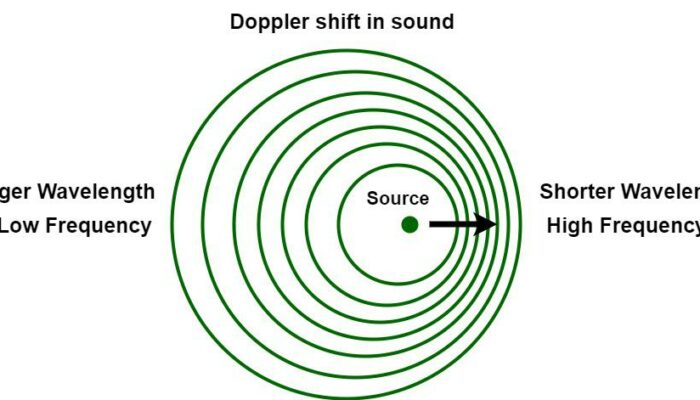
The Doppler Effect refers to the alteration in frequency or wavelength of waves as perceived by an observer when the source of those waves is in motion relative to the observer. This phenomenon is widely recognized in various scientific fields such as astrophysics, acoustics, and medical imaging. Typically, when a wave-emitting source approaches an observer, the observed frequency increases; conversely, as the source moves away, the frequency decreases.
Introduction to Metamaterials
Metamaterials are artificially engineered composites designed to exhibit properties not found in natural substances. Their unique characteristics arise from their precisely structured subwavelength components rather than the chemical composition of their base materials. These engineered structures enable unprecedented control over electromagnetic waves-including visible light, radio frequencies, and sound-allowing for phenomena such as negative refractive indices and unconventional wave behaviors.
Mathematical Description of the Classical Doppler Effect
The classical Doppler Effect can be expressed mathematically by the formula:
f’ = f times frac{v + v_o}{v + v_s}
- f’: Observed frequency
- f: Frequency emitted by the source
- v: Speed of the wave in the medium (e.g., speed of sound)
- v_o: Velocity of the observer relative to the medium
- v_s: Velocity of the source relative to the medium
This equation illustrates how the relative velocities of the source and observer influence the frequency perceived by the observer.
Reverse Doppler Effect Enabled by Metamaterials
Recent advancements in metamaterials have introduced the possibility of a “reverse Doppler effect,” where the frequency shift behaves contrary to classical expectations. In such materials, waves passing through can exhibit frequency changes that appear inverted: the frequency increases as the source moves away and decreases as it approaches. This counterintuitive effect stems from the metamaterial’s ability to simulate negative refractive indices and manipulate wave propagation in ways that mimic reversed source motion.
Mechanism Behind the Reverse Doppler Effect
The reverse Doppler phenomenon arises because metamaterials can alter the phase velocity and direction of waves passing through them. By engineering the internal structure of these materials, it is possible to create conditions where the wavefronts behave as if the source’s motion is reversed, leading to an inverted frequency shift. This manipulation challenges traditional interpretations of wave-source dynamics and opens new avenues for controlling wave behavior.
Applications of the Reverse Doppler Effect
Stealth Technology
One promising application of the reverse Doppler effect is in stealth and radar evasion technologies. By designing metamaterials that modify the frequency of reflected radar waves depending on the relative motion of the radar source, objects can be rendered less detectable or even invisible to radar systems. This capability could significantly enhance military stealth operations by reducing the radar signature of vehicles and equipment.
Telecommunications
In telecommunications, the ability to dynamically control wave frequencies through metamaterials offers potential improvements in bandwidth management and signal clarity. By encoding data with frequency shifts that counteract traditional noise and interference, communication systems could achieve higher data rates and more reliable transmissions, especially in environments with high signal congestion.
Optical Cloaking and Light Manipulation
Metamaterials also hold promise in the optical domain, where reverse Doppler shifts could be harnessed to develop advanced cloaking devices. By altering the frequency and propagation of visible light waves, these materials could make objects appear invisible to the human eye. Such technology could revolutionize privacy measures, architectural design, and even artistic installations.
Philosophical and Theoretical Implications
The ability to reverse frequency shifts through metamaterials invites deeper reflection on fundamental concepts such as causality and the nature of wave mechanics. If frequency perception can be decoupled from the relative motion of source and observer, it challenges the classical understanding of velocity and wave propagation. This prompts a reconsideration of foundational physical laws and encourages interdisciplinary research bridging physics, material science, and engineering.
Future Directions and Research Challenges
Ongoing investigations into metamaterials and their capacity to induce reverse Doppler effects require collaborative efforts across multiple scientific disciplines. Key challenges include ensuring reproducibility of results across different wave spectra and environmental conditions, as well as scaling these materials for practical applications. Continued research is expected to unlock new functionalities and expand the technological impact of these engineered materials.
Significance of the Reverse Doppler Effect
The exploration of reverse Doppler phenomena through metamaterials not only redefines our understanding of wave dynamics but also enhances technological capabilities in diverse fields such as defense, communications, and optics. By leveraging these novel materials, scientists and engineers can develop innovative solutions that transcend traditional limitations, marking a significant advancement in applied physics and material science.
FAQ
What is the reverse Doppler effect?
The reverse Doppler effect is a phenomenon where frequency shifts behave contrary to classical expectations, allowing frequency to increase as the source moves away and decrease as it approaches.
How do metamaterials enable the reverse Doppler effect?
Metamaterials can manipulate wave propagation and phase velocity, simulating negative refractive indices that lead to an inverted frequency shift.
What are some applications of the reverse Doppler effect?
Applications include stealth technology, telecommunications improvements, and advanced optical cloaking devices.






Leave a Reply