
Short Answer
Definition of the Hubble Space Telescope as a Temporal Observer
The idea of the Hubble Space Telescope acting as a “time machine” is a metaphorical concept rooted in astrophysics rather than science fiction. While it does not enable physical travel through time, Hubble allows us to observe the universe as it existed in the distant past by capturing light that has traveled across vast cosmic distances. This unique capability transforms the telescope into a powerful tool for peering back into the history of the cosmos.
Fundamentals of Light and Cosmic Time Travel
Understanding how Hubble functions as a temporal observer requires grasping the nature of light and its finite speed. Light moves at approximately 299,792 kilometers per second, meaning that when we observe distant celestial objects, we see them not as they are now but as they were when their light began its journey to Earth. This delay can span millions or even billions of years, depending on the object’s distance, effectively allowing telescopes to look back in time.
- Speed of Light:
The constant speed at which light travels limits how quickly information from distant objects reaches us. - Light Travel Time:
The farther away an object is, the older the light we observe, providing a glimpse into earlier cosmic epochs.
Hubble’s Observational Capabilities
Orbiting above Earth’s atmosphere, the Hubble Space Telescope avoids atmospheric distortion, enabling it to capture light across a wide spectrum-from ultraviolet through visible to near-infrared wavelengths. This broad range allows Hubble to detect celestial phenomena invisible or obscured to ground-based observatories. By collecting faint photons emitted billions of years ago, Hubble effectively captures images that serve as snapshots of the universe’s ancient past.

How Hubble Reveals the Universe’s History
When Hubble observes a galaxy billions of light-years away, it collects photons that have traveled uninterrupted for billions of years. The resulting image is not merely a spatial representation but a temporal record, showing the galaxy as it appeared when the universe was much younger. This process can be likened to cosmic archaeology, where astronomers uncover relics from long-extinct epochs.
Implications for Human Perception and Astronomy
The time-delayed nature of cosmic observation challenges our understanding of reality and immediacy. Unlike everyday experiences where sight and event coincide almost instantaneously, astronomical observations inherently involve a delay dictated by light speed. This means our view of the universe is always a look into the past, highlighting the gap between observation and the current state of distant objects.
Scientific Contributions of Hubble’s Temporal Perspective
Hubble’s ability to observe distant objects at various stages of their evolution has revolutionized our understanding of cosmic phenomena. By studying galaxies, stars, and supernovae at different distances-and thus different times-astronomers construct detailed evolutionary models of the universe. These observations have provided critical insights into star formation, galaxy development, and the universe’s expansion rate.
- Star Life Cycles:
Hubble has revealed stages of stellar birth, evolution, and death across cosmic time. - Galaxy Formation:
Observations of distant galaxies inform theories about their origins and transformations. - Cosmic Expansion:
Data from supernovae have helped measure the accelerating expansion of the universe.
Testing Fundamental Physics with Ancient Light
By detecting light emitted billions of years ago, Hubble enables scientists to examine whether the laws of physics have remained consistent over cosmic time. This capability is crucial for exploring phenomena such as dark energy, the mysterious force driving the universe’s accelerated expansion. Observations of distant supernovae have placed constraints on dark energy’s properties, refining our understanding of fundamental physics.
Clarifying the “Time Machine” Metaphor
It is important to distinguish Hubble’s observational time travel from the fictional concept of time machines that allow unrestricted movement through time. Hubble’s “time travel” is strictly passive and unidirectional, limited to receiving ancient light. It does not enable backward or forward jumps through time but offers a window into the universe’s past.
- Misconception: Hubble can transport observers through time.
Correction: Hubble only observes light from the past; it does not enable physical time travel. - Misconception: The telescope manipulates time or space.
Correction: Hubble’s function is purely observational, capturing photons that have traveled across space and time.
Advancements Beyond Hubble: The James Webb Space Telescope
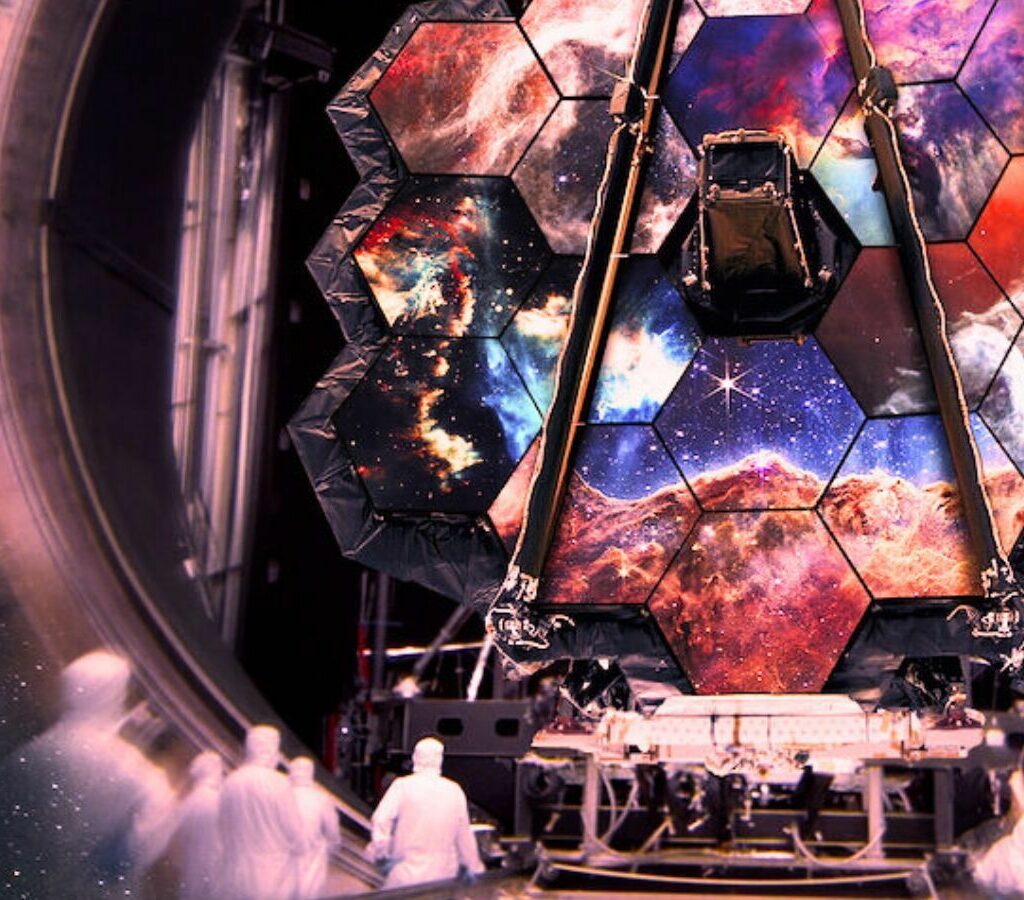
Building on Hubble’s legacy, newer instruments like the James Webb Space Telescope extend our temporal reach even further. Webb’s enhanced sensitivity and infrared capabilities allow it to peer deeper into the universe’s early epochs, closer to the formation of the first stars and galaxies. Together, these observatories create a more comprehensive narrative of cosmic history.
Significance of Hubble’s Temporal Insights
The Hubble Space Telescope serves as an extraordinary temporal lens, enabling astronomers and the public alike to witness epochs long vanished. Its observations have reshaped our understanding of the universe’s vast timeline and ongoing evolution. While not a time machine in the traditional sense, Hubble is a conduit for the stories carried by light, reminding us that light itself is the ultimate chronicler of cosmic history.

Leave a Reply