
Short Answer
Overview of the James Webb Space Telescope
The James Webb Space Telescope (JWST) represents a monumental leap in astronomical observation, designed to explore the universe’s earliest epochs with unprecedented clarity. Situated nearly one million miles from Earth at the second Lagrange point (L2), JWST leverages exceptional infrared sensitivity to peer into cosmic history. However, its remote and harsh environment raises critical questions about the feasibility of in-space maintenance, such as repairs or refueling, challenging traditional concepts of spacecraft longevity and servicing.
Historical Context: Spacecraft Servicing Missions
Early space missions demonstrated that servicing orbiting instruments was possible, albeit challenging. The Hubble Space Telescope, orbiting just 340 miles above Earth, benefited from multiple servicing missions conducted by Space Shuttle crews. These missions involved complex repairs and upgrades that significantly extended Hubble’s operational lifespan and scientific output. This human-led maintenance model set a precedent, fostering hopes that sophisticated space instruments could be routinely maintained and enhanced while in orbit. However, JWST’s mission parameters diverge significantly from this model.
JWST’s Location and Its Implications
Positioned at L2, approximately 1.5 million kilometers from Earth, JWST enjoys a gravitationally stable environment that optimizes solar shielding and thermal regulation. This vantage point is ideal for sensitive infrared observations but presents enormous challenges for servicing. Unlike Hubble’s relatively accessible low Earth orbit, JWST’s distant location makes crewed servicing missions currently unfeasible due to extended travel times, elevated costs, and increased mission risks.

Structural Complexity and Servicing Challenges
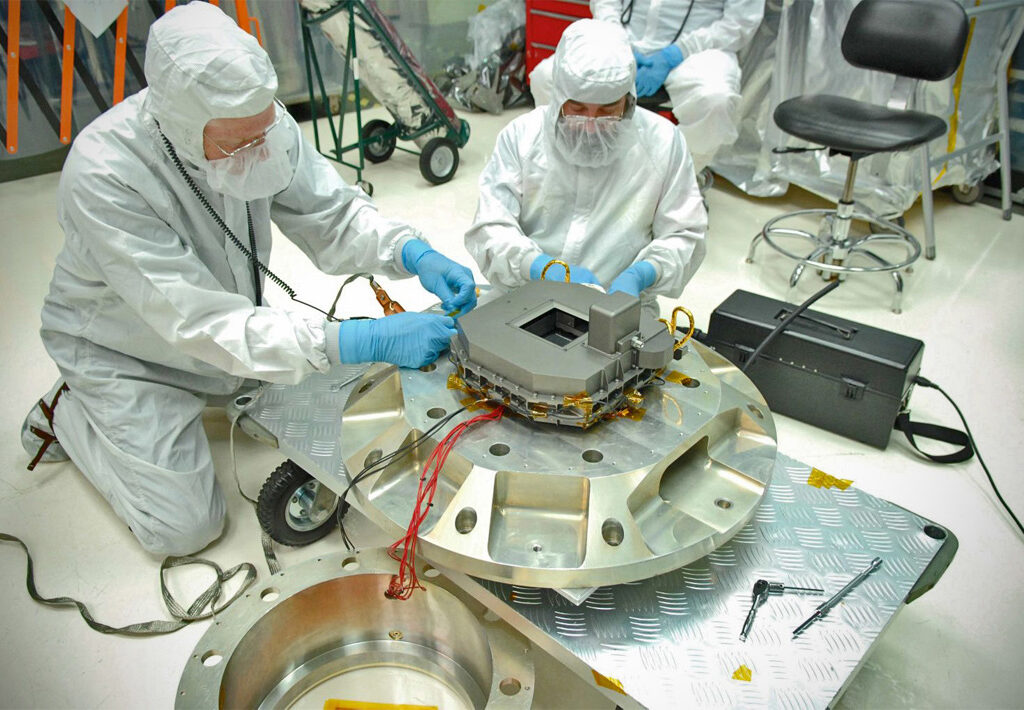
JWST’s intricate design further complicates potential maintenance efforts. Its primary mirror consists of 18 gold-coated hexagonal segments spanning 6.5 meters-more than twice the diameter of Hubble’s mirror. The telescope’s sunshield, roughly the size of a tennis court, must deploy flawlessly to maintain cryogenic temperatures essential for infrared observations. Any attempt to dock, repair, or refuel JWST would require extraordinary precision to avoid damaging these delicate components, rendering manual servicing missions impractical and hazardous with current technology.
Prospects for Robotic Servicing
Advances in robotic technology offer a glimmer of hope for future JWST maintenance. Autonomous spacecraft equipped with advanced manipulators could potentially rendezvous with JWST to perform repairs or refueling. Such missions would demand breakthroughs in autonomous navigation, remote manipulation, and contamination control to preserve JWST’s sensitive thermal environment. Although still speculative, robotic servicing could become a standard approach in the coming decades, extending the operational life of JWST and other distant space assets.
Refueling JWST: Possibilities and Obstacles
While JWST is not a fuel-intensive spacecraft, it relies on limited propellant for station-keeping maneuvers to maintain its position and orientation at L2. Once this fuel is depleted, the telescope’s operational life would end. Theoretically, refueling could prolong JWST’s mission by decades, enhancing its scientific contributions without requiring full repairs.
- Technical Challenges:
Docking with JWST and transferring fuel without contamination is a complex engineering feat, complicated by the telescope’s sensitivity and the dynamics of deep space rendezvous. - Logistical Hurdles:
Coordinating a refueling mission involves precise timing and navigation to intercept a distant, fast-moving target, necessitating advanced space infrastructure such as fuel depots and transfer vehicles.
JWST’s Autonomous Design Philosophy
Recognizing the impracticality of in-space servicing, JWST was engineered with extensive redundancies and fault-tolerant systems. Its components underwent rigorous testing to ensure near-perfect performance without the need for iterative adjustments. Additionally, predictive maintenance algorithms help manage potential degradation proactively. This self-reliant design marks a paradigm shift, embracing the concept of spacecraft as autonomous, single-deployment instruments with finite operational lifespans.
Mission Longevity and Scientific Impact
JWST’s expected operational duration of at least ten years is carefully balanced against fuel limitations and system durability. Even without servicing or refueling, its capabilities far exceed those of previous observatories, promising a wealth of groundbreaking scientific data. The acceptance of a finite mission life encourages the development of complementary or successor telescopes, ensuring continuous advancement in space exploration.
Future Directions in Spacecraft Maintenance
The ongoing discussion about JWST servicing stimulates innovation in space engineering. Emerging technologies such as autonomous drones, artificial intelligence, and in-orbit assembly could revolutionize spacecraft maintenance. Future observatories might be designed with modular components specifically intended for robotic or human replacement. Concepts like artificial habitats, deep space docks, and orbital fuel stations could transform current limitations into operational realities.
Significance of JWST Servicing Considerations
The question of whether JWST can be repaired or refueled underscores the evolving relationship between humanity and space exploration. It challenges engineers and scientists to push the boundaries of technology and mission design, fostering new paradigms for sustaining extraterrestrial assets. While immediate servicing of JWST is not feasible, contemplating these possibilities inspires a vision of continuous presence and care beyond Earth’s orbit.
Conclusion: JWST as a Milestone and a Catalyst
JWST stands as both a pinnacle of current space technology and a stepping stone toward future exploration. Its design reflects a strategic acceptance of limited mission duration combined with maximized scientific output. Positioned at the frontier of remote autonomy, JWST’s servicing challenges invite a transformative perspective-one where maintenance extends beyond Earth’s vicinity, and humanity’s cosmic endeavors evolve into enduring presences among the stars. This forward-looking mindset fuels curiosity and innovation, shaping the future of space exploration.




Leave a Reply