

Short Answer
Understanding Particles: The Building Blocks of Reality
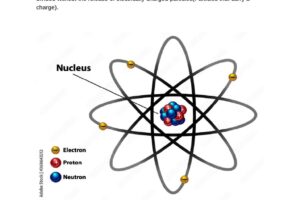
Particles constitute the fundamental components of all matter observed in the universe. These microscopic entities include electrons, protons, neutrons, and a vast array of subatomic particles. Far from being inert, particles are dynamic, constantly influenced by fundamental forces that govern their interactions and transformations. Their dual nature, embodying characteristics of both matter and energy, forms the cornerstone of modern physics and invites deeper investigation into their true essence.
Definition of Matter and Energy
To grasp the relationship between particles, matter, and energy, it is essential to define these concepts clearly:
- Matter:
Anything that has mass and occupies space, typically perceived as tangible objects ranging from everyday items to celestial bodies. - Energy:
An intangible quantity that enables work or causes change, existing in various forms such as kinetic, potential, thermal, and electromagnetic energy.
Mass-Energy Equivalence: The Bridge Between Matter and Energy
One of the most profound insights in physics is encapsulated in Albert Einstein’s mass-energy equivalence principle, expressed by the equation E=mc². This formula reveals that mass (m) and energy (E) are interchangeable, connected by the speed of light squared (c²). Consequently, particles are not merely matter; they also embody energy. When particles move, they possess kinetic energy, and when situated within fields, they hold potential energy. This principle has far-reaching implications, influencing our understanding of atomic behavior and the evolution of the cosmos.
Quantum Mechanics and Wave-Particle Duality
Quantum mechanics revolutionizes classical views by describing particles as entities exhibiting both wave-like and particle-like properties. This wave-particle duality means that particles can exist in multiple states simultaneously, a phenomenon that defies traditional deterministic interpretations. In certain contexts, particles behave as waves, emphasizing their energetic nature, while in others, they display characteristics typical of matter. This duality challenges the clear-cut distinction between energy and matter, highlighting the complex nature of particles.
Classification of Fundamental Particles in the Standard Model
The Standard Model of particle physics categorizes fundamental particles into two main groups:
- Fermions:
These are matter particles, including quarks and leptons, which combine to form atoms and thus constitute the tangible matter around us. - Bosons:
These particles act as force carriers, such as photons and gluons, mediating interactions between fermions and facilitating the forces that govern particle behavior.
This classification underscores the dual role particles play as both constituents of matter and carriers of energy, blurring the lines between these two fundamental concepts.
Practical Implications: Energy Extraction and Technological Applications
The interplay between matter and energy is vividly demonstrated in technologies that harness the energy stored within particles. Nuclear reactions, including fission and fusion, convert matter into vast amounts of energy, powering electricity generation and enabling medical advancements such as radiation therapy. These applications highlight how particles serve as reservoirs of energy, while simultaneously existing as material entities, illustrating their inseparable relationship in practical contexts.
Phenomena Illustrating Particle Duality: Superconductivity and Superfluidity
Certain physical phenomena further exemplify the complex nature of particles:
- Superconductivity:
At extremely low temperatures, materials exhibit zero electrical resistance, a state arising from the coherent behavior of particles and their energetic interactions. - Superfluidity:
In this state, fluids flow without viscosity, demonstrating quantum mechanical effects where particles act in unison, blending properties of matter and energy.
These phenomena reveal that particles cannot be strictly categorized as either matter or energy but instead embody aspects of both.
Astrophysical Perspectives: Dark Matter and Cosmic Mysteries
Astrophysics adds another dimension to the discussion through the study of dark matter, an elusive form of matter that influences the structure and expansion of the universe. Despite its gravitational effects, dark matter remains undetectable by conventional means, prompting speculation about its energetic properties and interactions. This ongoing research challenges our understanding of particles and their classification, suggesting that the boundary between matter and energy may be even more nuanced on a cosmic scale.
Common Misconceptions About Particles, Matter, and Energy
Particles are purely matter.
Particles possess both matter and energy characteristics, as demonstrated by mass-energy equivalence and quantum behavior.
Energy and matter are completely separate entities.
Energy and matter are interconvertible and deeply interconnected, with particles serving as the link between the two.
Significance of Understanding Particle Duality
Recognizing the intertwined nature of energy and matter within particles is crucial for advancing scientific knowledge and technological innovation. This understanding informs fields ranging from quantum physics and cosmology to energy production and material science. By appreciating the dual aspects of particles, researchers can develop more comprehensive models of the universe and harness the potential of matter-energy transformations for practical benefits.
Conclusion: The Ongoing Exploration of Particle Nature
The question of whether particles are more closely related to energy or matter does not yield a simple answer. Instead, it opens a pathway for continuous inquiry into the fundamental fabric of reality. Particles embody a synthesis of both concepts, defying rigid classification and inviting a holistic perspective. As physics evolves, integrating classical and quantum insights, our comprehension of the universe deepens, revealing the elegant interplay between the tangible and intangible elements that constitute existence.
FAQ
What is the relationship between particles and energy?
Particles possess both mass and energy, as described by Einstein's mass-energy equivalence principle, meaning they can exhibit properties of both matter and energy depending on their state and interactions.
Do particles behave like matter or energy?
Particles exhibit wave-particle duality, behaving as matter in some contexts and as energy waves in others, according to quantum mechanics.
What role do fermions and bosons play in particle physics?
Fermions are particles that make up matter, while bosons act as force carriers that mediate interactions between particles.
How does quantum mechanics influence our understanding of particles?
Quantum mechanics reveals that particles can exist in multiple states simultaneously and behave probabilistically, challenging classical distinctions between matter and energy.
Why is the question of whether particles are more related to energy or matter important?
Understanding whether particles are more related to energy or matter shapes foundational physics concepts and impacts technological applications such as nuclear energy and quantum computing.




Leave a Reply