
Short Answer
Definition of Lasers and Their Significance
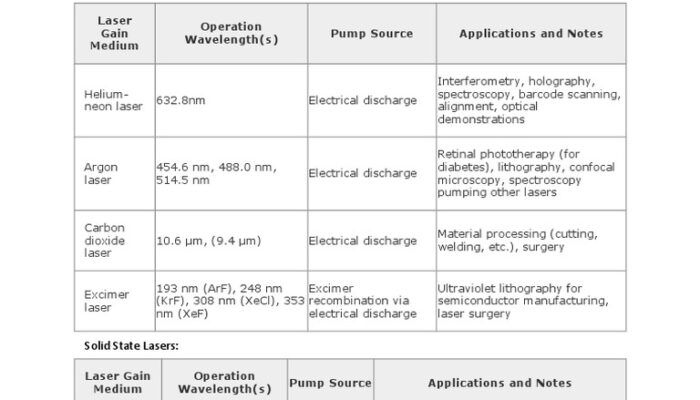
Lasers are highly concentrated beams of light characterized by their coherence, directionality, and monochromatic nature. These focused light sources have transcended their initial optical novelty to become pivotal tools across numerous scientific, industrial, and everyday applications. Their ability to deliver precise energy in controlled forms has made them indispensable in advancing technology and improving quality of life.
Medical Applications: Precision and Healing
One of the most prominent uses of laser technology is in the medical field, where lasers function with surgical precision to treat a variety of conditions. Laser surgery enables doctors to cut, coagulate, or vaporize tissue with minimal invasiveness, reducing recovery times and improving patient outcomes compared to traditional surgical methods.
- Ophthalmology:
Procedures like LASIK utilize lasers to reshape the cornea, correcting vision impairments such as myopia and astigmatism. This technique has restored sight to millions with minimal discomfort and rapid healing. - Dermatology:
Lasers are employed to remove tattoos, treat vascular lesions, and rejuvenate skin by stimulating collagen production. Fractional laser treatments promote skin renewal, offering effective results with reduced scarring and downtime.
Industrial Applications: Enhancing Manufacturing Precision
Laser technology has revolutionized manufacturing by enabling highly accurate cutting, engraving, and welding processes. These capabilities have improved efficiency, reduced waste, and allowed for the creation of complex components that were previously difficult or impossible to produce.
- Laser Cutting and Engraving:
Lasers provide clean, precise cuts in materials ranging from metals to plastics, surpassing traditional mechanical methods in both speed and detail. - Laser Welding:
This technique produces strong, durable joints with minimal thermal distortion, essential for industries such as aerospace and automotive manufacturing where precision and strength are critical.
Role of Lasers in Communications Technology
Lasers form the foundation of modern fiber-optic communication systems, transmitting vast amounts of data over long distances with exceptional speed and accuracy. Their unique properties enable efficient and secure data transfer, making them vital to the global information infrastructure.
- Fiber-Optic Networks:
Laser light travels through optical fibers with minimal signal loss, facilitating high-speed internet, telephone, and television services worldwide. - Data Integrity and Security:
The coherence and monochromaticity of laser beams ensure reliable and secure communication channels, essential for maintaining the integrity of transmitted information.
Scientific Research: Probing the Unknown
In scientific investigations, lasers serve as powerful instruments for analyzing matter and energy with extraordinary precision. Their applications span from chemical analysis to environmental monitoring and forensic science.
- Spectroscopy:
Lasers enable detailed examination of the composition of materials, including distant celestial bodies, by analyzing the interaction of light with matter. - Laser-Induced Breakdown Spectroscopy (LIBS):
This technique uses laser pulses to create plasma from a sample, allowing for rapid identification of elemental composition, useful in fields ranging from material science to crime scene analysis.
Everyday Consumer Uses of Lasers
Beyond specialized fields, lasers have become integral to many consumer products, enhancing convenience and entertainment.
- Laser Printers:
These devices produce high-quality, sharp prints efficiently, revolutionizing both home and office printing. - Barcode Scanners:
Utilizing laser beams to read product information, these scanners streamline retail operations and inventory management. - Entertainment:
Laser light shows combine technology and artistry to create captivating visual experiences, demonstrating the creative potential of laser applications.
Common Misconceptions About Lasers
Lasers are always dangerous and harmful.
While high-powered lasers can be hazardous, many laser applications use low-power beams that are safe when handled properly.
Lasers only have applications in science fiction or specialized industries.
Lasers are widely used in everyday technology, medicine, manufacturing, and entertainment, impacting daily life significantly.
Why Lasers Are Crucial in Modern Society
Lasers represent a fusion of light and innovation that has transformed numerous aspects of human endeavor. Their precision and versatility have enabled breakthroughs in healthcare, manufacturing, communication, and scientific discovery. As laser technology continues to advance, it promises to unlock new frontiers in knowledge and creativity, underscoring its vital role in shaping the future.
FAQ
What is a laser?
A laser is a device that emits light through a process of optical amplification based on stimulated emission of electromagnetic radiation.
How are lasers used in medicine?
Lasers are used for surgeries, eye treatments like LASIK, tattoo removal, and skin rejuvenation due to their precision and minimal invasiveness.
What industries benefit from laser technology?
Industries such as manufacturing, aerospace, automotive, telecommunications, and entertainment utilize lasers for cutting, welding, data transmission, and visual displays.
What role do lasers play in fiber-optic communication?
Lasers provide the coherent light that transmits data through fiber-optic cables at high speed and low loss over long distances.
Can lasers be found in everyday consumer products?
Yes, lasers are commonly used in devices like printers, barcode scanners, and laser light shows.






Leave a Reply