

Short Answer
Definition of End States in Scientific Inquiry
The term “end states” refers to the ultimate conditions or configurations that physical systems reach as they evolve over time under the influence of natural laws. These final stages represent the culmination of dynamic processes governed by forces such as gravity, thermodynamics, and quantum mechanics. In essence, end states mark the conclusion of a system’s evolutionary trajectory, whether in astrophysical phenomena, cosmology, or even cognitive processes.
- Physical Systems:
End states describe the final stable or quasi-stable forms that physical entities assume after undergoing transformation. - Conceptual Duality:
The phrase also metaphorically captures the limits of human understanding and theoretical frameworks, highlighting the boundary between known science and the unknown.
End States in Astrophysics and Cosmology
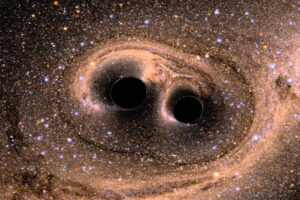
In astrophysics, the concept of end states is vividly illustrated by the life cycles of stars. Depending on their initial mass and composition, stars conclude their existence as white dwarfs, neutron stars, or black holes. These outcomes are dictated by the interplay of gravitational collapse, nuclear fusion, and quantum degeneracy pressure. The transition through these stages exemplifies the deterministic nature of physical laws guiding cosmic evolution.
On a grander scale, cosmology contemplates the ultimate fate of the universe itself. The Second Law of Thermodynamics predicts a progression toward maximum entropy, culminating in a state often referred to as the “heat death” of the universe. In this scenario, energy becomes uniformly distributed, eliminating gradients necessary for sustaining processes that drive complexity and life. This thermodynamic equilibrium represents a profound end state for cosmic evolution.
Multiverse Theories and Their Impact on End States
Emerging theoretical frameworks, such as the multiverse hypothesis, challenge traditional notions of a singular cosmic end state. The multiverse concept posits an infinite ensemble of universes, each with distinct physical constants and evolutionary paths. This plurality compels a reevaluation of what constitutes an end state, suggesting that our universe’s fate is but one possibility among countless others. Such perspectives demand an integrative approach to fundamental physics, blending cosmology with quantum theory and beyond.
Quantum Mechanics and the Nature of End States
Quantum mechanics introduces a probabilistic dimension to the understanding of end states. The Copenhagen interpretation, for example, emphasizes inherent randomness and the role of observation in determining physical outcomes. This contrasts with classical determinism and implies that the final states of particles and systems are not fixed but governed by probability distributions. The wave function’s collapse and quantum entanglement further complicate the picture, suggesting a universe where uncertainty is fundamental.
End States in Consciousness and Cognitive Science
The exploration of end states extends beyond physical systems into the realm of consciousness and cognition. Advances in artificial intelligence and neurobiology raise questions about the ultimate nature of human consciousness. There is growing speculation that consciousness might reach an end state where it becomes indistinguishable from computational processes, blurring the line between biological and artificial minds. This intersection of physics, neuroscience, and philosophy opens new avenues for understanding the self and reality.
Philosophical Implications and Paradigm Shifts
Scientific revolutions, as described by Thomas Kuhn, often precipitate paradigm shifts that reshape our understanding of end states. The transition from deterministic classical physics to probabilistic quantum mechanics exemplifies such a shift. These evolving perspectives invite profound philosophical inquiry into the meaning and purpose of existence, especially as scientific knowledge encroaches upon questions traditionally reserved for metaphysics.
Why Understanding End States Is Crucial
Grasping the concept of end states is vital for multiple disciplines, from physics and cosmology to cognitive science and philosophy. It informs our comprehension of the universe’s lifecycle, the fate of matter and energy, and the potential trajectories of consciousness. Moreover, it challenges us to reconsider the boundaries of knowledge and the nature of reality itself, fostering a deeper appreciation for the complexity and interconnectedness of all phenomena.
Common Misconceptions About End States
End states imply absolute finality and immutability.
Many end states are stable but can be subject to further transformation under new conditions or interpretations.
The universe’s end state is definitively known.
The ultimate fate of the universe remains speculative, with multiple competing theories such as heat death, big rip, or cyclic models.
Consciousness cannot be analyzed through physical laws.
Interdisciplinary research increasingly suggests that consciousness may be studied scientifically, potentially revealing its own end states.
Real-World Examples Illustrating End States
- Stellar Evolution:
The Sun will eventually become a white dwarf after exhausting its nuclear fuel, exemplifying a physical end state. - Thermodynamic Equilibrium:
A cup of hot coffee cooling to room temperature demonstrates a simple system reaching thermal equilibrium, a microcosm of universal heat death. - Artificial Intelligence Development:
The progression toward advanced AI systems raises questions about the potential convergence of machine and human consciousness as an end state.
FAQ
What are end states in scientific inquiry?
End states refer to the ultimate conditions or configurations that physical systems reach as they evolve over time under natural laws.
How do end states apply to astrophysics?
In astrophysics, end states represent the final forms of stars, such as white dwarfs, neutron stars, or black holes, based on their mass and composition.
What is the significance of understanding end states?
Understanding end states is crucial as it informs our comprehension of the universe's lifecycle, the fate of matter and energy, and the potential trajectories of consciousness.




Leave a Reply