

Short Answer
Definition of Black Hole Triplets and Binary Systems
Black hole triplets refer to a gravitationally bound system consisting of three black holes in close proximity, interacting dynamically through their immense gravitational fields. These systems arise when massive stars collapse into black holes within dense stellar environments, such as star clusters, where multiple black holes can form and remain near each other. Over time, the complex gravitational interplay among the three can lead to the formation of a binary black hole pair, where two black holes orbit each other closely, while the third is either ejected or remains at a distance.
- Black Hole:
A region in space with gravity so strong that nothing, not even light, can escape from it, typically formed from the remnants of massive stars. - Triplet System:
A gravitationally interacting group of three black holes, exhibiting chaotic orbital dynamics. - Binary Black Hole:
A pair of black holes orbiting each other, often the end state of a triplet after gravitational interactions.
Mechanics of Black Hole Interactions in Triplets
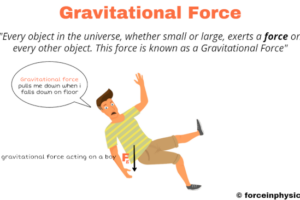
The gravitational forces within a black hole triplet create a complex and often chaotic orbital dance. Each black hole exerts a strong pull on the others, resulting in shifting trajectories and energy exchanges. This dynamic environment can cause one black hole to be gravitationally ejected or to lose its close association, while the remaining two black holes gradually form a tighter binary system. The process is governed by the laws of gravity and energy conservation, with the system evolving over time as gravitational waves carry away orbital energy.
Role of Gravitational Waves in Binary Formation
As two black holes orbit each other, they emit gravitational waves-ripples in the fabric of spacetime predicted by Einstein’s theory of general relativity. These waves transport energy away from the system, causing the black holes to spiral closer together. This energy loss is crucial in the transition from a loosely bound pair to a tightly bound binary system, eventually leading to a merger. The emission of gravitational waves not only influences the orbital dynamics but also provides observable signals that astronomers can detect, offering insights into the evolution of black hole systems.
Astrophysical Significance of Black Hole Binary Formation
The emergence of binary black holes from triplets has profound implications for our understanding of cosmic evolution. When two black holes merge, they form a more massive black hole, carrying the combined mass and angular momentum of their predecessors. This process contributes to the growth of supermassive black holes found at the centers of galaxies and influences the dynamics of dense stellar environments such as globular clusters and galactic nuclei. Observations of gravitational waves from these mergers have revolutionized astronomy, providing a new method to study the universe’s most extreme phenomena.
Metaphorical Interpretation: Cosmic Love Triangles
Beyond the scientific framework, the concept of black hole triplets and their evolution into binary systems can be viewed metaphorically as a “cosmic love triangle.” This analogy draws parallels between the gravitational interactions of black holes and human relationships, exploring themes of companionship, separation, and union. Just as black holes are bound by physical forces, human connections are influenced by emotional and social dynamics. The metaphor highlights the universal nature of attraction and the transformative power of relationships, even in the most inhospitable environments.
Common Misconceptions About Black Hole Systems
Black holes always exist in isolation.
Black holes can form complex systems, including binaries and triplets, especially in dense stellar regions.
Black holes only consume matter and do not interact gravitationally with each other.
Black holes exert strong gravitational forces on one another, leading to dynamic orbital interactions and mergers.
Gravitational waves are purely theoretical and cannot be observed.
Gravitational waves have been directly detected by observatories like LIGO and Virgo, confirming their existence and providing data on black hole mergers.
Why Understanding Black Hole Triplets Matters
Studying the formation and evolution of black hole triplets and binaries is crucial for advancing astrophysics and cosmology. These systems serve as natural laboratories for testing general relativity under extreme conditions and help explain the growth of massive black holes in the universe. Additionally, the detection of gravitational waves from binary mergers opens new avenues for observing phenomena invisible to traditional telescopes. On a broader scale, the metaphor of cosmic love triangles enriches our cultural and philosophical perspectives, linking the mysteries of the cosmos with human experiences of connection and transformation.
Real-World Observations and Future Prospects
Gravitational wave observatories have already identified numerous binary black hole mergers, confirming theoretical predictions about their formation. As detection technology improves, astronomers anticipate discovering evidence of black hole triplets and the transitional processes leading to binary formation. These observations will deepen our understanding of stellar evolution, black hole demographics, and the dynamic environments within star clusters and galactic centers. The ongoing study of these cosmic phenomena promises to illuminate both the physical universe and the metaphorical narratives we construct to comprehend it.
FAQ
What are black hole triplets?
Black hole triplets are gravitationally bound systems consisting of three black holes that interact through their gravitational fields.
How do black holes interact in a triplet system?
The gravitational forces create chaotic orbital dynamics, potentially leading to the formation of binary black holes.
What is the significance of gravitational waves in black hole systems?
Gravitational waves carry energy away from black hole pairs, influencing their orbital dynamics and leading to potential mergers.


Leave a Reply