
Short Answer
Overview of the Columbus Module
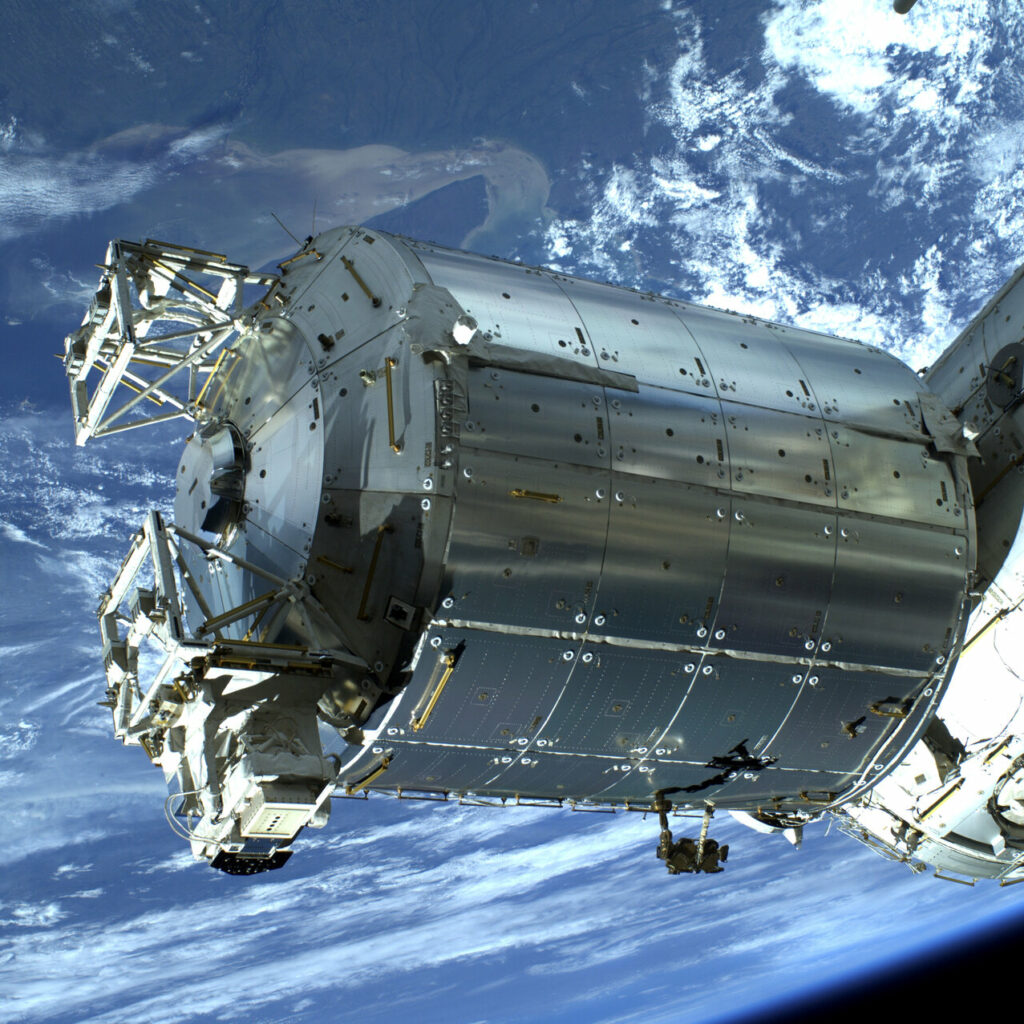
Orbiting Earth as part of the International Space Station (ISS), the Columbus module stands as a testament to human innovation and international cooperation. Serving as Europe’s foremost laboratory in space, Columbus is more than just a structural component; it represents a pioneering effort to advance scientific research and deepen our comprehension of both Earthly and cosmic phenomena.
Historical Background and Design
Launched on February 24, 2008, aboard the Space Shuttle Atlantis, the Columbus module marked a significant achievement in European space endeavors. Primarily engineered and assembled in Germany and Italy, the module is named after the renowned Italian explorer Christopher Columbus, symbolizing humanity’s enduring spirit of exploration. Measuring roughly 4.5 meters in diameter and extending over 6 meters in length, Columbus incorporates state-of-the-art technology that supports a wide range of experiments in a microgravity environment. Its design integrates advanced systems for heating, ventilation, air conditioning (HVAC), environmental control, and electrical power, all essential for sustaining life and scientific activities in the harsh conditions of space.
Scientific Research Capabilities
The Columbus module offers a unique platform for conducting experiments that are impossible to replicate on Earth due to the absence of gravity. This microgravity setting allows scientists to explore phenomena with unprecedented clarity and precision.
Fluid Dynamics in Microgravity
One area of study involves fluid behavior, which becomes significantly more complex without gravitational forces. Observing fluids in this environment provides insights that can lead to advancements in material science and engineering applications.
Biomedical Investigations
Columbus plays a crucial role in biomedical research by examining how microgravity affects human physiology. Changes in gene expression observed in space help scientists understand issues such as bone density reduction, muscle wasting, and immune system alterations. These findings are vital for developing countermeasures to protect astronauts on long-duration missions and have potential applications in treating age-related health problems on Earth.
Fundamental Physics and Material Science
The module also facilitates experiments in fundamental physics, where atomic interactions, chemical processes, and material properties behave differently in microgravity. For example, protein crystallization benefits greatly from the absence of gravity, producing higher-quality crystals than those grown on Earth. This improvement is instrumental in drug development, enabling more detailed molecular analysis and accelerating the creation of new medications.
Educational and Outreach Initiatives
Beyond research, Columbus serves as a hub for educational programs aimed at inspiring the next generation of scientists. The European Space Agency (ESA) leverages live broadcasts and interactive experiments conducted aboard the ISS to engage students worldwide, fostering curiosity and a deeper understanding of space science.
International Collaboration and Impact
The Columbus module exemplifies multinational cooperation, involving contributions from 18 European nations. This partnership not only advances scientific knowledge but also promotes diplomatic relations and shared innovation. The collaborative environment nurtured by the ISS helps address global challenges such as climate change, resource management, and public health crises.
Applications and Broader Significance
Research conducted on Columbus has far-reaching implications beyond space exploration. Insights gained influence diverse sectors including pharmaceuticals, environmental science, and engineering. By providing a vantage point free from Earth’s gravitational constraints, Columbus enables breakthroughs that can lead to novel solutions for pressing terrestrial issues.
Conclusion: Columbus as a Symbol of Progress
The Columbus module represents Europe’s commitment to advancing space exploration and scientific discovery. Its multifaceted contributions enhance our understanding of life, matter, and the universe, propelling humanity toward new frontiers. As it continues to orbit Earth, Columbus inspires curiosity and encourages future generations to pursue knowledge among the stars, embodying a transformative journey that reshapes our perception of existence beyond our planet.
FAQ
What is the Columbus module?
The Columbus module is Europe’s primary scientific laboratory aboard the International Space Station, designed for conducting experiments in microgravity.
When was the Columbus module launched?
The Columbus module was launched on February 24, 2008, aboard the Space Shuttle Atlantis.
What types of research are conducted on the Columbus module?
Research includes fluid dynamics, biomedical studies, fundamental physics, and material science, leveraging the microgravity environment.




Leave a Reply