
Short Answer
Overview of the CERN to UCL Equipment Transfer
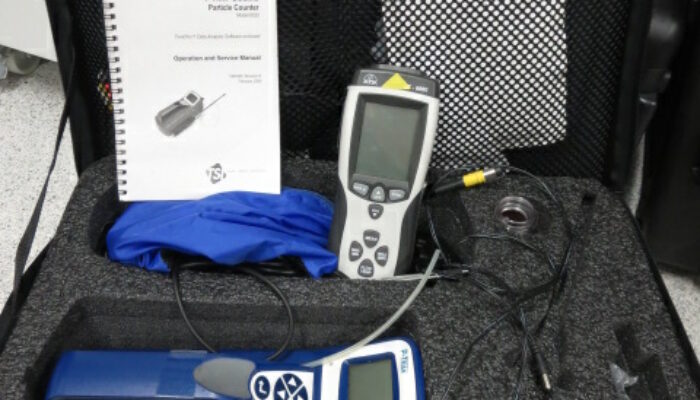
The recent relocation of specialized scientific instruments from CERN, the European Organization for Nuclear Research, to University College London (UCL) signifies more than a mere change in location. This movement represents a pivotal moment in the evolution of particle physics research, symbolizing a shift toward enhanced collaboration, educational outreach, and expanded research potential. Much like a river altering its course to nourish new terrain, this transition opens fresh avenues for scientific discovery and knowledge dissemination.
Background: CERN and Its Role in Particle Physics
Situated beneath the Swiss-French border, CERN is home to the Large Hadron Collider (LHC), the world’s largest and most powerful particle accelerator. Towering over the Eiffel Tower in scale, the LHC enables protons to collide at extraordinary energies, allowing physicists to probe the fundamental constituents of matter and the universe’s deepest mysteries. The facility’s success depends not only on its monumental infrastructure but also on a rich intellectual environment and international cooperation. Moving key apparatus from this epicenter of high-energy physics to UCL fosters a mutually beneficial relationship that could amplify scientific achievements on both sides.
University College London: A Hub for Innovation and Research
UCL boasts a long-standing tradition of pioneering research and academic excellence. Its physics department serves as a vibrant center for innovative thought and experimentation. The integration of CERN’s advanced equipment into UCL’s dynamic research environment creates a fertile ground for breakthroughs in particle physics. This collaboration reflects the spirit of collective scientific endeavor, reminiscent of Renaissance workshops where artisans and scholars joined forces to advance universal knowledge.
Enhancing Accessibility and Educational Opportunities
While CERN’s cutting-edge research has historically been accessible primarily to a specialized group of physicists, UCL’s acquisition of this technology democratizes access to state-of-the-art tools. This shift enables a broader spectrum of students and researchers to engage directly with sophisticated apparatus, fostering hands-on learning and inspiring the next generation of scientists. The move echoes historical scientific revolutions, such as Galileo’s, by making complex concepts more approachable and encouraging widespread intellectual participation.
Interdisciplinary Collaboration and Scientific Synergy
The introduction of CERN’s equipment into UCL’s multidisciplinary academic setting acts like adding a grand piano to an orchestra, enriching the collective scientific output. This fusion encourages cross-pollination between particle physics and other fields such as computer science, engineering, and materials science. Such interdisciplinary cooperation is crucial for addressing today’s multifaceted challenges, including climate change, energy sustainability, and public health crises. By breaking down traditional academic silos, this partnership fosters innovative experimental techniques and computational methods.
Globalization and Cultural Impact of the Relocation
The transfer from a predominantly European-centric research hub to a cosmopolitan city like London signals a broader cultural and scientific shift. UCL’s position as an international nexus invites diverse researchers from around the world, promoting inclusivity and a rich exchange of ideas. This global perspective enhances the vibrancy of particle physics research and aligns with contemporary trends toward open, collaborative science that transcends national boundaries.
Urban Environment and Public Engagement
London’s bustling urban landscape offers more than just a backdrop for scientific activity; it actively contributes to the dissemination and popularization of particle physics. The city’s wealth of museums, educational institutions, and public forums provides platforms to translate complex scientific discoveries into accessible narratives. This engagement fosters public enthusiasm, supports science literacy, and inspires future generations to pursue careers in STEM fields.
Benefits for the Scientific Community and Society
The relocation enriches the intellectual ecosystem by enabling a wide audience-including students, educators, and the general public-to participate in scientific discourse. Through lectures, workshops, and demonstrations, UCL can transform into a lively center of knowledge exchange. Making particle physics more approachable encourages a deeper dialogue between scientists and society, enhancing mutual understanding and support.
Long-Term Implications and Sustainability in Research
This transition embodies a strategic vision for sustainable scientific progress. While CERN continues to push the frontiers of high-energy physics, embedding its apparatus within a leading academic institution like UCL ensures that cutting-edge research tools are preserved and utilized for future generations. This dual approach balances the pursuit of groundbreaking discoveries with a commitment to education and long-term knowledge cultivation.
Conclusion: A New Chapter in Particle Physics Exploration
The movement of CERN’s critical equipment to UCL marks the beginning of an exciting chapter in the global scientific narrative. It highlights the interconnected nature of modern research and the immense potential unlocked through collaboration. This transition underscores the belief that unraveling the universe’s mysteries depends not only on advanced machinery but also on the inquisitive minds that harness it. Like a river reshaping its course to enrich new lands, the flow of knowledge continues to expand, deepening our collective understanding and fueling the quest for truth in the cosmos.
FAQ
What is the significance of CERN moving equipment to UCL?
The move signifies a strategic collaboration aimed at enhancing research opportunities and educational accessibility in particle physics.
How does this relocation impact students and researchers?
It democratizes access to advanced research tools, allowing more students and researchers to engage with particle physics.
What role does UCL play in this partnership?
UCL serves as a hub for innovation and interdisciplinary collaboration, integrating CERN’s advanced equipment into its research environment.




Leave a Reply