

Short Answer
Understanding Cell Phone Capacity
The phrase “cell phone capacity” invites a deeper look into the physical principles that govern how our mobile devices communicate. While making a call or sending data may seem straightforward, these actions are constrained and enabled by complex physical phenomena. The familiar signal strength bars on your phone screen represent the intricate dance of electromagnetic waves and network technologies that determine how much information your device can handle at once.
Cellular Network Architecture
To grasp the physics behind cell phone capacity, it is essential to understand the cellular network’s design. This network is composed of numerous base stations, commonly known as cell towers, which are strategically distributed to cover large geographic regions. Each tower operates within a specific frequency range, transmitting and receiving data via electromagnetic waves. The coordination among these towers ensures seamless communication, but the efficiency of this system depends on how well each component manages signal transmission and reception.
Electromagnetic Waves and Signal Transmission
At the core of mobile communication lies electromagnetic radiation, a phenomenon where oscillating electric and magnetic fields generate radio waves. These waves occupy a segment of the electromagnetic spectrum and serve as carriers of information between base stations and mobile devices. The ability to transmit multiple signals simultaneously over different frequencies-known as multiplexing-is fundamental to increasing network capacity.
Frequency Division Multiplexing (FDM)
One key technique to enhance capacity is Frequency Division Multiplexing. This method divides a broad frequency band into several narrower channels, each capable of carrying separate signals. Imagine a multi-lane highway where each lane allows vehicles to travel independently without interference. Similarly, FDM enables multiple calls or data streams to coexist without overlapping, improving the overall network performance.
The Role of Wavelength in Signal Propagation
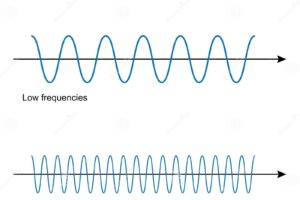
Wavelength, a fundamental property of electromagnetic waves, significantly influences how signals travel and interact with the environment. The wavelength is inversely proportional to frequency, meaning higher frequencies have shorter wavelengths and vice versa. Cellular signals typically operate between 700 MHz and 2.5 GHz, resulting in varying wavelengths that affect coverage and data rates.
- Longer wavelengths:
These can diffract around obstacles such as buildings and trees, providing better coverage in urban and obstructed environments. - Shorter wavelengths:
These support higher data transmission rates but are more susceptible to blockage and attenuation by physical barriers.
Challenges of Signal Interference and Attenuation
Signal degradation is a common issue caused by obstacles like buildings, foliage, and atmospheric conditions that disrupt the path between the transmitter and receiver. This phenomenon, known as attenuation, reduces signal strength and quality. To mitigate these effects, engineers employ advanced technologies such as Multiple-Input Multiple-Output (MIMO), which uses multiple antennas to send and receive parallel data streams, enhancing throughput and reliability.
Advanced Modulation Techniques
As demand for higher data rates grows, modulation methods have evolved to maximize the efficiency of signal transmission. Quadrature Amplitude Modulation (QAM) is a sophisticated technique that combines variations in both amplitude and phase to encode more bits per symbol. This approach allows networks to transmit more information within the same bandwidth, significantly boosting capacity.
Balancing Capacity and Reliability in Modern Networks
The evolution from 3G to 4G and now 5G networks has brought remarkable improvements in speed and capacity. However, these advancements also introduce greater vulnerability to interference and signal degradation. To address this, modern networks utilize adaptive algorithms and intelligent management systems that dynamically adjust to changing environmental conditions, ensuring consistent and reliable communication.
Power Management and Its Impact on Capacity
Efficient power consumption is crucial in mobile devices, especially as capacity and performance demands increase. Effective energy management systems are designed to optimize battery life while minimizing heat generation, guided by thermodynamic principles. This balance not only enhances user experience but also supports environmental sustainability by reducing energy waste.
Summary: The Physics Behind Cell Phone Capacity
The capacity of cell phones to handle vast amounts of data hinges on a complex interplay of electromagnetic theory, wave behavior, signal processing, and energy management. These interconnected scientific principles enable seamless communication across extensive networks. As technology continues to advance, understanding and applying these physical concepts will be vital in meeting the growing demands of our digital world and fostering future innovations.
FAQ
What is cell phone capacity?
Cell phone capacity refers to the amount of data that a mobile device can handle at once, influenced by physical principles and network design.
How do electromagnetic waves affect cell phone communication?
Electromagnetic waves are essential for transmitting information between cell towers and mobile devices, determining the quality and speed of communication.
What is Frequency Division Multiplexing (FDM)?
FDM is a technique that divides a broad frequency band into multiple narrower channels, allowing several signals to be transmitted simultaneously without interference.


Leave a Reply