Excitonic Integrated Circuit: Lighting the Way to Next-Gen Optoelectronics

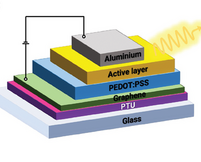
Definition of Excitonic Integrated Circuits Excitonic integrated circuits (EICs) represent an emerging frontier in optoelectronics, blending the principles of photonics and electronics by utilizing light-based particles rather than solely relying on electron flow for information transmission and processing. Central to these circuits are excitons-quasi-particles formed by the coupling of an electron and a hole within […]

Read More →

The Future is Bright for CERN’s Antimatter Physicists

Definition of Antimatter Antimatter consists of particles that are the exact opposites of the particles making up ordinary matter. Each antiparticle carries the same mass as its matter counterpart but exhibits opposite electric charge and other quantum properties. When matter and antimatter particles meet, they annihilate each other, releasing energy according to Einstein’s equation, E=mc². […]

Read More →

Left-Handed Materials Under Fire: A New Twist in Metamaterials

Definition of Left-Handed Materials Left-handed materials, also known as negative index materials, are a class of engineered metamaterials that exhibit extraordinary electromagnetic properties not found in natural substances. Their hallmark feature is a negative refractive index, which allows them to manipulate electromagnetic waves in unconventional ways. This unique characteristic enables applications such as super-resolution imaging, […]

Read More →

Examining Newton’s Darker Side: Genius Gravity and Gaps in the Story

Definition Sir Isaac Newton stands as a towering figure in the history of science, renowned for his groundbreaking contributions to physics and mathematics. His work laid the foundation for classical mechanics and profoundly influenced our comprehension of the natural universe. However, beyond his celebrated achievements lies a complex persona marked by personal conflicts, intellectual rivalries, […]

Read More →

Gamma Rays: The Surprise That Keeps on Giving

Definition of Gamma Rays Gamma rays are a highly energetic form of electromagnetic radiation characterized by their extremely short wavelengths and high frequencies. Originating from processes such as radioactive decay, nuclear reactions, and various cosmic events, gamma rays hold a significant place in both physics and astronomy. Their immense energy and penetrating ability make them […]

Read More →

Exams vs. Inquiry: Do Tests Undermine Critical Thinking in Physics?

Understanding Critical Thinking in Physics Education Critical thinking represents a multifaceted cognitive skill set essential for dissecting and comprehending complex scientific ideas. In physics, this involves the ability to analyze, evaluate, and synthesize information to solve problems that range from classical mechanics to advanced theories like quantum physics and relativity. Developing these skills enables students […]

Read More →

Physics Gems Uncovered by Google

Understanding the Role of Technology in Physics Education Physics, often perceived as a complex and mysterious domain, invites curious minds to explore its profound principles. In this scientific field, innovative tools serve as illuminating guides, uncovering hidden insights beneath layers of intricate concepts. Among these tools, digital platforms like Pocket Physics have emerged as pivotal […]

Read More →

Macro Magic: Entanglement Reaches Larger Scales

Definition of Quantum Entanglement Quantum entanglement is a fundamental phenomenon in quantum physics where particles become interconnected such that the state of one particle instantaneously influences the state of another, regardless of the distance between them. This non-local correlation defies classical intuition and has intrigued scientists for decades. Traditionally observed at the microscopic scale involving […]

Read More →

Room-Temperature Quantum: Diamonds Entangled Without Cryogenics

Understanding Room-Temperature Quantum Systems Quantum physics traditionally explores the behavior of particles at the subatomic scale, governed by principles that often seem intangible and complex. Historically, manipulating quantum states-such as achieving quantum entanglement-has required extreme conditions, notably temperatures close to absolute zero. However, recent breakthroughs have introduced the possibility of operating quantum systems at room […]

Read More →

What’s next after quantum computer science?

Understanding Quantum Computing Quantum computing represents a revolutionary shift in computational science, captivating researchers, technologists, and visionaries worldwide. Unlike classical computing, which relies on bits as the smallest unit of data, quantum computing harnesses the principles of quantum mechanics to process information in fundamentally new ways. This emerging technology promises to transform numerous fields by […]

Read More →