Why are there no free quarks in nature?

Definition of Free Quarks Free quarks are hypothetical elementary particles that serve as the fundamental building blocks of hadrons, such as protons and neutrons. Despite their essential role in composing these particles, free quarks have never been directly detected in isolation. This phenomenon presents a significant puzzle in particle physics, prompting investigations into the intrinsic […]

Read More →

Can you have a nuclear bomb without radiation?

Definition of Nuclear Weapons and Radiation Nuclear weapons are explosive devices that derive their immense destructive power from nuclear reactions, specifically fission or fusion. These reactions involve the transformation of atomic nuclei, releasing vast amounts of energy. Radiation, in this context, refers to the emission of energetic particles or waves-such as alpha particles, beta particles, […]

Read More →

Does god’s particle exist now?

Definition of the Higgs Boson The Higgs boson is a fundamental particle in particle physics, often referred to as “God’s particle” due to its critical role in explaining how particles acquire mass. This particle is a manifestation of the Higgs field, a scalar field that permeates all space and interacts with elementary particles, endowing them […]

Read More →

What is a Higgs boson/particle?

Definition of the Higgs Boson The Higgs boson is a fundamental particle integral to the Standard Model of particle physics. It is linked to the Higgs field, a pervasive quantum field that exists throughout the universe. This particle was first theorized in the 1960s by physicists including Peter Higgs, François Englert, and Robert Brout. The […]

Read More →

Which is a smaller particle?

Understanding the Smallest Particles in Matter The exploration of the tiniest constituents of matter delves into the core principles of atomic theory and subatomic physics. Situated at the crossroads of chemistry and physics, this inquiry seeks to identify which particle can be deemed the smallest building block of the universe. This journey takes us deep […]

Read More →

What is the origin of mass in the universe?

Definition of Mass and Its Origin Mass is a fundamental property of matter that extends beyond simply quantifying the amount of substance in an object. It is deeply embedded in the principles of modern physics, bridging concepts from classical mechanics to quantum field theory. The origin of mass addresses profound questions about the nature of […]

Read More →

Are atom

Definition of an Atom An atom is the smallest unit of matter that retains the properties of an element. It serves as the fundamental constituent of all physical substances in the universe. Atoms are not merely building blocks; they embody the essential nature of material existence, forming the basis for everything from the simplest gases […]

Read More →

Is there a dark matter connected with elementary particles?

Definition of Dark Matter Dark matter is a mysterious form of matter that constitutes approximately 27% of the universe’s total mass-energy composition. Unlike ordinary matter, it neither emits nor interacts with electromagnetic radiation, making it invisible to conventional telescopes and detectors. Its presence is inferred primarily through gravitational effects on visible matter, radiation, and the […]

Read More →

Why are some atomic nuclei asymmetric?

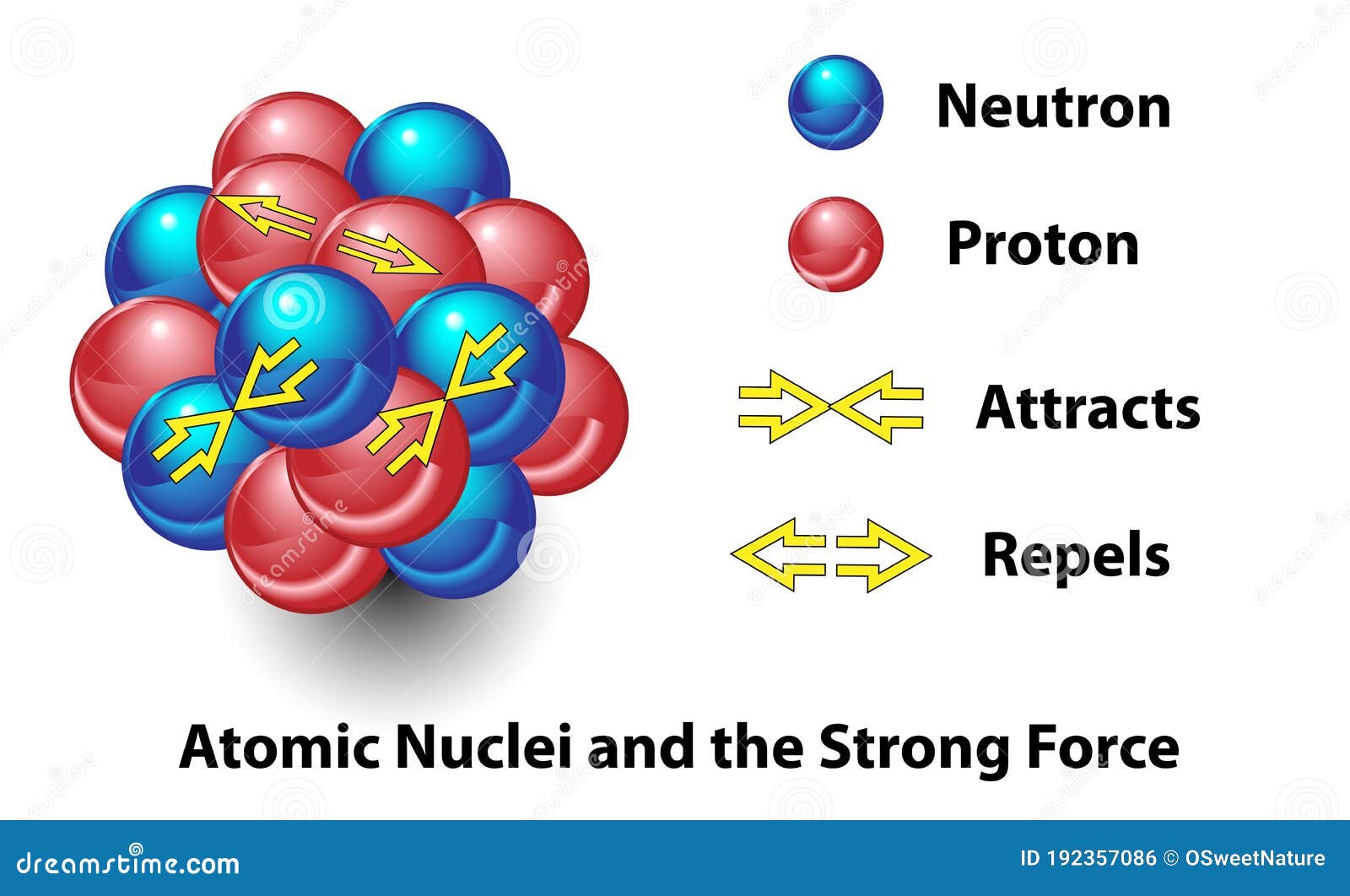
Definition of Nuclear Asymmetry Nuclear asymmetry refers to the phenomenon where atomic nuclei do not exhibit perfect symmetrical shapes or balanced structures. Instead of being uniformly spherical or evenly arranged, certain nuclei display irregular or distorted configurations. This characteristic arises from the complex interactions and arrangements of protons and neutrons within the nucleus, challenging the […]

Read More →

Can I start nuclear physics before atomic physics in class 12?

Definition of Atomic and Nuclear Physics Atomic physics and nuclear physics are two closely related branches of physics that explore the fundamental components of matter, yet they focus on different scales and phenomena within the atom. Atomic Physics: This field investigates the structure and behavior of atoms, primarily focusing on electrons, protons, and neutrons. It […]

Read More →