Dissolvable Glass: The Key to Fixing Bones?

Definition of Dissolvable Glass Dissolvable glass is an advanced biomaterial situated at the crossroads of materials science and biomedical engineering. It is primarily designed to support bone repair by gradually dissolving within the body, thereby facilitating natural healing processes. Unlike conventional surgical materials such as metal implants, dissolvable glass integrates seamlessly with biological tissues, offering […]

Read More →

Exoplanet Caught on the Move: A Celestial Shift in Real-Time

Definition of Exoplanets and Their Significance Exoplanets are celestial bodies that orbit stars beyond our own solar system. They represent a captivating area of study in modern astrophysics, offering insights into the formation and evolution of planetary systems throughout the galaxy. The direct observation of an exoplanet orbiting its host star marks a pivotal milestone […]

Read More →

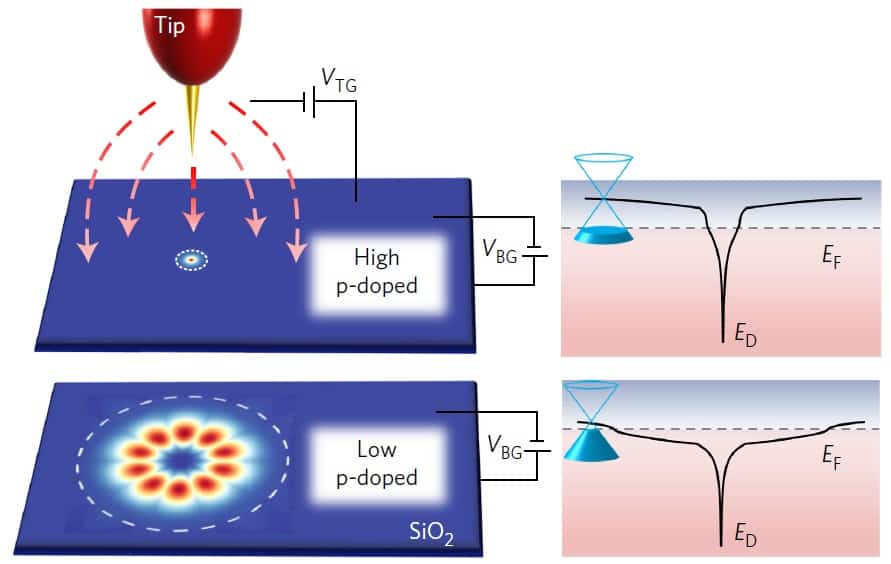
Evanescent Waves Open a New Window Into the Nanoworld

Definition of Evanescent Waves Evanescent waves are a unique type of electromagnetic wave that occur at the boundary between two different media when light undergoes total internal reflection. Unlike conventional propagating waves, evanescent waves do not travel far into the second medium but instead decay exponentially with distance from the interface, typically within a few […]

Read More →

Designer Graphene Debuts: Material Tailoring Reaches Atomic Precision

Definition of Designer Graphene Designer graphene refers to the deliberate modification and control of graphene’s atomic structure and electronic properties to tailor its behavior for specific applications. Graphene itself is a single-atom-thick sheet of carbon atoms arranged in a two-dimensional hexagonal lattice, renowned for its exceptional electrical, mechanical, and thermal characteristics. The concept of designer […]

Read More →

Magnetic Holograms: The Sci-Fi Future of Memory Storage

Definition of Magnetic Holograms Magnetic holograms represent an emerging technology in the realm of data storage, combining the principles of holography with magnetic materials to create a novel method for encoding and preserving information. Unlike traditional storage media, magnetic holography leverages the interaction of light interference patterns and magnetic domains to form complex, multidimensional data […]

Read More →

New Doubts Cast on Lunar Formation Models

Definition of Lunar Formation Lunar formation refers to the processes and events that led to the creation of the Moon, Earth’s natural satellite. Understanding how the Moon originated is crucial for insights into planetary formation and the early history of the solar system. Various scientific models have been proposed to explain the Moon’s genesis, with […]

Read More →

The World’s First Heat Transistor

Definition of Heat Transistor A heat transistor is an advanced thermal management device designed to regulate and control heat flow in a manner analogous to how traditional electronic transistors manipulate electrical currents. By integrating principles from thermodynamics, materials science, and electronics, heat transistors enable dynamic modulation of thermal energy, offering a novel approach to energy […]

Read More →

A Glass Breakthrough: The End of Floppy Disks?

Definition of Data Storage Evolution Data storage technology has undergone remarkable changes over the decades, fundamentally reshaping how information is saved and accessed. Historically, floppy disks served as a pioneering medium for digital data retention during the late 20th century. However, recent advancements in materials science and engineering have introduced glass-based storage systems, which promise […]

Read More →

Graphene’s Speed Record

Definition of Graphene Graphene is a single layer of carbon atoms arranged in a two-dimensional hexagonal lattice. This atom-thin sheet exhibits extraordinary physical and electronic properties, making it a groundbreaking material in modern science and technology. Its unique structure grants it exceptional electrical conductivity, mechanical strength, and thermal properties, positioning it as a key player […]

Read More →

Tracking Graphene Defects as They Creep and Climb

Understanding Graphene and Its Defects Graphene is a single layer of carbon atoms arranged in a two-dimensional honeycomb lattice, renowned for its extraordinary electrical conductivity, mechanical robustness, and thermal resilience. Over recent decades, this remarkable material has attracted intense scientific interest. However, during its synthesis and handling, various imperfections-known as defects-can form within the graphene […]

Read More →