Frogs Turn to Physics: The Science of a Leap

Definition The leap of a frog represents a fascinating intersection of biological design and physical laws. It is a complex movement that showcases evolutionary adaptations and fundamental principles of mechanics, illustrating how living organisms harness energy and force to achieve remarkable feats of motion. Biological Aspect: The leap is powered by specialized muscles and anatomical […]

Read More →

Quantum Eyeglass: Electrons Zoom in on Single Atoms

Definition of Quantum Eyeglass The Quantum Eyeglass is an advanced technological instrument designed to observe, control, and interact with electrons at the scale of individual atoms. Rooted in the principles of quantum physics, this device transcends traditional optical limitations, enabling scientists to explore atomic and subatomic phenomena with unprecedented clarity. It represents a significant leap […]

Read More →

Experiment Halted: Fermilab Told to Slow Down Neutrino Ambitions

Understanding Neutrino Research Neutrino research is a captivating branch of particle physics focused on studying neutrinos-subatomic particles that are notoriously elusive. These particles interact only via the weak nuclear force, making their detection and analysis exceptionally challenging. Neutrinos come in three types, or “flavors”: electron, muon, and tau neutrinos, which can transform from one flavor […]

Read More →

Magnetic Mayhem: Electrons Behave Unexpectedly in Fields

Definition The study of electron behavior in magnetic fields is a pivotal area within condensed matter physics, focusing on how electrons respond and interact under magnetic influence. This field explores both observable macroscopic effects and the quantum mechanical principles that dictate electron dynamics, offering deep insights into the nature of matter and electromagnetic interactions. Electron […]

Read More →

Fermi Spots a Monster: Cosmic Particle Accelerator Revealed

Definition of Cosmic Particle Accelerators Cosmic particle accelerators are naturally occurring astrophysical phenomena that propel subatomic particles to extremely high energies, often surpassing those achievable by human-made accelerators on Earth. These colossal accelerators exist in various energetic cosmic environments and are responsible for producing high-energy cosmic rays that continuously bombard our planet from outer space. […]

Read More →

Peering into the Nanoworld: Electron Tomography Unleashed

Definition of Electron Tomography Electron tomography is an advanced imaging technique that integrates electron microscopy with tomographic reconstruction to generate detailed three-dimensional (3D) visualizations of specimens at the nanoscale. By capturing multiple two-dimensional (2D) projection images from various angles around a sample, this method reconstructs the internal architecture of materials and biological entities with exceptional […]

Read More →

Precision Pulse: Femtosecond Lasers Redefine Time

Definition of Femtosecond and Femtosecond Lasers A femtosecond represents an extraordinarily brief unit of time, precisely one quadrillionth of a second (10-15 seconds). This minuscule interval is fundamental to the study of ultrafast processes in physics and engineering. Femtosecond lasers are specialized devices that emit light pulses lasting only a few femtoseconds, enabling unprecedented precision […]

Read More →

Boron Breakthrough: Electrons Tunnel Through with Ease

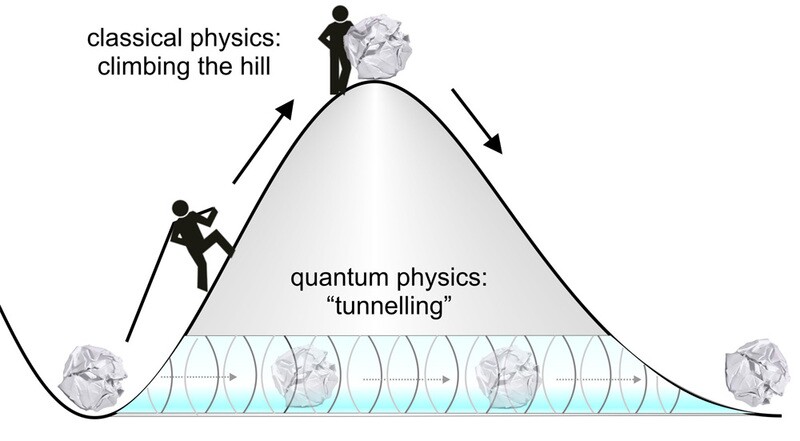
Definition of Boron Nitride and Electron Tunneling Boron nitride is a compound renowned for its exceptional thermal and chemical resilience. It has recently become a focal point in studies exploring the quantum mechanical phenomenon known as electron tunneling. Electron tunneling refers to the quantum process where electrons pass through energy barriers that would be insurmountable […]

Read More →

Caught in the Act: Watching Electron Tunneling in Real Time

Definition of Electron Tunneling Electron tunneling is a fundamental quantum mechanical phenomenon where particles, such as electrons, pass through energy barriers that they classically should not be able to overcome due to insufficient energy. This counterintuitive effect arises from the wave-like nature of particles at the quantum scale, allowing them to exist with a certain […]

Read More →

Graphene Heats Up: The Temperature Tale of Tiny Electrons

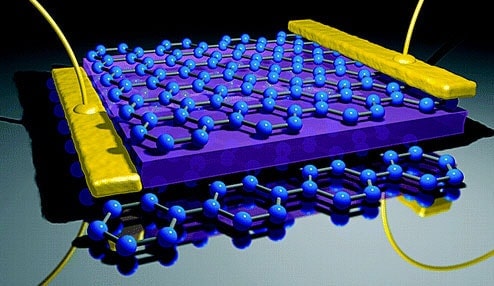
Definition of Graphene and Its Unique Properties Graphene is a groundbreaking material celebrated for its exceptional electrical, mechanical, and thermal attributes. It is a two-dimensional allotrope of carbon, consisting of a single layer of atoms arranged in a hexagonal lattice. Despite being only one atom thick, graphene exhibits extraordinary properties that challenge traditional materials science […]

Read More →