
Short Answer
Definition of Boron Nitride and Electron Tunneling
Boron nitride is a compound renowned for its exceptional thermal and chemical resilience. It has recently become a focal point in studies exploring the quantum mechanical phenomenon known as electron tunneling. Electron tunneling refers to the quantum process where electrons pass through energy barriers that would be insurmountable according to classical physics. This behavior is rooted in the wave-particle duality of electrons, allowing them to behave both as particles and waves, enabling penetration through potential barriers.
- Boron Nitride:
A chemically stable compound with diverse crystalline forms, notable for its insulating properties and structural versatility. - Electron Tunneling:
A quantum mechanical effect where electrons traverse barriers without the energy required to overcome them classically.
Crystalline Structures and Their Influence on Electron Behavior
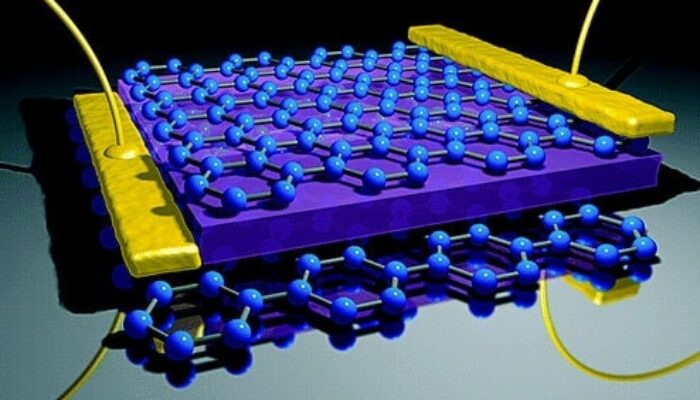
Boron nitride exists in multiple allotropes, each with distinct physical and electronic properties. The two primary forms are hexagonal boron nitride (h-BN) and cubic boron nitride (c-BN). Hexagonal boron nitride, often dubbed “white graphene,” shares a two-dimensional layered structure similar to graphene, characterized by strong covalent bonds within layers. This structure imparts unique electronic features, including the ability to support quantum transport phenomena despite its insulating nature. Cubic boron nitride, on the other hand, is prized for its extreme hardness and thermal endurance, making it valuable in industrial applications but less relevant for electron tunneling studies.
Quantum Mechanics Behind Electron Tunneling in Boron Nitride
Electron tunneling in boron nitride challenges traditional assumptions about insulators. While classical physics predicts negligible electron flow through such materials, quantum mechanics reveals that electrons can probabilistically penetrate energy barriers. This is due to their wave-like nature, which allows a finite probability of presence on the opposite side of a barrier. The unique electronic structure of boron nitride, influenced by sp2 and sp3 hybridizations, facilitates this tunneling by creating localized states and modifying barrier properties.
Modulating Electron Tunneling Through Defect Engineering
One of the most compelling aspects of boron nitride is the ability to tailor its electronic properties by introducing defects into its crystal lattice. These imperfections create localized electronic states that can trap electrons, effectively serving as conduits for tunneling events. By controlling the type and concentration of defects, researchers can enhance the tunneling probability, enabling precise manipulation of electron transport. This tunability is crucial for designing materials optimized for quantum computing and other advanced electronic applications.
Applications in Quantum Computing and Optoelectronics
The efficient electron tunneling properties of boron nitride have significant implications for emerging technologies. In quantum computing, the controlled transfer of electrons is essential for qubit operation and coherence. Boron nitride’s ability to facilitate tunneling with minimal energy loss makes it a promising candidate for quantum device substrates. Additionally, in optoelectronics, where the interaction between light and electrons is fundamental, boron nitride can enhance the performance of devices such as LEDs, photodetectors, and solar cells by providing a stable platform for electron transport and light manipulation.
Integration with Other Two-Dimensional Materials
Combining boron nitride with other two-dimensional materials, such as transition metal dichalcogenides (TMDs), leads to the creation of van der Waals heterostructures. These layered assemblies exploit the complementary properties of each material, resulting in novel electronic and optoelectronic behaviors. Such heterostructures open new research avenues into phenomena like superconductivity and nanoscale magnetism, expanding the functional scope of boron nitride beyond its standalone capabilities.
Broader Implications in Nanotechnology and Biomedicine
Beyond electronics, boron nitride’s robustness, biocompatibility, and thermal stability make it an attractive material for nanotechnological and biomedical applications. Its capacity to support electron tunneling enhances the sensitivity and functionality of nanoscale sensors and drug delivery systems. This interdisciplinary potential underscores the importance of fundamental research in bridging physics, materials science, and engineering to develop innovative solutions across diverse fields.
Common Misconceptions About Boron Nitride and Electron Tunneling
Boron nitride, as an insulator, cannot support electron transport.
Despite its insulating nature, boron nitride facilitates electron tunneling due to quantum mechanical effects and its unique crystal structure.
Electron tunneling is purely theoretical and has no practical applications.
Electron tunneling is a well-documented phenomenon with critical roles in quantum computing, optoelectronics, and nanoscale devices.
Significance of Boron Nitride in Modern Science and Technology
The discovery of boron nitride’s ability to enable electron tunneling represents a paradigm shift in material science. It challenges the conventional classification of insulators and expands the toolkit for designing next-generation electronic and photonic devices. By harnessing the interplay between quantum mechanics and material properties, boron nitride stands at the forefront of innovations that could revolutionize computing, energy harvesting, and biomedical technologies, highlighting its vital role in advancing both fundamental science and practical applications.
FAQ
What is boron nitride?
Boron nitride is a compound known for its thermal and chemical resilience, used in various applications including electronics.
How does electron tunneling occur in boron nitride?
Electron tunneling in boron nitride occurs due to quantum mechanical effects, allowing electrons to pass through barriers that would be insurmountable by classical physics.




Leave a Reply