
Short Answer
Definition of Femtosecond and Femtosecond Lasers
A femtosecond represents an extraordinarily brief unit of time, precisely one quadrillionth of a second (10-15 seconds). This minuscule interval is fundamental to the study of ultrafast processes in physics and engineering. Femtosecond lasers are specialized devices that emit light pulses lasting only a few femtoseconds, enabling unprecedented precision in observing and manipulating matter at microscopic and molecular scales.
- Femtosecond:
A time measurement equal to 0.000000000000001 seconds, crucial for ultrafast phenomena. - Femtosecond Laser:
A laser system that produces extremely short bursts of light, facilitating high-precision interactions with materials.
Principles Behind Femtosecond Laser Operation
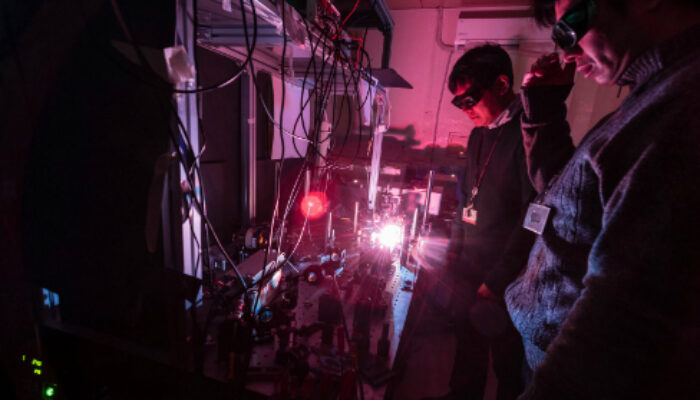
Femtosecond lasers function by generating ultra-short pulses of light that concentrate significant energy into a fleeting moment. This intense, brief energy delivery allows for highly controlled interactions with various materials. The underlying physics involves nonlinear optical effects, such as multi-photon absorption, where multiple photons simultaneously interact with a medium, enabling precise modifications at microscopic levels. These principles are essential in both fundamental scientific research and advanced technological applications.
Applications in Ophthalmic Surgery
One of the most transformative uses of femtosecond lasers is in eye surgery, where their precision surpasses traditional laser technologies. Earlier methods, including mechanical microkeratomes for corneal flap creation, often introduced irregularities that could impair vision. Femtosecond lasers have revolutionized procedures like LASIK and cataract surgery by enabling surgeons to sculpt corneal tissue with exceptional accuracy, minimizing damage to surrounding areas and improving patient outcomes. This advancement exemplifies the shift toward personalized and minimally invasive medical treatments.
Advantages Over Conventional Techniques
- Precision:
Femtosecond lasers allow for exact corneal incisions, reducing complications. - Safety:
Reduced collateral tissue damage enhances recovery and visual results. - Customization:
Surgeons can tailor procedures to individual patient anatomy for optimal correction of refractive errors.
Philosophical and Temporal Implications
Beyond practical applications, femtosecond lasers challenge traditional perceptions of time. While time is commonly understood as a continuous, linear progression, femtosecond-scale events reveal a realm where changes occur so rapidly they escape direct human perception. These fleeting moments can trigger significant molecular or cellular transformations, prompting philosophical reflections on causality and the fundamental nature of reality. The ability to manipulate such brief intervals invites reconsideration of how time influences physical processes and existence itself.
Impact on Material Science and Nanotechnology
Femtosecond lasers have also opened new frontiers in material science by enabling precise modifications at the nanoscale. Their ability to induce controlled changes in materials facilitates the fabrication of nanostructures with customized properties, which are vital for advancements in electronics, photonics, and other high-tech industries. This capability highlights the synergy between temporal precision and technological innovation, driving progress in creating materials with enhanced or novel functionalities.
Exploration in Chemistry and Molecular Dynamics
In the field of chemistry, femtosecond lasers provide a window into ultrafast molecular reactions that were previously difficult to observe. By capturing these rapid processes, scientists gain deeper insights into reaction mechanisms, chemical kinetics, and energy transfer. Such understanding is instrumental in developing more efficient catalysts and improving energy conversion technologies, underscoring the importance of temporal resolution in experimental science.
Common Misconceptions About Femtosecond Lasers
Femtosecond lasers are only useful in medical applications.
While prominent in medicine, these lasers are equally vital in physics, chemistry, material science, and nanotechnology.
The effects of femtosecond lasers are too brief to have practical impact.
Despite their fleeting duration, femtosecond pulses can induce precise and significant changes at molecular and cellular levels.
Significance and Future Prospects
The advent of femtosecond laser technology marks a pivotal advancement in both scientific understanding and practical application. By enabling manipulation of matter on ultrafast timescales, these lasers not only enhance surgical precision and material fabrication but also prompt a reevaluation of temporal concepts in science and philosophy. As research continues, femtosecond lasers are poised to drive innovations across diverse fields, reflecting humanity’s enduring quest to master the fleeting moments that shape our universe.
FAQ
What are femtosecond lasers?
Femtosecond lasers are devices that produce extremely short bursts of light, allowing for precise manipulation of matter.
What are the main applications of femtosecond lasers?
They are used in medical procedures like LASIK, as well as in material science and chemistry for observing rapid molecular reactions.
How do femtosecond lasers differ from conventional lasers?
Femtosecond lasers deliver energy in much shorter bursts, allowing for highly controlled interactions without damaging surrounding materials.



Leave a Reply