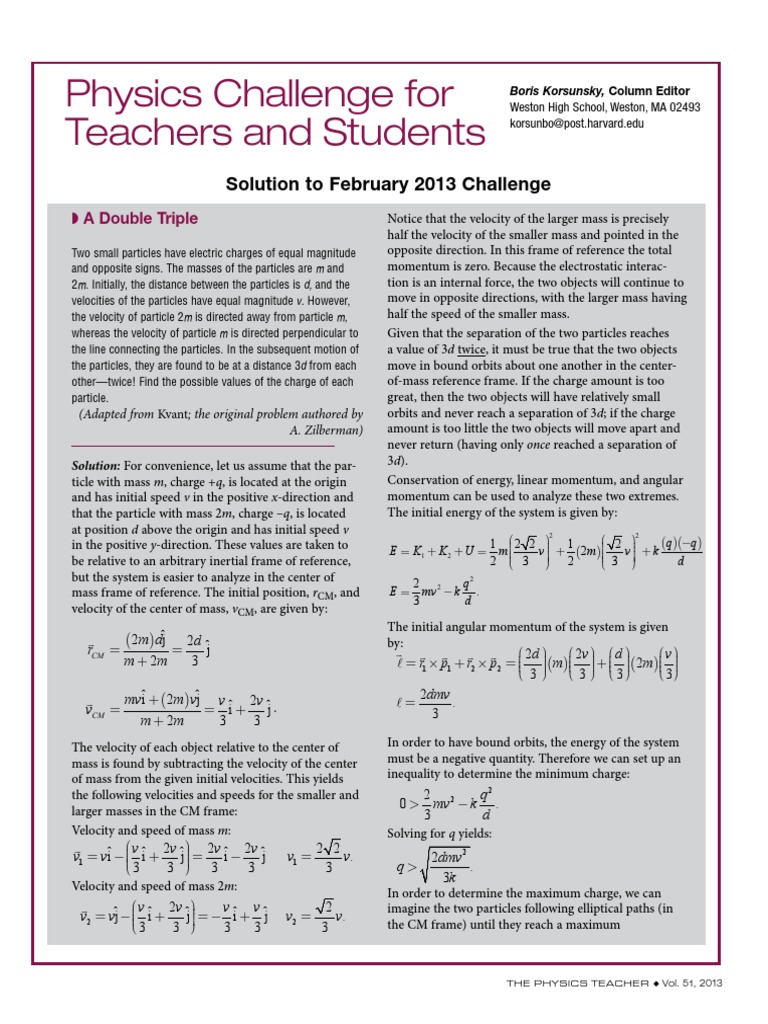
Is the International Space Station Truly in Zero Gravity?

Understanding Gravity in Orbit When picturing astronauts aboard the International Space Station (ISS), many imagine them floating freely in a state often called “zero gravity.” However, this term is somewhat misleading. The ISS does not exist in a true zero gravity environment but rather in a condition known as microgravity. This subtle distinction invites a […]
Read More →

Everything You Know About Space Could Be Incomplete

Understanding the Cosmos: An Expansive Overview Space has captivated human imagination for centuries, representing the ultimate frontier filled with mysteries and wonders. From ancient stargazers mapping constellations to contemporary scientists utilizing advanced technology, our comprehension of the universe has grown dramatically. However, despite these advances, much of what we believe about space remains incomplete, and […]

Read More →

Can Gravity Change Over Time on Earth or Mars?

Definition of Gravity and Its Planetary Significance Gravity is a fundamental natural force responsible for the attraction between masses, governing the motion of planets, moons, and other celestial bodies. It also influences the behavior of objects on planetary surfaces, shaping environments and affecting biological adaptations. On planets like Earth and Mars, gravity plays a crucial […]

Read More →

Not So Dark After All? New Findings Light Up the Dark Matter Debate

Understanding Dark Matter Dark matter is a mysterious and invisible component of the universe that exerts a significant gravitational influence despite being undetectable by conventional observational tools. It constitutes approximately 27% of the universe’s total mass-energy content and acts as the unseen framework supporting the formation and structure of galaxies and larger cosmic formations. Its […]

Read More →

Discovering Darkness: The Ongoing Search for Dark Matter

Definition of Dark Matter Dark matter is a mysterious form of matter that is believed to make up about 27% of the universe’s total mass-energy content. Unlike ordinary matter, it does not emit, absorb, or reflect light, making it invisible to traditional astronomical instruments. Despite its elusive nature, dark matter exerts a significant gravitational influence […]

Read More →

Gamma Rays Galactic Haze and a Dark Matter Connection?

Definition of Gamma Rays and Galactic Haze Gamma rays are a form of electromagnetic radiation characterized by extremely high energy levels. They play a vital role in astrophysics, emerging from a variety of complex cosmic phenomena such as nuclear reactions within stars, particle-antiparticle annihilation, and other exotic astrophysical events. One intriguing subject within this field […]

Read More →

Physics Grand Challenges for the U.S.

Overview of Contemporary Physics Challenges in the United States Physics, a field rich with complex and often perplexing phenomena, continuously pushes the boundaries of human knowledge and challenges established scientific doctrines. The United States, as a leader in scientific innovation, faces a series of profound challenges within physics that not only require resolution but also […]

Read More →

What is the source or origin of dark matter and dark energy?

Understanding Dark Matter and Dark Energy Dark matter and dark energy stand as two of the most perplexing and significant subjects in modern astrophysics. Their investigation challenges existing cosmic paradigms and suggests the presence of phenomena beyond the observable universe. While dark matter constitutes nearly 85% of the universe’s total mass, dark energy accounts for […]

Read More →