
Short Answer
Understanding Black Holes
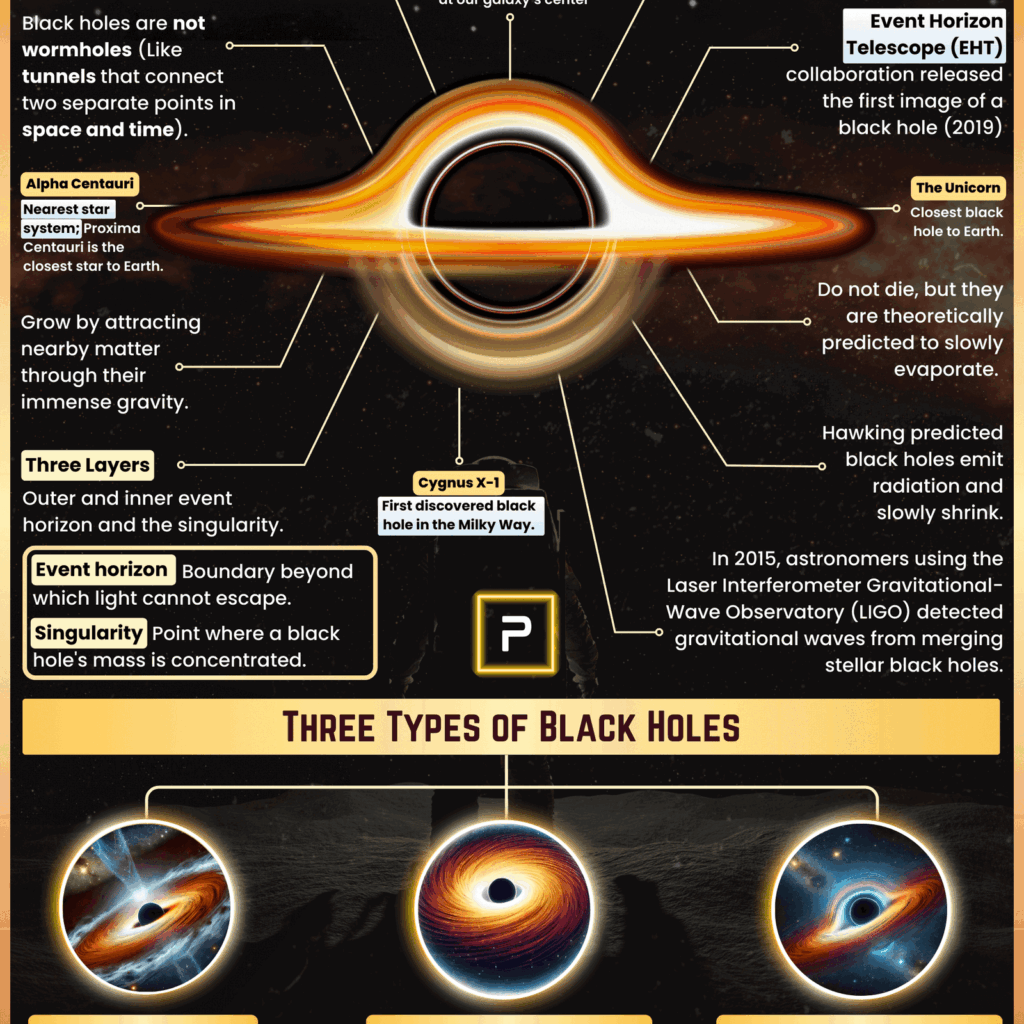
Black holes are among the most fascinating and perplexing phenomena in the universe. They are regions in spacetime where gravity is so overwhelmingly strong that nothing, including light, can escape their pull. Traditionally, black holes have been viewed as cosmic vacuum cleaners, relentlessly consuming everything nearby. This perception paints them as destructive forces, marking the end of stars and matter that cross their boundaries.
Reevaluating Black Holes: Beyond Destruction
However, emerging theories challenge this conventional view, proposing that black holes might play a far more creative role in the cosmos. Instead of being mere endpoints, black holes could act as cosmic reproductive systems, giving rise to new universes and driving the cyclical nature of cosmic evolution. This perspective invites a profound shift in how we understand the lifecycle of the universe, blending destruction with creation.
Cosmological Natural Selection and the Multiverse Hypothesis
One of the most intriguing ideas supporting this reproductive role is the theory of cosmological natural selection, also known as the fecund universes hypothesis. According to this concept, each black hole may spawn a new, distinct universe beyond its event horizon. These “offspring” universes could inherit physical constants similar to their “parent” universe but with slight variations. Such variations might influence the propensity for black hole formation in the new universe, creating a form of cosmic evolution akin to biological natural selection.
- Multiverse Creation:
Each black hole potentially acts as a gateway to a separate universe, contributing to a vast multiverse. - Inheritance of Physical Laws:
New universes may carry modified physical constants, affecting their structure and evolution. - Evolutionary Pressure:
Universes that produce more black holes could be more “successful,” perpetuating this cosmic reproductive cycle.
The Singularity and White Holes: Gateways to New Realms
The singularity at a black hole’s core, where density becomes infinite and known physics break down, might not be a dead end but a transitional portal. Theoretical models introduce the concept of white holes-hypothetical counterparts to black holes that expel matter and energy instead of absorbing them. Together, black holes and white holes could form a cosmic mechanism for birthing new regions of spacetime, facilitating the universe’s ongoing regeneration.
Information Preservation and the Holographic Principle
Contrary to the idea of black holes as ultimate destroyers, recent research suggests they may conserve and redistribute information. The holographic principle posits that all information swallowed by a black hole is encoded on its event horizon, potentially transmitting this data into a nascent universe. This transforms black holes into vessels of cosmic legacy, preserving the informational fabric of the universe across different realms.
Thermodynamics and Quantum Mechanics at the Event Horizon
The thermodynamic properties of black holes further support their role in cosmic reproduction. The Bekenstein-Hawking entropy, which is proportional to the surface area of the event horizon rather than the volume, reveals a deep connection between gravity, thermodynamics, and quantum theory. These intertwined forces at the black hole’s boundary may create the extreme conditions necessary for the birth of new universes.
Higher Dimensions and Cosmic Lineage
Advances in quantum gravity and string theory propose that black holes might serve as multidimensional portals, harboring embryonic universes within higher-dimensional spaces beyond our perception. This raises the possibility that our own universe exists inside a black hole of a “parent” universe, suggesting an infinite hierarchy of universes continuously generating one another in an eternal cosmic lineage.
Challenges and Speculations
Despite the compelling nature of these theories, they remain speculative due to the current inability to observe beyond the event horizon directly. The veil of the event horizon limits our capacity to verify the internal processes of black holes with existing technology. Nonetheless, the theoretical frameworks and interdisciplinary research continue to inspire new insights into the universe’s complex and possibly reproductive structure.
Implications for Our Cosmic Perspective
Viewing black holes as agents of cosmic reproduction transforms them from ominous endpoints into vital participants in the universe’s ongoing cycle of birth and renewal. This paradigm encourages a holistic understanding where creation and destruction are intertwined processes embedded in the fabric of reality. It also raises profound questions about the nature of existence: Is our universe a unique occurrence, or one among countless descendants in an infinite cosmic family tree?
Conclusion: The Cosmic Reproductive Dance
Exploring the possibility that black holes function as the universe’s reproductive system enriches both scientific inquiry and philosophical reflection. As we delve deeper into the mysteries of black holes, we move closer to unraveling not only the fate of stars but also the origins of entire universes. This ongoing quest reveals a majestic cosmic dance of creation and transformation, echoing through the vast expanse of spacetime.
FAQ
What are black holes?
Black holes are regions in spacetime with gravitational forces so strong that nothing, not even light, can escape them.
How do black holes reproduce?
Emerging theories suggest that black holes may act as gateways to new universes, potentially giving rise to new cosmic entities.
What is cosmological natural selection?
It is a theory proposing that black holes can spawn new universes, each with varying physical constants influencing their development.

Leave a Reply