
Short Answer
Definition of Gravity in Planetary Contexts
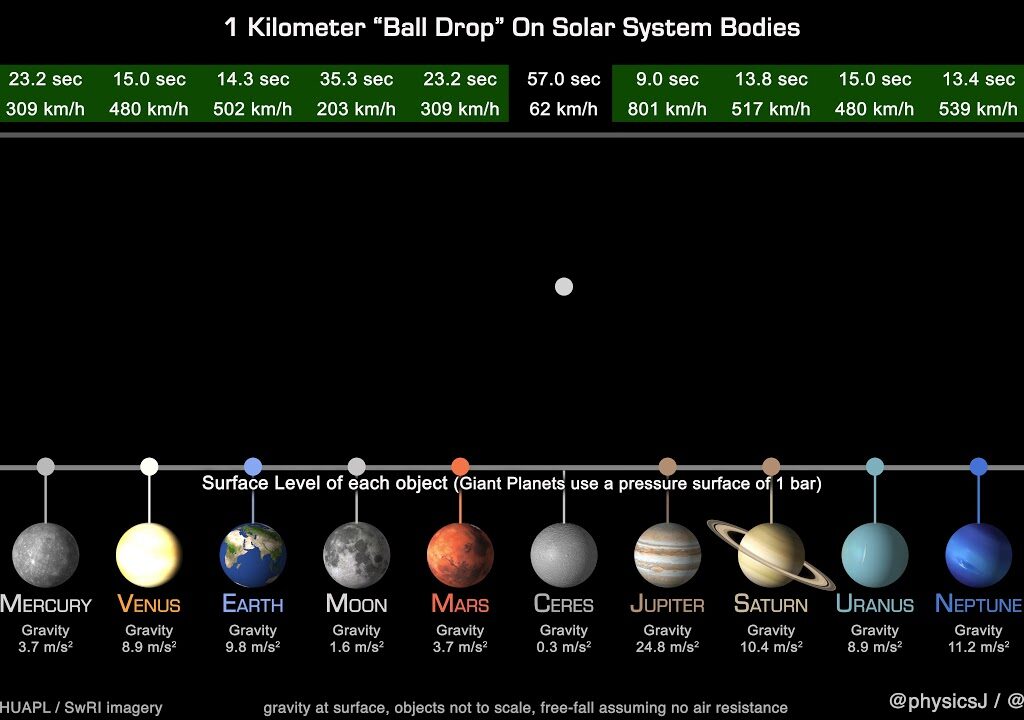
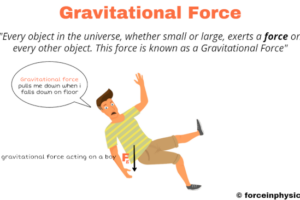
Gravity is the fundamental force that causes two masses to attract each other. On Earth, this force results in a consistent acceleration of approximately 9.8 meters per second squared, which governs how objects fall and move. When considering other planets, gravity varies depending on factors such as the planet’s mass and radius, leading to different gravitational accelerations that influence everything from surface conditions to atmospheric retention.
Fundamental Principles Behind Gravity Measurement
The foundation for understanding gravity across the solar system lies in Newton’s law of universal gravitation. This law states that the gravitational force between two objects is directly proportional to the product of their masses and inversely proportional to the square of the distance separating them. To accurately measure gravity on another planet, scientists must determine the planet’s mass and radius, which are critical variables in calculating gravitational acceleration.
- Newton’s Law of Universal Gravitation:
F = G * (m1 * m2) / r², where F is the gravitational force, G is the gravitational constant, m1 and m2 are the masses, and r is the distance between the centers of the two masses. - Surface Gravity Calculation:
g = G * M / R², where g is the acceleration due to gravity on the planet’s surface, M is the planet’s mass, and R is its radius.
Techniques for Measuring Planetary Gravity
Orbital Analysis Using Spacecraft
One of the most effective methods to gauge a planet’s gravity involves monitoring spacecraft orbiting the celestial body. As a satellite moves through the planet’s gravitational field, its speed and trajectory experience subtle changes. By analyzing these variations through radio signal tracking and Doppler shift measurements, scientists can infer the gravitational pull and thus estimate the planet’s mass distribution and surface gravity.
Accelerometer Data from Landers and Rovers
In addition to orbital measurements, landers and rovers equipped with accelerometers provide direct readings of gravitational acceleration. These instruments detect changes in acceleration during descent and while stationary on the surface, offering valuable data points. For example, Mars landers have utilized accelerometers to measure the planet’s gravity during touchdown, complementing orbital observations for a comprehensive understanding.
Gravity Science on Gas Giants
Measuring gravity on massive gas giants like Jupiter and Saturn presents unique challenges due to their size, rapid rotation, and complex atmospheric dynamics. Missions such as NASA’s Juno spacecraft employ specialized gravity science instruments that detect minute velocity changes during close flybys. These measurements reveal gravitational anomalies linked to internal structures and atmospheric phenomena, enabling detailed gravitational mapping.
Computational and Indirect Methods
Beyond direct measurements, computational models integrate observational data with theoretical physics to estimate gravitational fields. These models consider planetary density variations, core composition, and rotational effects to solve equations governing gravitational potential and motion. Additionally, tidal interactions between planets and their moons provide indirect clues about gravitational forces. By studying orbital changes and tidal flexing, researchers deduce gravitational characteristics of planets that are otherwise difficult to measure directly.
Illustrative Examples of Gravity Variation
While physically dropping a ball on distant planets is not currently feasible, simulations and analogies help illustrate how gravity differs across worlds:
- Moon:
Gravity is about one-sixth that of Earth, causing objects to fall more slowly and appear to float during descent. - Mars:
With roughly 38% of Earth’s gravity, a dropped object descends more leisurely compared to Earth. - Jupiter:
Due to its massive size, Jupiter’s surface gravity is over twice that of Earth, resulting in a much faster fall for objects.
Common Misconceptions About Planetary Gravity
Gravity is the same everywhere in the solar system.
Gravity varies significantly depending on a planet’s mass and radius, leading to different surface gravitational accelerations.
Gravity can be measured simply by dropping objects on other planets.
Direct experiments like dropping objects are impractical on distant planets; instead, scientists rely on spacecraft data, accelerometers, and indirect methods.
Significance of Measuring Gravity Beyond Earth
Understanding gravitational variations across planets is crucial for multiple scientific and practical reasons. Gravity influences planetary formation, internal structure, atmospheric retention, and surface geology. It also affects the potential for habitability by determining whether a planet can hold onto water and an atmosphere. Precise gravity measurements inform mission planning, navigation, and the design of landers and rovers, making them indispensable for ongoing and future space exploration.
Future Directions in Planetary Gravity Research
Advancements in technology promise to enhance the precision of gravity measurements. Upcoming missions aim to deploy highly sensitive gravimeters and quantum sensors that utilize matter-wave interference to detect minute gravitational variations. These innovations will enable scientists to map gravitational anomalies caused by planetary rings, atmospheric layers, and subsurface structures with unprecedented detail, deepening our understanding of planetary interiors and evolution.
Conclusion: The Quest to Decode Gravity Across the Solar System
The endeavor to measure gravity on other planets exemplifies human curiosity and scientific ingenuity. From tracking spacecraft orbit perturbations to analyzing accelerometer data and modeling gravitational fields, researchers piece together the invisible forces shaping our planetary neighbors. This ongoing exploration not only enriches our knowledge of celestial mechanics but also lays the groundwork for future discoveries about the nature and habitability of worlds beyond Earth.
FAQ
What is gravity?
Gravity is the fundamental force that causes two masses to attract each other.
How do scientists measure gravity on other planets?
Scientists use spacecraft orbital analysis, lander accelerometers, and computational models.
Why is measuring gravity important?
It influences planetary formation, internal structure, and potential for habitability.
Leave a Reply