
Short Answer
Understanding Dark Matter
Dark matter represents one of the most perplexing and invisible components of our universe. Although it neither emits nor absorbs electromagnetic radiation, making it undetectable by conventional telescopes, its gravitational influence is unmistakable. Constituting roughly 27% of the universe’s total mass-energy budget, dark matter vastly exceeds the amount of ordinary matter that forms stars, planets, and living beings. This elusive substance acts as the unseen framework supporting the formation and cohesion of galaxies and galaxy clusters, prompting scientists to unravel its true nature and distribution.
NASA’s Role in Dark Matter Exploration
NASA spearheads a multifaceted approach to investigate dark matter, combining advanced observational tools, innovative technology, and collaborative scientific efforts. Central to this mission is the James Webb Space Telescope (JWST), renowned for its infrared sensitivity and ability to observe the earliest cosmic epochs. While JWST primarily focuses on star and galaxy formation, its capabilities also allow indirect detection of dark matter by studying how it shapes the large-scale structure of the universe. By measuring gravitational effects on visible matter, JWST helps map the cosmic web where dark matter exerts its influence.
Gravitational Lensing: A Window into the Invisible
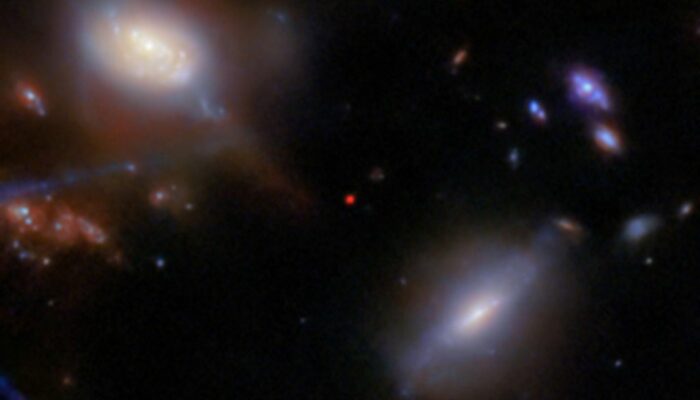
One of the most powerful techniques to study dark matter is gravitational lensing. This phenomenon occurs when the gravitational field of massive objects bends and distorts light from distant galaxies, effectively acting as a natural cosmic magnifier. Although dark matter itself is invisible, its presence alters these lensing patterns. By analyzing subtle distortions captured by NASA’s telescopes, astrophysicists can chart the distribution of dark matter halos surrounding galaxies. These observations are crucial for testing and refining theoretical models about dark matter’s properties and behavior.
Scientific Strategies and Particle Physics Connections
Beyond mapping, NASA’s investigation delves into the fundamental composition of dark matter. The agency supports a broad spectrum of scientific methods that bridge astrophysics and particle physics. Key hypotheses involve particles such as Weakly Interacting Massive Particles (WIMPs) and axions, which are potential dark matter candidates. While many detection experiments occur in terrestrial laboratories, NASA’s space-based observations provide essential contextual data that complement and guide these ground-based efforts.
Upcoming Missions: The Nancy Grace Roman Space Telescope
The forthcoming Nancy Grace Roman Space Telescope is poised to enhance our understanding of dark matter with unprecedented precision. By surveying millions of galaxies and analyzing their clustering and gravitational lensing patterns over time, this mission aims to determine whether dark matter interacts solely through gravity or if other forces are involved. Such findings could revolutionize current physics paradigms and deepen our comprehension of cosmic evolution.
Insights from the Cosmic Microwave Background
NASA’s exploration of dark matter also extends to the study of the cosmic microwave background (CMB), the residual radiation from the Big Bang. Missions like the Wilkinson Microwave Anisotropy Probe (WMAP) and Planck have provided detailed maps of temperature fluctuations in the CMB, which carry imprints of dark matter’s influence during the universe’s infancy. Analyzing these patterns allows scientists to constrain dark matter’s density, distribution, and possible interactions in the early cosmos.
Theoretical Models and Computational Simulations
Dark matter research embraces a variety of theoretical possibilities, including the idea that it may consist of multiple components or exhibit unexpected characteristics. NASA encourages the development of innovative models and simulations to explore exotic candidates such as sterile neutrinos or primordial black holes. These hypotheses are tested through sophisticated computational simulations that integrate cosmic evolution with observational data, enabling researchers to validate or challenge emerging theories.
Global Collaboration and Data Sharing
Recognizing the complexity of dark matter research, NASA actively fosters international partnerships with space agencies, academic institutions, and scientific consortia. These collaborations facilitate the exchange of data, joint mission planning, and interdisciplinary dialogue, significantly expanding the scope and depth of investigations. This cooperative framework accelerates progress toward a comprehensive understanding of dark matter and its role in the cosmos.
The Significance of Unveiling Dark Matter
Deciphering the mysteries of dark matter is pivotal for advancing our knowledge of the universe’s structure and evolution. NASA’s integrated strategy-leveraging revolutionary telescopes, innovative observational methods, and global scientific cooperation-brings humanity closer to transforming dark matter from an enigmatic shadow into a fundamental element of cosmic understanding. This endeavor not only pushes the boundaries of technology and physics but also enriches our perspective on the universe and our place within it.
Conclusion: Humanity’s Quest for Cosmic Knowledge
The pursuit to comprehend dark matter epitomizes humanity’s relentless curiosity and determination to illuminate the unknown. As NASA’s instruments capture ancient photons traveling across billions of years, the interplay between visible and invisible matter gradually unfolds. This ongoing exploration promises to reshape our cosmic narrative, revealing the hidden scaffolding that underpins the universe and deepening our connection to the vast cosmic tapestry.
FAQ
What is dark matter?
Dark matter is an invisible substance that makes up approximately 27% of the universe, influencing its structure through gravitational effects.
How does NASA study dark matter?
NASA employs telescopes like the James Webb Space Telescope and the upcoming Nancy Grace Roman Space Telescope, using techniques such as gravitational lensing to investigate dark matter.


Leave a Reply