
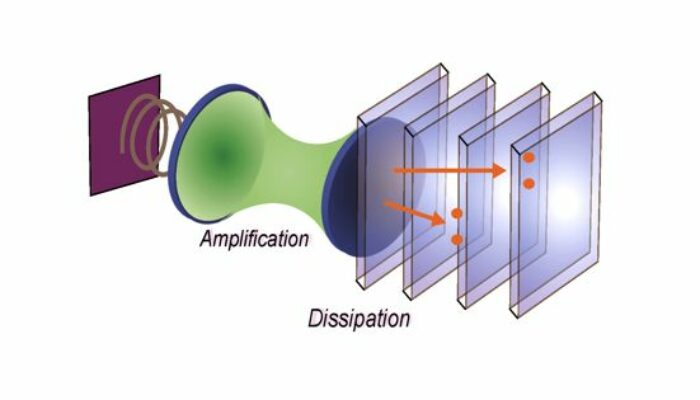
Short Answer
Definition of the Casimir Effect
The Casimir effect is a quantum phenomenon arising from the fluctuations of vacuum energy in empty space. It occurs when two uncharged, conductive plates are positioned extremely close to each other, resulting in an attractive force between them. This force emerges due to the restriction of quantum vacuum modes between the plates, which alters the energy density compared to the surrounding space.
- Quantum Vacuum Fluctuations:
The vacuum is not truly empty but filled with transient virtual particles that spontaneously appear and vanish, contributing to zero-point energy. - Casimir Force:
The imbalance in vacuum energy between the plates and outside them generates a measurable force pulling the plates together.
Fundamental Principles Behind the Casimir Effect
At its core, the Casimir effect is a manifestation of quantum field theory, where the vacuum state is influenced by boundary conditions imposed by physical objects. When two parallel plates are placed in a vacuum, only certain electromagnetic modes can exist between them, reducing the vacuum energy relative to the outside. This energy difference creates an attractive force.
Mathematically, the effect can be understood by considering the allowed wavelengths of virtual photons between the plates, which are limited compared to the unrestricted modes outside. This leads to a net pressure pushing the plates together.
Casimir Effect in Fluid Environments
Introducing a fluid medium between or around the plates complicates the classical Casimir scenario. The fluid molecules interact with the virtual particles and photons, modifying the effective vacuum state and the resulting forces. This interaction blends quantum mechanics with classical fluid dynamics, creating a hybrid system with unique behaviors.
- Modification of Vacuum Modes:
The presence of fluid changes the electromagnetic boundary conditions, altering the spectrum of vacuum fluctuations. - Viscosity and Drag:
Fluid properties such as viscosity introduce forces like drag, which can compete with or modify the Casimir force. - Fluid-Quantum Interactions:
Collisions between virtual particles and fluid molecules add complexity, potentially dampening or enhancing the net force.
Mechanisms of Casimir Forces in Fluids
When the Casimir effect occurs within a fluid, the interplay between quantum vacuum fluctuations and fluid dynamics becomes critical. The fluid’s viscosity and molecular interactions influence the effective boundary conditions, which in turn affect the magnitude and direction of the Casimir force. This dynamic environment can lead to variations in force strength, sometimes amplifying or diminishing the effect depending on fluid properties.
Moreover, turbulent flow within the fluid can introduce transient fluctuations that obscure the steady Casimir force, making experimental observation and theoretical modeling more challenging.
Mathematical Framework and Formula
The classical Casimir force between two perfectly conducting plates separated by a distance d in vacuum is given by:
F = -frac{pi^2 hbar c}{240 d^4} A
- F: Casimir force (attractive)
- (hbar): Reduced Planck’s constant
- c: Speed of light in vacuum
- d: Distance between the plates
- A: Surface area of the plates
In fluid environments, this formula requires modification to account for the dielectric properties of the fluid, viscosity, and altered boundary conditions, often necessitating complex numerical simulations or perturbative approaches.
Experimental Challenges and Techniques
Studying the Casimir effect within fluids demands highly sensitive measurement methods due to the subtlety of the forces and the interference from fluid dynamics. Advances in optomechanical systems and microelectromechanical sensors have enabled researchers to detect minute force variations with greater precision.
Experimental setups must carefully control fluid viscosity, temperature, and flow conditions to isolate the quantum contributions from classical fluid effects. These challenges have spurred innovation in metrology, pushing the boundaries of precision measurement in quantum physics.
Applications and Implications
The interaction between Casimir forces and fluids holds promise for multiple scientific and technological fields:
- Nanotechnology:
Understanding these forces can aid in designing nanoscale devices where fluid environments are common, influencing adhesion and friction at small scales. - Material Science:
Insights into quantum-fluid interactions may inspire new materials with tailored surface properties or energy manipulation capabilities. - Cosmology and Fundamental Physics:
Exploring how quantum vacuum fluctuations behave in complex environments could shed light on early universe phenomena such as cosmic inflation and the behavior of primordial particles.
Common Misconceptions About the Casimir Effect
The Casimir effect only occurs in a perfect vacuum.
While originally described in vacuum, the Casimir force can also manifest in fluids and other media, though its characteristics may change.
The Casimir force is purely classical.
It is fundamentally a quantum phenomenon arising from vacuum fluctuations, not explainable by classical physics alone.
The Casimir effect is always attractive.
Depending on geometry and materials, the force can be repulsive or attractive.
Significance of the Casimir Effect in Science and Technology
The Casimir effect exemplifies the profound influence of quantum vacuum fluctuations on macroscopic objects, bridging quantum theory and classical physics. Its study enhances our understanding of fundamental forces and energy at the nanoscale, impacting the design of micro- and nanoelectromechanical systems (MEMS/NEMS).
Moreover, investigating the Casimir effect in fluid environments opens new avenues for interdisciplinary research, combining quantum mechanics with fluid dynamics. This fusion could lead to breakthroughs in controlling quantum forces in practical applications, advancing fields from precision engineering to cosmology.
Future Directions and Philosophical Reflections
The exploration of Casimir forces within fluids challenges traditional boundaries between disciplines and invites a reevaluation of how quantum phenomena interact with complex environments. This ongoing research not only pushes scientific frontiers but also provokes deeper philosophical questions about the nature of reality, the interplay of forces, and the fabric of the universe.
As physicists continue to probe these interactions, the metaphor of the Casimir force ‘swimming’ through fluidic space symbolizes the dynamic and adaptive qualities of quantum effects, hinting at undiscovered principles that may reshape our understanding of the cosmos.
FAQ
What is the Casimir effect?
The Casimir effect is a quantum phenomenon where two uncharged conductive plates placed close together in a vacuum experience an attractive force due to vacuum energy fluctuations.
How does the Casimir effect behave in fluid environments?
In fluid environments, the Casimir effect is modified by the fluid’s properties such as viscosity, which can alter the electromagnetic boundary conditions and the resulting forces.
What are the applications of the Casimir effect?
The Casimir effect has implications in nanotechnology, material science, and cosmology, influencing the design of nanoscale devices and understanding fundamental physical phenomena.






Leave a Reply