
Short Answer
Understanding Gravity in Planet-Moon Systems
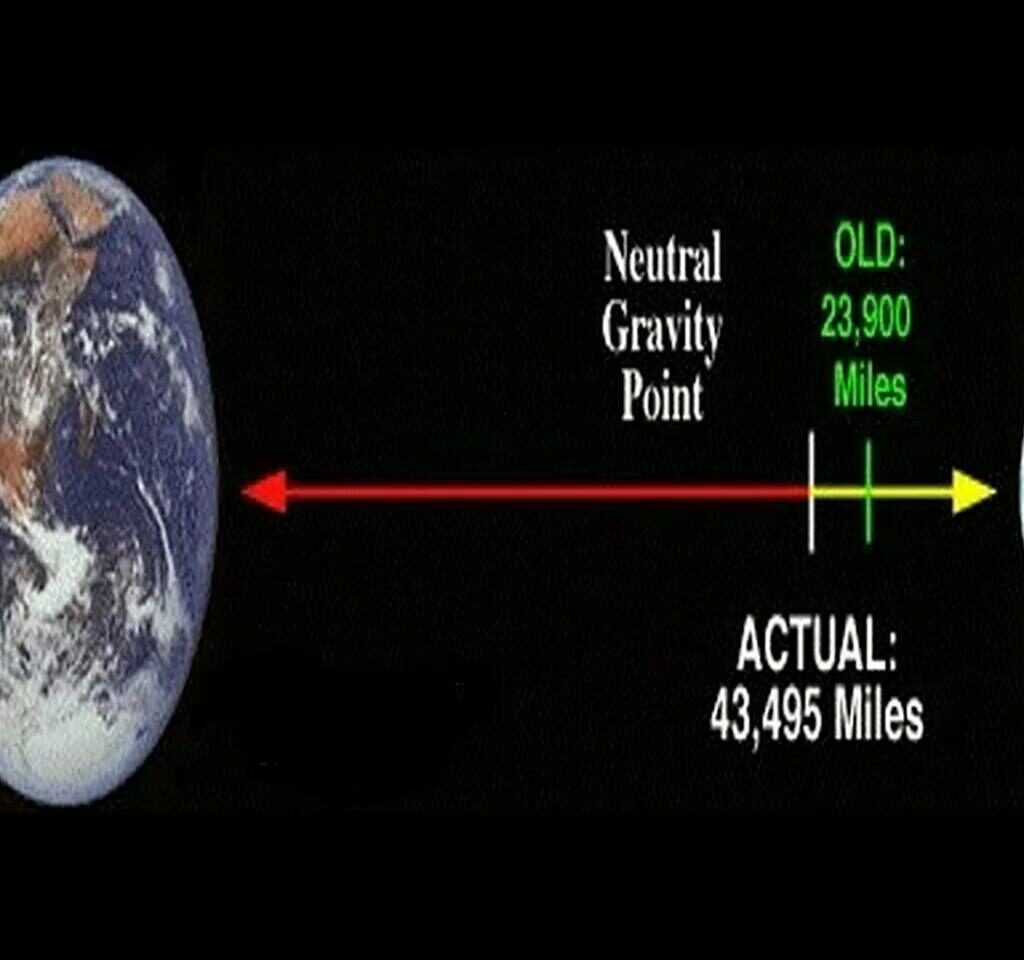
Gravity is the fundamental force that governs the attraction between masses in the universe. It orchestrates the motion of celestial bodies, maintaining orbits and shaping planetary atmospheres. The strength of gravitational pull depends primarily on two factors: the mass of the objects involved and the distance separating their centers of mass. Newton’s Law of Universal Gravitation succinctly expresses this relationship, stating that the gravitational force between two bodies is directly proportional to the product of their masses and inversely proportional to the square of the distance between them.
Surface Gravity Versus Gravitational Force
When discussing gravity in the context of planets and moons, it is crucial to differentiate between the gravitational force exerted between two bodies and the surface gravity experienced on each body. Surface gravity refers to the acceleration due to gravity at the surface of a celestial object and depends not only on its mass but also on its radius. This means that a larger body with a significant mass but a vast radius might have surface gravity comparable to a smaller, denser satellite. Therefore, achieving equal surface gravity between a planet and its moon involves a complex interplay of mass, size, and density rather than simply matching their masses.
Examples from Our Solar System
Earth and its Moon provide a clear illustration of the disparity in surface gravity within a typical planet-moon system. Earth’s surface gravity is approximately 9.8 m/s², a result of its considerable mass and radius. In contrast, the Moon’s surface gravity is about 1.62 m/s², less than one-sixth that of Earth’s, primarily due to its smaller mass and radius. This significant difference highlights the rarity of gravitational parity in conventional planetary systems, where moons are generally smaller bodies formed from debris or captured remnants.
Binary Planetary Systems and Gravitational Symmetry
Beyond our solar system, the diversity of celestial arrangements expands dramatically. Binary planetary systems, where two bodies of comparable size orbit a common center of mass (barycenter), challenge the traditional planet-moon classification. A notable example is the Pluto-Charon system. Although Pluto is classified as a dwarf planet, Charon’s diameter is about half that of Pluto, and their barycenter lies outside Pluto’s surface. This unique configuration results in a more balanced gravitational interaction, with both bodies exerting significant influence on each other.
Mutual Tidal Locking and Its Consequences
In systems where gravitational forces are nearly equal, mutual tidal locking is a natural outcome. This phenomenon causes both bodies to perpetually show the same face to each other, creating a synchronized orbital dance. Such gravitational parity could also lead to intertwined atmospheric and geological processes, potentially affecting volcanic activity, surface evolution, and magnetic field interactions in ways not observed in typical planet-moon pairs.
Implications for Planetary Formation and Evolution
The possibility of equal surface gravity between a planet and its moon raises intriguing questions about their origins. Could two bodies of similar size and gravity emerge from the same region of a protoplanetary disk? Might gravitational perturbations and collisional events sculpt such balanced systems? These scenarios blur the conventional distinctions between planets and moons, suggesting that our cosmic vocabulary may need to evolve to accommodate these complex relationships.
Geophysical and Atmospheric Effects of Equal Gravity
Surface gravity plays a pivotal role in shaping a celestial body’s geology and atmosphere. Equal gravity on a planet and its moon would influence the weight of geological formations, the retention of atmospheres, and the dynamics of volcanic activity. Additionally, the interaction of their magnetic fields could create unique space weather environments, differing significantly from those around solitary planets or typical moon-planet pairs.
Challenges and Possibilities in Achieving Gravitational Equality
Despite the fascinating prospects, achieving equal surface gravity between a planet and its moon is a delicate balance. It requires precise alignment of mass, radius, and density, alongside stable orbital mechanics to prevent eventual merging or escape. However, the growing catalog of exoplanets and their satellites continues to reveal unexpected configurations, fueling optimism that such gravitational parity may exist somewhere in the cosmos.
Why Exploring Gravitational Parity Matters
Investigating whether a planet and its moon can share equal gravity extends beyond theoretical curiosity. It challenges established astrophysical classifications and deepens our understanding of celestial mechanics. This inquiry pushes the boundaries of planetary science, encouraging both rigorous analysis and imaginative exploration. As observational technologies advance, the study of gravitational interactions in diverse planetary systems will enrich our comprehension of the universe’s complexity and the myriad forms planetary companionship can take.
FAQ
Can a planet and its moon have equal gravity?
Yes, under specific conditions where both bodies have similar mass and size, gravitational parity can occur, though it is rare.
What factors influence gravitational force?
Gravitational force is influenced by the masses of the objects and the distance between their centers of mass.
What is surface gravity?
Surface gravity is the acceleration due to gravity at the surface of a celestial object, dependent on its mass and radius.

Leave a Reply