
Short Answer
Definition of the Hubble Space Telescope
The Hubble Space Telescope (HST) is a sophisticated orbital observatory positioned approximately 340 miles above Earth’s surface. It serves as a powerful astronomical instrument designed to capture high-resolution images and data from distant cosmic phenomena. Far more than a mere machine, Hubble acts as a symbolic sentinel, extending humanity’s vision beyond terrestrial limits to explore the vast universe.
Historical Context and Initial Challenges
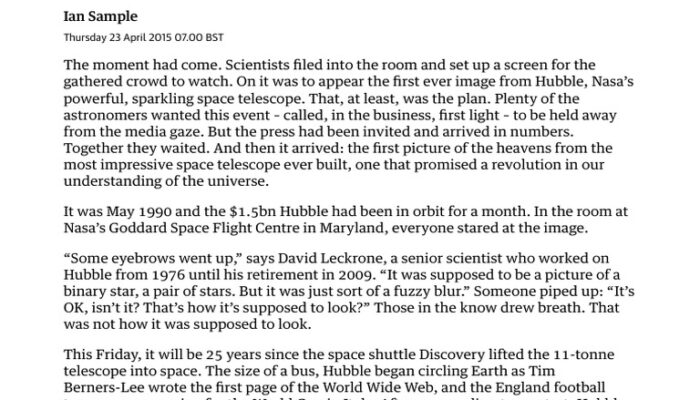
Launched in 1990, the Hubble Space Telescope’s debut was initially marred by a critical flaw: a slight imperfection in its primary mirror caused the first images to appear blurred. This unexpected setback transformed what was anticipated as a triumphant launch into a dramatic episode of failure and recovery. The subsequent servicing mission by the space shuttle corrected the mirror’s defect, turning Hubble’s narrative into a remarkable story of resilience and human determination to overcome technological adversity.
Scientific Contributions and Discoveries
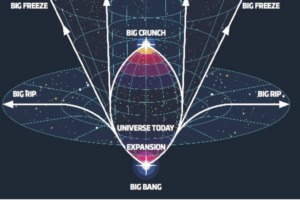
Hubble’s scientific impact is profound, having revolutionized astrophysics by enabling precise measurements of the universe’s expansion rate and providing insights into enigmatic phenomena such as dark energy and black holes. Its ability to observe distant galaxies, supernova remnants, and cosmic nebulae with unprecedented clarity has expanded our understanding of the cosmos and reshaped scientific paradigms.
Key Scientific Achievements
- Measuring Cosmic Expansion:
Hubble’s observations have refined estimates of the Hubble constant, the rate at which the universe is expanding. - Exploring Dark Energy:
Data from Hubble contributed to the discovery of dark energy, a mysterious force accelerating cosmic expansion. - Studying Black Holes:
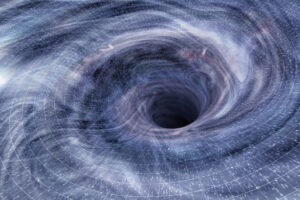
The telescope has provided detailed images and data on black holes, enhancing knowledge of their properties and behavior.
Philosophical and Psychological Significance
Beyond its scientific achievements, Hubble embodies humanity’s deep-seated curiosity and existential quest to comprehend the unknown. It bridges the gap between empirical observation and the human experience by transforming distant, faint points of light into vivid, detailed images that evoke wonder and humility. This connection prompts fundamental questions about our origins, the possibility of extraterrestrial life, and the future of the universe.
International Collaboration and Operational Longevity
The Hubble Space Telescope is a testament to global scientific cooperation, representing a partnership primarily between NASA and the European Space Agency (ESA), alongside the broader international scientific community. Unlike singular manned missions or robotic landers, Hubble operates continuously, providing a persistent observational platform that benefits researchers worldwide.
Its mission longevity is notable; through multiple servicing missions and technological upgrades, Hubble has adapted and evolved, extending its operational life far beyond initial expectations. This durability underscores the importance of sustainability and resilience in long-term space exploration endeavors.
Comparison with Other Space Milestones
When contrasted with other landmark space achievements-such as the Apollo Moon landings or robotic planetary explorations-Hubble’s legacy is distinct. While Apollo missions symbolized human presence and geopolitical prowess, and Mars rovers physically extended our reach, Hubble’s contribution lies in intellectual exploration. It enriches humanity’s collective knowledge and imagination without territorial conquest, leaving a legacy inscribed in scientific advancement and universally accessible cosmic imagery.
Common Misconceptions About Hubble
Hubble was an immediate success upon launch.
The telescope initially suffered from a flawed mirror, resulting in blurred images that required a complex repair mission.
Hubble’s achievements are purely scientific.
While its scientific contributions are immense, Hubble also holds profound philosophical and cultural significance, inspiring wonder and existential reflection.
Why the Hubble Space Telescope Matters
The importance of the Hubble Space Telescope extends beyond its technical and scientific accomplishments. It symbolizes humanity’s relentless pursuit of knowledge and the desire to connect with the cosmos. By providing detailed views of the universe’s distant past and present, Hubble challenges and enriches our understanding of existence, inspiring scientists, artists, and the public alike. Its enduring influence continues to shape academic research and popular imagination, making it a cornerstone of modern astronomy and a beacon of hope for future exploration.
Real-World Impact and Legacy
Hubble’s continuous stream of data and imagery has transformed not only scientific fields but also education and culture. Its breathtaking photographs have become iconic, featured in textbooks, museums, and media worldwide. The telescope’s success has paved the way for subsequent space observatories and missions, setting a high standard for technological innovation and international collaboration in space science.
Conclusion: A Symbol of Human Aspiration
Ultimately, the Hubble Space Telescope represents a paradigm shift in humanity’s engagement with the cosmos. It exemplifies the fusion of advanced technology, scientific inquiry, and profound human curiosity. Whether or not it is deemed the greatest space achievement, its lasting impact on science and society is undeniable, inspiring generations to explore, learn, and seek meaning among the stars.

Leave a Reply