
Short Answer
Definition of Melting Ice
Melting ice refers to the physical transformation of water from its solid state (ice) into liquid form. This process is governed by fundamental physical laws and involves complex interactions at the molecular and thermodynamic levels. While it may appear as a simple phase change, melting ice embodies intricate scientific principles and carries significant environmental and metaphorical implications.
Thermodynamic Principles Behind Melting
The melting of ice is deeply rooted in thermodynamics, particularly the laws that describe heat transfer and phase transitions. Ice consists of water molecules arranged in a highly ordered crystalline lattice at temperatures below freezing. As heat energy is introduced, molecular motion intensifies, disrupting the hydrogen bonds that stabilize the solid structure. This leads to a phase change at 0°C under standard atmospheric pressure, where ice becomes liquid water. This transition exemplifies the delicate balance between energy input and molecular arrangement.
Heat Transfer and Phase Change
- Heat Absorption:
Ice absorbs thermal energy without a rise in temperature during melting, known as latent heat of fusion. - Hydrogen Bond Disruption:
Increased molecular kinetic energy breaks the hydrogen bonds holding the ice lattice together.
Molecular Dynamics and Water’s Unique Properties
From the perspective of kinetic molecular theory, melting ice showcases the dynamic interplay of atomic forces. Water molecules possess a strong dipole moment due to polar covalent bonds between hydrogen and oxygen atoms, enabling extensive hydrogen bonding. This characteristic results in a high heat of fusion and an unusually high specific heat capacity compared to other solvents. These properties influence how ice melts and how water behaves thermally, making it a unique substance in nature.
Significance of Hydrogen Bonding
- High Heat of Fusion:
The energy required to convert ice to water is substantial due to strong intermolecular forces. - Specific Heat Capacity:
Water’s ability to store and release heat moderates environmental temperatures.
Environmental Impact of Melting Ice
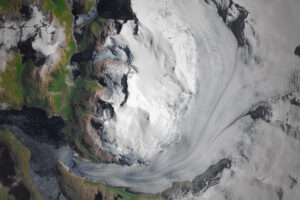
The melting of ice extends beyond physical science, playing a critical role in environmental and climate systems. Glaciers and polar ice caps serve as vital freshwater reservoirs and climate archives, preserving atmospheric data over thousands of years. Their accelerated melting due to human-induced climate change leads to rising sea levels, altered ecosystems, and loss of habitats for species such as polar bears. These changes underscore the profound ecological consequences of ice melt and highlight the urgency of addressing global warming.
Ecological Consequences
- Sea Level Rise:
Melting glaciers contribute to increasing ocean volumes, threatening coastal communities. - Habitat Loss:
Species dependent on ice-covered regions face survival challenges as their environments shrink. - Freshwater Reduction:
Diminished glacial mass affects freshwater availability for ecosystems and human use.
Latent Heat of Fusion: Scientific and Metaphorical Perspectives
The latent heat of fusion is the energy absorbed by ice during melting without a temperature change. This concept is crucial in regulating Earth’s climate and has broader metaphorical significance. Just as energy is required to overcome the solid state, transitions in life-whether personal, societal, or ecological-often demand effort and adaptation. The melting process symbolizes the necessity of relinquishing old forms to embrace new states of being.
Real-World Examples of Ice Melting
In various regions around the globe, the effects of melting ice are visibly profound. Arctic sea ice diminishes annually, impacting marine food webs and indigenous communities. Glacial retreat in mountain ranges alters freshwater supplies and local climates. The plight of the polar bear exemplifies the biological ramifications of habitat loss due to melting ice, illustrating the interconnectedness of climate change and biodiversity.
Common Misconceptions About Melting Ice
Melting ice always causes sea levels to rise.
While melting land ice contributes to sea level rise, melting sea ice itself does not significantly affect sea levels due to displacement.
Ice melts instantly once it reaches 0°C.
Melting requires absorption of latent heat, so ice can remain at 0°C until fully transformed.
Philosophical Reflections on Melting Ice
Beyond its physical and environmental dimensions, melting ice serves as a metaphor for transformation and resilience. The transition from solid to liquid mirrors moments in life where individuals must let go of former identities to grow and adapt. This process invites reflection on the fluidity of existence and the continuous interplay between stability and change within natural and human systems.
Importance of Understanding Melting Ice
Grasping the physics and implications of melting ice is vital for multiple disciplines, including environmental science, climate policy, and even psychology. It informs our comprehension of climate dynamics, guides conservation efforts, and enriches philosophical discourse on change. Recognizing the interconnectedness revealed by melting ice encourages responsible stewardship of the planet and fosters a deeper appreciation of the delicate balance sustaining life on Earth.
FAQ
What is melting ice?
Melting ice is the physical transformation of ice from a solid state to liquid water, governed by thermodynamic principles.
How does melting ice affect the environment?
Melting ice contributes to rising sea levels, habitat loss for species, and changes in freshwater availability, all of which are exacerbated by climate change.




Leave a Reply