
Short Answer
Definition of Ultraviolet and Extreme Ultraviolet Light
Ultraviolet (UV) light is a segment of the electromagnetic spectrum characterized by wavelengths ranging from 10 nanometers (nm) to 400 nm, which are invisible to the human eye. Within this range lies the subset known as extreme ultraviolet (EUV) light, spanning wavelengths from approximately 10 nm to 124 nm. EUV light occupies a critical position in scientific research, industrial processes, and medical applications due to its unique properties and interactions with matter.
- Ultraviolet Light:
Electromagnetic radiation with wavelengths shorter than visible light but longer than X-rays, used in sterilization, fluorescence, and photochemistry. - Extreme Ultraviolet Light:
A high-energy portion of UV light with shorter wavelengths, essential for advanced lithography and materials analysis.
Fundamental Principles Behind EUV Light Generation
The production of extreme ultraviolet radiation involves converting energy into photons within the EUV wavelength range. This process typically requires ionizing gases or materials to create plasma or harnessing nonlinear optical effects to generate high-frequency harmonics. The generation methods vary in complexity, efficiency, and suitability for different applications.
Gas Discharge Lamps
One traditional approach to EUV generation involves gas discharge lamps, where an electrical current passes through noble gases such as xenon or krypton. This ionization produces plasma that emits radiation within the EUV spectrum. While these lamps are relatively simple and have been used extensively, they often face challenges related to output stability and limited spectral bandwidth, necessitating sophisticated engineering to optimize performance.
High-Harmonic Generation (HHG) in Laser Systems
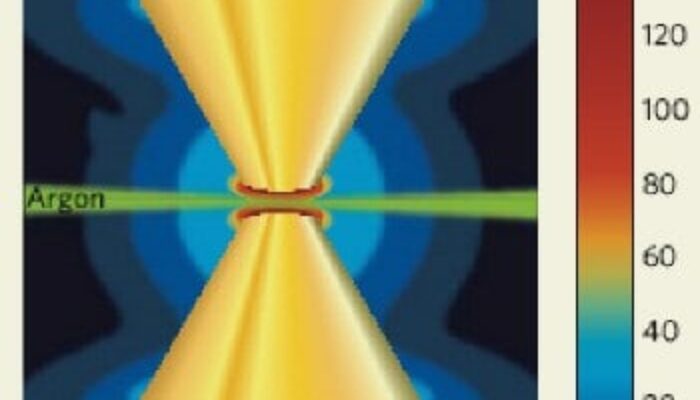
High-harmonic generation is a cutting-edge technique where intense laser pulses interact with gaseous media, producing photons at multiples (harmonics) of the original laser frequency. This method yields coherent EUV radiation with excellent temporal and spatial control, making it invaluable for ultrafast spectroscopy and imaging. However, the efficiency of HHG remains a significant hurdle, with ongoing research focused on optimizing laser parameters and gas conditions to enhance output.
Laser-Produced Plasma (LPP)
Laser-produced plasma sources generate EUV light by directing high-intensity laser beams onto solid targets, causing rapid vaporization and plasma formation. The energetic electrons and ions within this plasma emit a broad spectrum of radiation, including EUV wavelengths. LPP is a cornerstone technology for commercial EUV sources, particularly in semiconductor manufacturing, though it requires precise control of laser intensity and thermal management to maintain stable operation.
Applications of Extreme Ultraviolet Light
The unique properties of EUV light have enabled transformative advancements across multiple fields, from microelectronics to healthcare.
Semiconductor Manufacturing and Lithography
EUV lithography is revolutionizing the fabrication of integrated circuits by enabling patterning at nanometer scales. As electronic devices continue to shrink, EUV light allows for finer resolution than traditional photolithography, supporting the continuation of Moore’s Law and the development of faster, more efficient microchips.
Materials Science and Nanotechnology
In materials research, EUV radiation facilitates photoionization and photochemical reactions that can modify materials at the molecular and atomic levels. This capability is crucial for developing new nanostructures, coatings, and semiconductor doping techniques, expanding the frontiers of material properties and functionalities.
Medical and Sterilization Uses
UV light’s germicidal effects have been harnessed for sterilization and disinfection, offering alternatives to chemical methods in combating microbial resistance. EUV light, with its high energy, holds potential for advanced sterilization technologies, though its safe application requires careful study of biological effects and protective measures in clinical environments.
Challenges in Generating and Utilizing EUV Light
Despite its promising applications, the generation and deployment of EUV light face several obstacles:
- Technical Complexity:
Producing stable, high-intensity EUV radiation demands sophisticated equipment and precise control over plasma and laser parameters. - High Costs:
The infrastructure, including specialized mirrors and optical components capable of handling EUV wavelengths, involves significant financial investment. - Thermal and Material Constraints:
Managing heat loads and material degradation in EUV sources and optics remains a critical engineering challenge.
Significance of Extreme Ultraviolet Light in Modern Science and Technology
The ability to generate and manipulate EUV light is pivotal for advancing numerous scientific disciplines and industrial sectors. In semiconductor manufacturing, it underpins the production of next-generation microchips essential for computing and communication technologies. In materials science, EUV enables precise control over chemical and physical transformations at the nanoscale. Furthermore, its role in medical sterilization offers promising avenues for public health. Continued innovation in EUV generation technologies is vital for sustaining progress in these areas and unlocking new possibilities.
FAQ
What is extreme ultraviolet (EUV) light?
EUV light is a part of the electromagnetic spectrum with wavelengths between 10 nm and 124 nm, used in various advanced technological applications.
What are the main applications of EUV light?
EUV light is primarily used in semiconductor manufacturing, materials science, and for sterilization in medical settings.
What challenges are associated with generating EUV light?
Challenges include technical complexity, high costs, and managing thermal and material constraints during production.


Leave a Reply