

Short Answer
Understanding Black Holes
Black holes represent one of the most intriguing and complex phenomena in astrophysics. Once considered purely theoretical, these cosmic entities have become central to modern astronomical research. They are regions in space where gravity is so intense that nothing, not even light, can escape their pull. This immense gravitational force causes black holes to act like cosmic vacuum cleaners, drawing in matter, radiation, and even the fabric of spacetime itself.
Definition and Key Features
A black hole is defined by its event horizon, the boundary beyond which no information or matter can return. This boundary marks the point of no escape, akin to a whirlpool in the cosmic ocean that relentlessly drags everything inward.
- Event Horizon:
The invisible surface surrounding a black hole, beyond which escape is impossible. - Singularity:
The core of a black hole where density becomes infinite and known laws of physics break down. - Accretion Disk:
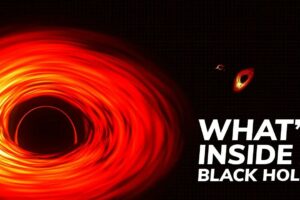
A luminous ring of gas and dust formed as matter spirals into the black hole.
Tidal Disruption Events (TDEs): A Window into Black Hole Activity
Tidal disruption events occur when a star ventures too close to a black hole and is torn apart by its overwhelming gravitational forces. This process stretches and distorts the star, often leading to its complete destruction. The debris from the star forms an accretion disk around the black hole, emitting vast amounts of energy detectable across multiple wavelengths, including X-rays and visible light.
Significance of TDE Observations
Real-time monitoring of TDEs has revolutionized our understanding of black hole behavior and their interaction with surrounding matter. These events provide crucial insights into:
- Black Hole Growth:
How black holes accumulate mass over time through stellar consumption. - Galaxy Evolution:
The influence of black hole activity on star formation and galactic dynamics. - Cosmic Conditions:
The physical properties of the host galaxy, including metallicity and energy distribution.
Mechanics of Black Hole and Star Interactions
When a star approaches the event horizon, the black hole’s tidal forces exceed the star’s self-gravity, causing it to be stretched and fragmented. The resulting stellar debris forms a swirling accretion disk, which heats up due to friction and gravitational energy, radiating intense light and other electromagnetic signals.
Black Holes and Gravitational Waves
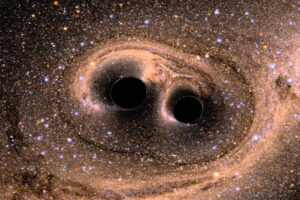
Beyond electromagnetic observations, black holes also reveal themselves through gravitational waves-ripples in spacetime generated by the merging of black holes. These waves offer a novel method to study black hole populations, their formation mechanisms, and their evolutionary paths across the universe.
The Black Hole Information Paradox
One of the most profound puzzles in theoretical physics is the black hole information paradox. It questions the fate of information that crosses the event horizon, challenging the principles of quantum mechanics and determinism. This paradox has spurred new theoretical frameworks attempting to reconcile general relativity with quantum theory.
Technological Advances in Black Hole Research
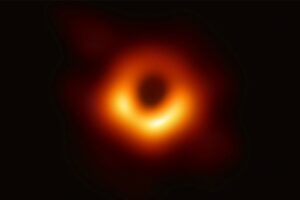
Modern astronomy benefits from cutting-edge instruments such as the Event Horizon Telescope and the James Webb Space Telescope. These tools enhance our ability to capture high-resolution images and spectra of black holes, enabling detailed studies of their structure and the energetic phenomena surrounding them.
Philosophical and Scientific Implications
Black holes not only push the boundaries of scientific knowledge but also evoke deep philosophical questions about the nature of reality and the limits of human understanding. They symbolize the unknown and inspire ongoing exploration into the fundamental laws governing the cosmos.
Real-World Examples of Black Hole Phenomena
Several observed tidal disruption events have provided valuable data:
- ASASSN-14li:
A well-studied TDE that offered insights into accretion disk formation and black hole feeding processes. - GW150914:
The first detected gravitational wave event from merging black holes, confirming predictions of general relativity.
Common Misunderstandings About Black Holes
- Misconception: Black holes suck in everything like a vacuum cleaner.
Correction: Black holes only pull in matter that crosses their event horizon; objects at a safe distance orbit normally. - Misconception: Black holes are cosmic monsters that destroy everything instantly.
Correction: Black holes influence their surroundings through gravity, but destruction occurs only when objects come too close.
Why Studying Black Holes is Crucial
Exploring black holes is vital for advancing our comprehension of fundamental physics, including gravity, quantum mechanics, and the evolution of galaxies. These cosmic phenomena serve as natural laboratories for testing theories under extreme conditions, ultimately enriching our understanding of the universe’s origin, structure, and fate.
Frequently Asked Questions (FAQ)
What exactly is a tidal disruption event (TDE)?
A tidal disruption event happens when a star gets too close to a black hole and is torn apart by its strong gravitational forces, leading to the formation of an accretion disk that emits energy across different wavelengths.
Why are black holes often referred to as cosmic drains?
Black holes earn this nickname because they draw in matter, light, and even distort time beyond their event horizon, functioning like powerful cosmic vacuum cleaners.
What makes observing tidal disruption events important?
Watching TDEs helps scientists understand how black holes grow, how galaxies evolve, and how matter behaves under intense gravitational forces.
How do black holes relate to gravitational waves?
When black holes merge, they produce gravitational waves-ripples in spacetime-that provide valuable information about their distribution, formation, and evolution.
What is the black hole information paradox?
This paradox questions what happens to information that falls into a black hole, challenging traditional physics and prompting new theories in quantum mechanics and relativity.
FAQ
What is a tidal disruption event (TDE)?
A tidal disruption event occurs when a star wanders too close to a black hole and is torn apart by its intense gravitational forces, resulting in the formation of an accretion disk emitting energy across various wavelengths.
Why are black holes called cosmic drains?
Black holes are called cosmic drains because they pull in matter, light, and even time itself beyond their event horizon, acting like cosmic vacuum cleaners in space.
What is the significance of observing tidal disruption events?
Observing tidal disruption events helps astronomers understand black hole growth, galaxy evolution, and the dynamics of matter under extreme gravitational forces.
How do black holes relate to gravitational waves?
When black holes merge, they emit gravitational waves—ripples in spacetime—that provide insights into their distribution, formation, and evolution.
What is the black hole information paradox?
The black hole information paradox is a fundamental physics question about what happens to information that falls into a black hole, challenging traditional ideas about determinism and quantum mechanics.
Leave a Reply