
Short Answer
Understanding Beer Physics
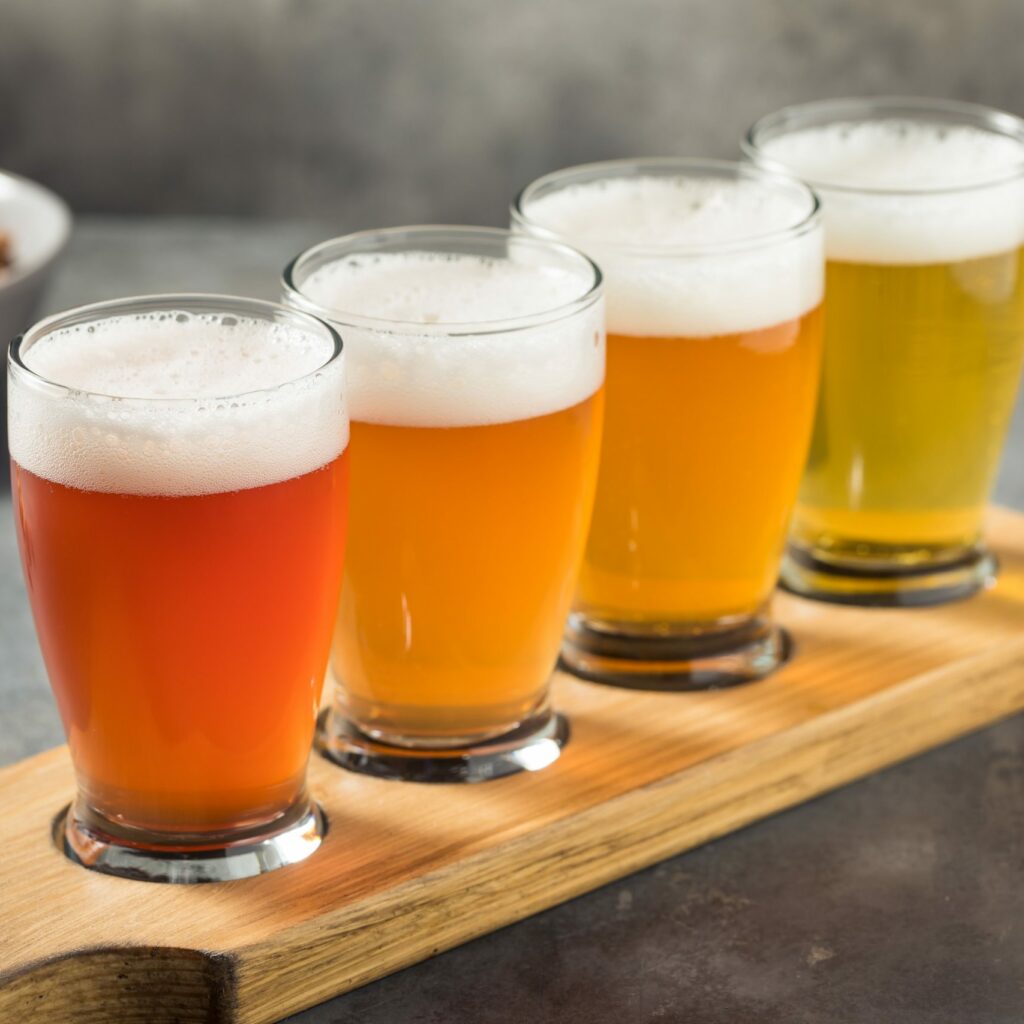
Beer, often perceived as a simple blend of water, malt, hops, and yeast, holds a fascinating complexity beyond its taste and aroma. The physics underlying beer, especially the behavior of its foam and bubbles, has attracted scientific curiosity, culminating in an Ig Nobel Prize for Physics. This award, which honors unusual and thought-provoking research, highlighted the intriguing parallels between beer foam and quantum phenomena, humorously celebrated with the phrase “Cheers to Quantum Foam!”
Definition of Quantum Foam and Its Relation to Beer
Quantum foam describes the turbulent, fluctuating nature of spacetime at the incredibly tiny Planck scale, approximately 10-35 meters. Originating from quantum mechanics, this concept illustrates a chaotic microcosm where classical physics breaks down. In beer, the frothy bubbles-especially prominent in stouts and ales-exhibit behaviors that, while governed by classical fluid dynamics, metaphorically echo the unpredictable and dynamic qualities of quantum foam. The interaction of surface tension, bubble formation, and fluid viscosity creates a rich analogy to these quantum effects.
Bubble Formation and Foam Dynamics in Beer
The bubbles in beer, collectively known as foam, play a crucial role in defining the beverage’s texture and sensory appeal. When beer is poured, dissolved gases escape the liquid, forming bubbles through a process called nucleation. This occurs when pressure differences and the liquid’s viscosity allow gas molecules to break free from the solution. The behavior of these bubbles can be likened to particles fluctuating under quantum conditions, providing a vivid metaphor for complex physical processes.
Role of Surface Tension
Surface tension is fundamental to the stability and structure of beer foam. It arises from cohesive forces between liquid molecules and adhesive forces at the gas-liquid interface, creating a delicate yet resilient bubble network. This balance of forces is analyzed through thermodynamics and fluid mechanics, revealing how bubbles maintain their shape and longevity.
Temperature Effects on Foam
Temperature significantly influences fermentation and bubble behavior. Yeast-driven fermentation is sensitive to heat, with higher temperatures increasing molecular motion and affecting bubble formation and stability. Warmer beers tend to produce more lively, volatile bubbles that enhance aroma but reduce foam creaminess and persistence compared to colder brews. This temperature dependence mirrors quantum systems where thermal energy impacts the stability of quantum states.
Quantum Analogies in Bubble Behavior
The dynamic processes of bubble collapse and coalescence in beer foam evoke concepts from quantum physics, such as wave-particle duality and entanglement. As bubbles merge, they redistribute energy in a manner reminiscent of particle interactions at the quantum level, illustrating a surprising connection between everyday phenomena and fundamental physics.
Viscosity and Its Impact on Beer Characteristics
Viscosity, the measure of a fluid’s resistance to flow, shapes how beer pours and feels in the mouth. Darker beers like stouts exhibit higher viscosity than lighter ales, resulting in a thicker texture and altered bubble dynamics. This property invites comparison to quantum fluids, which at extremely low temperatures can become superfluids with zero viscosity, displaying extraordinary flow behaviors such as frictionless movement and fountain-like effects.
Foam Stability and Protein Interactions
The longevity of beer foam is influenced by the presence of proteins derived from malt, which possess amphiphilic properties-meaning they have both hydrophilic (water-attracting) and hydrophobic (water-repelling) regions. These proteins form protective monolayers at the gas-liquid interface, stabilizing bubbles and prolonging foam life. This structural arrangement is analogous to lattice formations in quantum systems, where weak forces create remarkable stability amid disorder.
Carbonation and Gas Dynamics in Beer
Carbon dioxide (CO₂), produced during fermentation, is responsible for beer’s characteristic effervescence. The solubility and release of CO₂ gas follow principles similar to the ideal gas law, governing how gases dissolve and escape liquids. Additionally, the microscopic interactions of gas molecules in beer can be viewed through the lens of quantum particle behavior, enriching our understanding of carbonation beyond classical explanations.
Significance of Beer Physics in Science and Culture
The study of beer’s physical properties, highlighted by the Ig Nobel Prize, exemplifies how seemingly trivial subjects can reveal profound scientific insights. This intersection of brewing and quantum physics not only entertains but also educates, offering accessible ways to explore complex theories. The metaphor of “quantum foam” in beer serves as a reminder that science permeates everyday life, turning a simple toast into a celebration of the mysteries of the universe.
Common Misconceptions About Beer and Quantum Physics
Beer bubbles behave exactly like quantum particles.
While beer bubbles exhibit behaviors that metaphorically resemble quantum phenomena, their dynamics are governed by classical fluid mechanics rather than true quantum mechanics.
Higher temperature always improves beer foam quality.
Elevated temperatures increase bubble volatility and aroma but often reduce foam stability and creaminess.
Conclusion: The Fusion of Brewing and Quantum Science
The interplay between beer and quantum physics offers a unique platform to demystify complex scientific concepts through familiar experiences. By examining the physics of bubbles, foam, viscosity, and carbonation, we gain not only a deeper appreciation for beer but also a broader understanding of the natural world. Raising a glass thus becomes more than a social gesture-it transforms into a tribute to the wonders of science in everyday life.
FAQ
What is quantum foam?
Quantum foam refers to the turbulent nature of spacetime at the Planck scale, where classical physics breaks down and quantum effects become prominent.
How does temperature affect beer foam?
Temperature influences the behavior of bubbles in beer; higher temperatures can increase volatility and aroma but may reduce foam stability.





Leave a Reply